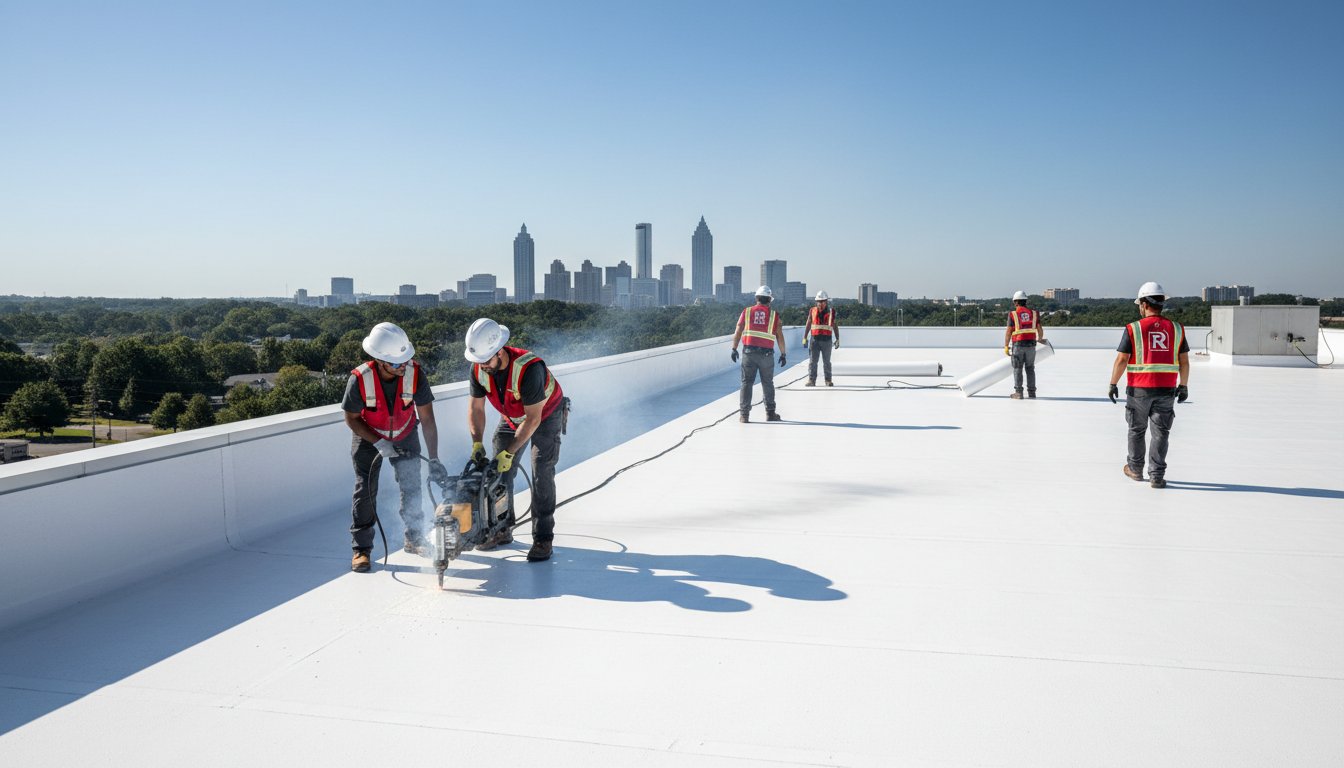
In the heart of Atlanta, the "heat island" effect can push rooftop temperatures to a staggering 170 degrees during July. This intense thermal pressure doesn't just stress your HVAC system; it actively degrades your building's structural integrity. Choosing tpo roofing provides an immediate, reflective shield against these extremes, cutting cooling costs by as much as 30% for local property owners.
You probably feel the pressure of Georgia's unpredictable weather, where a peaceful morning in Cumming can turn into a damaging hailstorm by noon. It's a constant struggle to balance rising energy bills with the need for a durable, leak-free seal. We're here to help you secure a 30-year lifespan for your facility and demystify the insurance process so you never have to face an adjuster alone. This 2026 guide provides a clear roadmap for maximizing your ROI, comparing single-ply options, and ensuring your next commercial project meets the highest standards of craftsmanship and protection.
Key Takeaways
- Learn why tpo roofing has become the gold standard for Atlanta businesses seeking to slash energy costs and meet strict local energy codes.
- Discover how the specific layers of a Supreme system, including high SRI components, can qualify your property for valuable local tax incentives.
- Compare the "Big Three" single-ply membranes to understand why white reflective surfaces outperform traditional black rubber roofs in the intense Georgia heat.
- Identify common vulnerabilities like seam failures and hail damage to proactively protect your investment against North Georgia’s unpredictable weather.
- See how partnering with a local Cumming-based expert ensures a stress-free restoration process backed by meticulous craftsmanship and "Supreme" accountability.
What is TPO Roofing and Why is it Dominating the Atlanta Market?
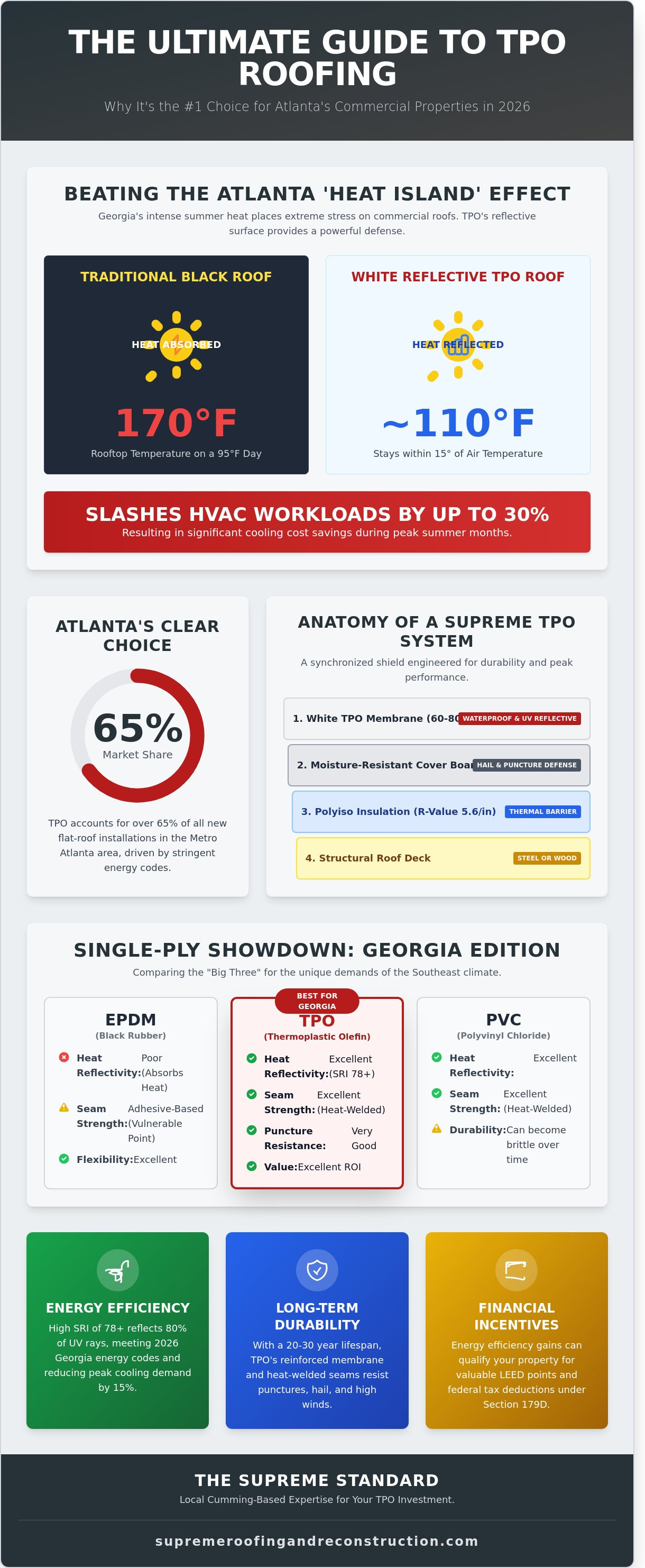
TPO roofing is a high-performance, single-ply reflective membrane that has transformed how we protect commercial and flat-roof residential properties across Georgia. It's an acronym for What is TPO (Thermoplastic Olefin)?, a material category known for its exceptional durability and heat-shielding capabilities. In 2026, this system accounts for over 65% of all new flat-roof installations in the Metro Atlanta area. This dominance grew rapidly after 2015 when local energy codes became more stringent, requiring buildings to meet higher thermal efficiency standards.
The rise of this material is a direct response to the "Heat Island" effect that plagues Atlanta and its surrounding suburbs. Because our city features vast stretches of asphalt and concrete, urban temperatures often sit 7 to 12 degrees higher than in rural Georgia. TPO solves this problem by acting as a thermal mirror. It doesn't just cover your building; it protects your bottom line by rejecting heat before it enters the structure. This shift from niche product to market leader is driven by a simple reality: it's the most cost-effective way to secure a building against the Southern climate.
The Chemical Composition of TPO
We describe TPO as a blend of polypropylene and ethylene-propylene rubber. It's engineered to provide the best of both worlds: the strength of plastic and the flexibility of rubber. Unlike older PVC membranes, TPO doesn't contain added plasticizers that can leach out and cause the roof to become brittle. This means the membrane stays pliable for its entire 20 to 30-year lifespan. Every roll we install includes a reinforced polyester "scrim" layer. This internal mesh provides the high-tensile strength and puncture resistance needed to withstand heavy Georgia thunderstorms and falling debris.
TPO vs. The Georgia Heat
White TPO membranes reflect up to 80% of UV rays back into the atmosphere. On a standard 95-degree July afternoon in Cumming, a traditional black roof can easily reach 170 degrees. In contrast, a TPO surface stays significantly cooler, often remaining within 15 degrees of the actual air temperature. This massive reduction in surface heat slashes HVAC workloads by an average of 30% during peak summer months. It's a proactive solution that preserves your cooling equipment and keeps indoor environments comfortable without overworking your systems.
The Anatomy of a Supreme TPO System: Durability Meets Reflectivity
A high-performance tpo roofing system functions as a synchronized shield for your commercial asset. We don't just roll out a membrane; we engineer a defense. The assembly starts with high-density polyisocyanurate insulation, providing an R-value of 5.6 per inch to trap conditioned air where it belongs. Above that, we install a moisture-resistant cover board to prevent hail punctures and foot traffic damage. Finally, the TPO membrane itself, typically 60-mil or 80-mil thick, provides the waterproof finish. You can explore our commercial roofing options to see how we customize these layers for your specific facility.
The "Supreme Standard" goes beyond the flat surfaces. We focus heavily on the perimeter, using 24-gauge steel edge metal and reinforced flashing. These components prevent the 90 mph wind gusts common in North Georgia from getting under the membrane. By securing the edges with meticulous detail, we eliminate the most frequent cause of roof failure.
SRI Ratings and Energy Efficiency
Solar Reflective Index (SRI) measures how well a roof rejects heat. Georgia’s 2026 energy codes require a minimum initial SRI of 78 for most flat-roof commercial developments. This isn't just about compliance; it's about your bottom line. A high SRI can reduce your building's peak cooling demand by 15% during an Atlanta August. These efficiency gains help developments qualify for LEED certification points and federal tax deductions under Section 179D, which currently offers up to $5.00 per square foot for significant energy reductions.
Installation Methods for Georgia Properties
We choose the attachment method based on your building's structural deck and local wind exposure. Each method offers distinct benefits for tpo roofing longevity:
- Mechanically Attached: We secure the membrane using heavy-duty plates and fasteners driven directly into the deck. It's a fast, cost-effective method that works exceptionally well for steel and wood decks.
- Fully Adhered: We bond the membrane to the cover board using specialized adhesives. This eliminates "sheet flutter" and offers the highest wind-uplift rating for properties in high-exposure areas.
- Induction Welding: Using tools like the RhinoBond system, we weld the membrane to plates underneath without penetrating the top layer. This creates 50% more fastening points than traditional mechanical attachment for uniform strength across the entire surface.
Our team selects the specific bond or fastener density to ensure your roof stays put when storms roll through Cumming. We don't settle for "good enough" when your inventory and operations are at stake. Every installation follows a rigid checklist to guarantee that the final product meets our internal quality benchmarks and manufacturer warranty requirements.
TPO vs. EPDM vs. PVC: Which is Best for the Southeast?
Choosing between TPO, EPDM, and PVC determines your building’s energy efficiency and structural health for the next two decades. In the Atlanta metro area, tpo roofing remains the dominant choice, capturing approximately 65% of the commercial market as of 2024. While EPDM (ethylene propylene diene monomer) offers high durability, its traditional black surface acts as a heat magnet during Georgia’s 95-degree summers. PVC provides excellent chemical resistance but typically carries a 20% to 35% price premium over TPO.
Modern performance data from 2025 indicates that TPO systems installed with 60-mil thickness now achieve a service life of 22 to 27 years when maintained correctly. This makes it the standard for local property owners who prioritize a balance of longevity and upfront value. We see many Cumming businesses moving away from EPDM because the material's heat absorption can increase interior cooling costs by as much as 15% during peak humidity months.
The Cost-Efficiency Breakdown
TPO roofing delivers the lowest total cost of ownership for most Georgia facilities. Installation costs for TPO typically range from $6.50 to $11.00 per square foot, depending on the insulation requirements. In contrast, PVC often starts at $12.00 per square foot due to higher material costs. You'll find the best ROI by matching the membrane to your specific operation:
- Warehouses and Retail: TPO is the "Supreme" choice here. It offers the best reflectivity-to-price ratio for large square footages.
- Restaurants: PVC is superior for food service. It resists the animal fats and grease vented onto the roof that would otherwise degrade a TPO or EPDM membrane.
- Maintenance: All three systems require bi-annual inspections. We focus on heat-welded seams and flashing integrity to ensure your 20-year warranty remains valid.
Climate Performance in Georgia
Georgia’s humidity creates a breeding ground for biological growth. Modern TPO formulations include antimicrobial agents that prevent mold and algae from taking root on your roof's surface. Our local climate also sees rapid temperature shifts. In March, Atlanta often swings from 38 degrees at sunrise to 78 degrees by 3 PM. TPO’s flexible polyolefin base handles this thermal expansion without cracking or losing its seal. While black EPDM absorbs nearly 90% of solar heat into your building's structure, white TPO membranes reflect up to 80% of that radiation to keep cooling costs low.
Navigating TPO Maintenance and Storm Damage in Georgia
Owning a commercial property in Atlanta or Cumming means your roof faces intense thermal cycling and high-velocity weather events. While tpo roofing is engineered for extreme durability, it isn't invincible. We frequently identify seam failures caused by improper heat welding from previous installers or mechanical punctures from HVAC contractors. Standing water remains a critical threat. If water sits for more than 48 hours after a typical Georgia downpour, it accelerates biological growth and can degrade the membrane's surface. Our team focuses on three core areas to prevent premature failure:
- Seam Integrity: We test every linear foot of welding to ensure a monolithic bond.
- Puncture Detection: Identifying small tears from debris before they saturate the underlying insulation.
- Drainage Management: Clearing scuppers and drains to prevent structural weight issues from ponding.
TPO Storm Damage Restoration
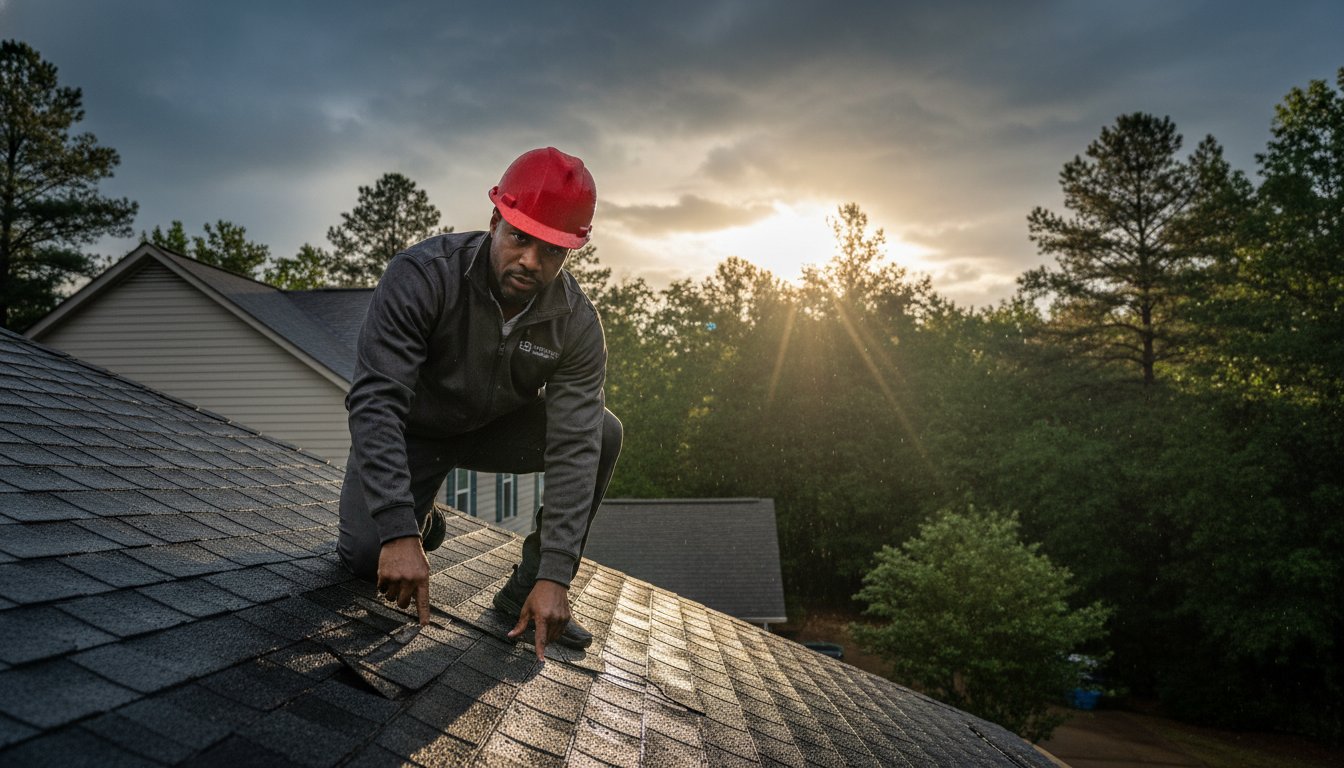
Hail damage on a white TPO surface is often deceptive. Unlike asphalt shingles, TPO membranes don't always show immediate bruising. A 1.5-inch hailstone can create a "star fracture" in the bottom reinforcement layer while the top layer appears intact. This hidden damage leads to delamination within 12 to 18 months. After a major Atlanta storm, we provide forensic inspections to document these fractures for your insurance carrier. Our experts act as your advocate, meeting with adjusters to ensure the 2026 replacement costs are fully covered. We handle the complex paperwork so you can focus on running your business.
Preventative Maintenance for Longevity
To keep your 20-year manufacturer warranty valid, you must have documented bi-annual inspections. In Alpharetta and Cumming, we perform these assessments every March and October. We prioritize cleaning the membrane to maintain its 0.80 Solar Reflectance Index (SRI). A dirty roof absorbs 30% more heat, which directly spikes your summer cooling costs. We also inspect the flashing around every roof penetration. Catching a loose seal today prevents a $10,000 interior repair project next season. Our proactive approach keeps your facility dry and your maintenance budget predictable.
Don't wait for a ceiling leak to reveal hidden storm damage. Schedule your professional TPO inspection today to protect your investment and secure your warranty.
The Supreme Standard: Why Local Expertise Matters for Your TPO Investment
Choosing a commercial roof isn't just about the material; it's about the hands that install it. In Georgia, the intense heat and sudden storms of 2024 and 2025 have tested every commercial structure. Local roots in Cumming and Atlanta mean we don't disappear after the final inspection. We live where you work. This accountability ensures your tpo roofing system performs exactly as promised for the next 20 years. We take pride in being a local ally that understands the specific humidity and thermal expansion challenges unique to the Southeast.
Our philosophy revolves around being your "Expert Protector." We combine technical precision with a neighborly approach that removes the stress from the construction process. We typically utilize 60-mil or 80-mil reinforced membranes to ensure your facility survives the 70-mph wind gusts common in North Georgia. Every seam is heat-welded with a meticulous eye, creating a monolithic barrier that protects your inventory and your bottom line. We don't just meet industry standards; we set the "Supreme" benchmark for craftsmanship and integrity.
Our Local Commitment to Georgia Businesses
Supreme Roofing serves the commercial corridors of Cumming, Marietta, and Roswell with a focus on long-term property value. Our community-focused values mean we treat every warehouse or retail center like it's our own. In June 2024, we completed a 15,000-square-foot TPO retrofit in Alpharetta that reduced the client's cooling costs by 22% within the first quarter. Another 2025 project in John's Creek involved a complex recovery over an existing substrate, saving the owner $12,000 in tear-off fees. These results aren't accidents; they're the product of local expertise.
Your Next Steps to a Protected Property
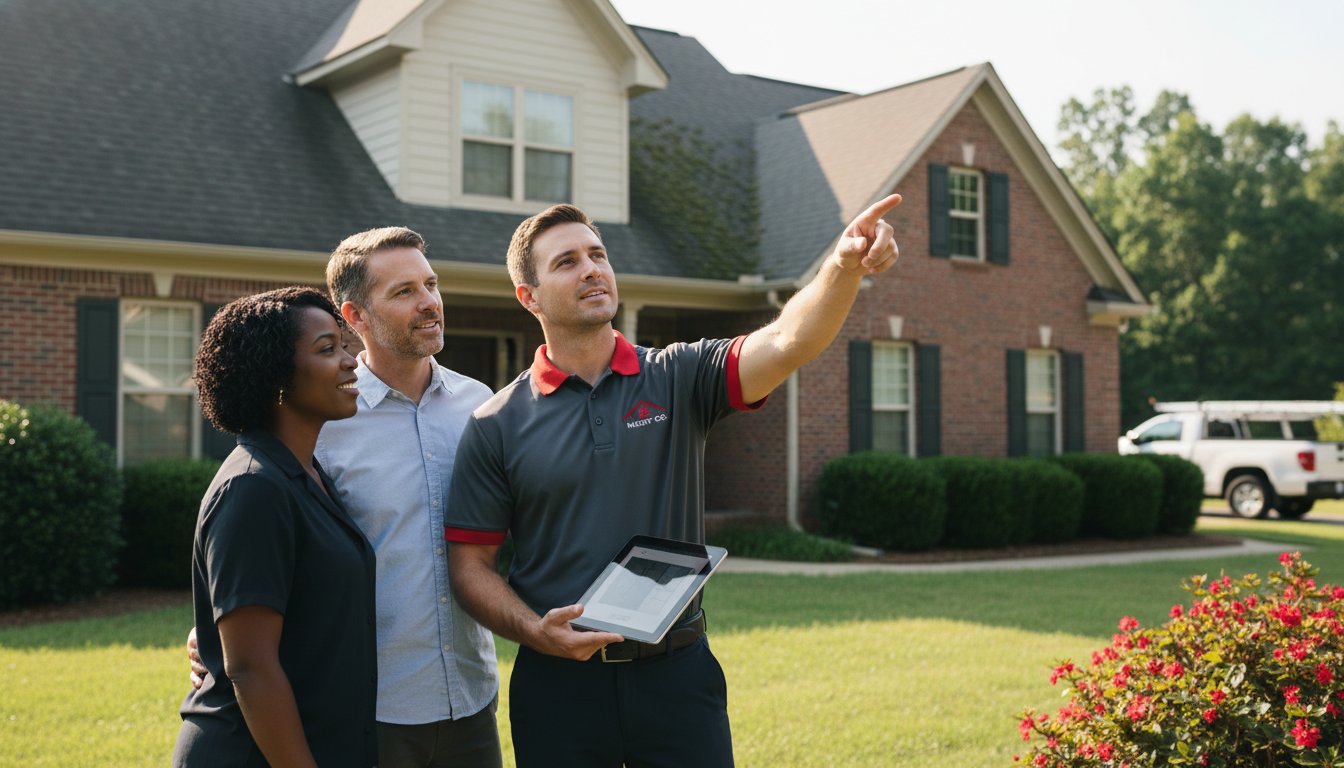
A "Supreme" inspection is a transparent, step-by-step audit of your current roof's integrity. We analyze core samples, check drainage efficiency, and identify thermal leaks using advanced diagnostic tools. For 2026, we’ve updated our consulting process to include specific guidance on shifting insurance requirements and competitive financing for energy-efficient upgrades. We act as your advocate, ensuring you never face adjusters or complex paperwork alone. Our goal is a seamless transition to a roof that lasts decades. Schedule your Supreme TPO roof assessment today!
Secure Your Property with Atlanta’s Premier TPO Solutions
Investing in a high-quality roof is the most effective way to protect your commercial asset from Georgia’s unpredictable weather cycles. Since 2016, Supreme Roofing and Reconstruction has delivered meticulous installations that outperform standard EPDM and PVC alternatives. Our tpo roofing systems provide the thermal reflectivity needed to slash cooling costs while maintaining the puncture resistance required for high-traffic surfaces. You aren't just buying a membrane; you're securing a 20-year solution backed by our Supreme Standards of Craftsmanship.
If recent weather has left you concerned about leaks or wind uplift, our team acts as your expert storm damage advocates. We navigate the complexities of insurance claims so you don't have to face adjusters alone. We've served the Cumming and Atlanta metro areas for nearly a decade, ensuring every project meets our rigorous quality benchmarks. Your property deserves a roof that works as hard as you do.
Get Your Stress-Free TPO Roofing Quote from Supreme Roofing
We look forward to building a safer, more efficient future for your building.
Frequently Asked Questions
How long does a TPO roof typically last in Georgia?
A properly installed TPO roof lasts between 20 and 30 years in the Georgia climate. Our high-heat summers in Atlanta can accelerate wear, but modern formulations reflect 87% of UV rays to prevent premature cracking. We recommend a professional inspection every 24 months to ensure the heat-welded seams remain watertight. This proactive approach helps you maximize your investment and avoid the 15% higher repair costs associated with neglected flat roofs.
Is TPO roofing more expensive than traditional asphalt shingles?
TPO roofing typically costs 25% to 35% more than standard architectural shingles due to the specialized heat-welding equipment and technical expertise required for installation. While the initial investment is higher, the energy savings often offset this cost within 7 years. You're paying for a seamless, waterproof membrane that outperforms shingles on low-slope structures. Most Atlanta business owners find the 30% reduction in cooling costs makes this the more economical long-term choice.
Can TPO roofing be installed over an existing roof system?
You can install a new TPO system over an existing roof provided there is only one current layer and the decking is 100% dry. Georgia building codes prohibit a third layer, so we perform a thermal moisture scan to identify trapped water before proceeding. If the substrate is sound, we install a 0.5-inch recovery board to create a smooth surface for the new membrane. This method saves you approximately $1,500 in labor and disposal fees during the tear-off phase.
How do I know if my TPO roof has hail damage after an Atlanta storm?
Inspect your roof for circular indentations or star fractures in the membrane after storms with hail exceeding 1 inch in diameter. While TPO is impact-resistant, high-velocity strikes can fracture the internal fiberglass scrim. You should also check the metal flashing for dents and ensure the heat-welded seams haven't separated. Our team uses specialized sensors to detect microscopic punctures that aren't visible to the naked eye, preventing 90% of future interior leaks.
Does white TPO roofing really lower energy bills in the summer?
Installing white tpo roofing can lower your summer cooling costs by 30% to 40% because it reflects up to 88% of solar radiation. In Cumming and Atlanta, rooftop temperatures on dark surfaces can reach 160 degrees, but white membranes stay within 15 degrees of the ambient air temperature. This reduction in the heat island effect lessens the strain on your HVAC system. It effectively extends the life of your air conditioner by 3 to 5 years. To fully capitalize on these benefits, it's wise to pair your new roof with regular HVAC maintenance, and you can find expert help at rmihvacr.com.
What is the difference between 45-mil and 60-mil TPO thickness?
The primary difference is that 60-mil TPO is 33% thicker than 45-mil, providing significantly better puncture resistance and a longer warranty. A 60-mil membrane typically includes a 20-year or 25-year manufacturer warranty, whereas 45-mil often caps at 15 years. We recommend the 60-mil option for Atlanta buildings with heavy foot traffic or nearby trees. The extra thickness adds roughly $0.50 per square foot but doubles the membrane's resistance to weathering.
Is TPO roofing slippery when wet or during North Georgia winters?
TPO membranes become extremely slippery when wet or covered in frost, so you must use designated walk pads for roof access. Even a light morning dew in North Georgia makes the surface as slick as ice. We install textured gray walk pads around HVAC units and roof hatches to provide 50% more traction for maintenance crews. Never walk on a wet membrane without fall protection equipment, as the friction coefficient drops below safe levels immediately.
Will insurance cover a TPO roof replacement after storm damage?
Insurance providers typically cover TPO replacement if a forensic inspection confirms damage from wind gusts over 60 mph or hail strikes. We act as your expert advocate by documenting every 2-millimeter puncture and seam failure for the adjuster's report. Our team ensures the claim includes all necessary components like recovery boards and edge metal. We handle the technical communication so your restoration process remains stress-free and your out-of-pocket costs stay limited to your deductible.