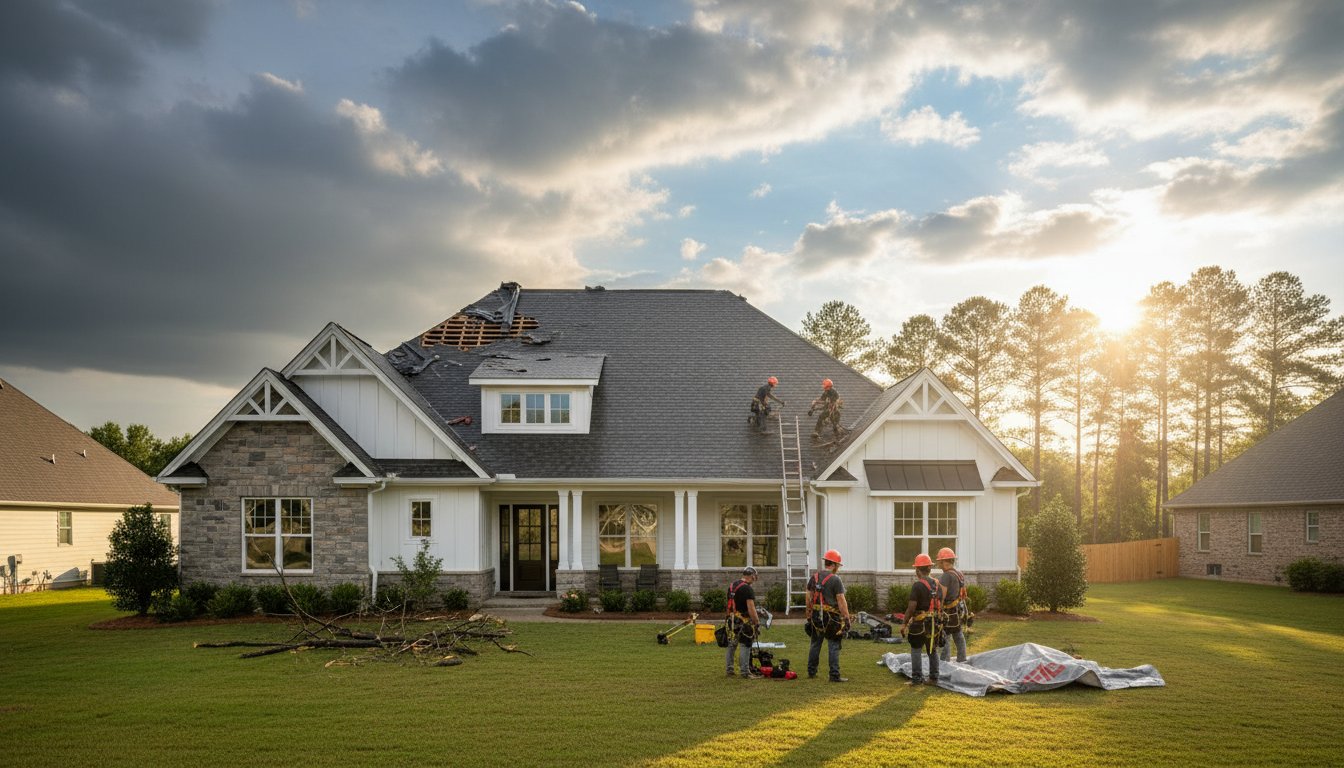
On June 15, 2023, a sudden hailstorm across North Georgia turned a quiet evening into a $15,000 repair nightmare for hundreds of Cumming families. You've likely felt that same knot in your stomach while surveying shingle debris in your yard or spotting a new water stain on the ceiling. It's natural to feel overwhelmed by technical insurance jargon or the fear of hidden structural rot that could cause future leaks. You deserve a partner who treats your home with the same meticulous care they'd use on their own property.
This guide provides a professional roadmap for storm damage restoration, ensuring you secure a leak-free roof and a fair insurance settlement without the stress of "storm chaser" scams. We'll demystify the recovery process by outlining exactly how to identify subtle flashing issues and negotiate with adjusters for the full value of your claim. We'll walk through the specific steps to restore your curb appeal and protect your property value, moving from initial inspection to a seamless, high-quality finish that stands the test of time.
Key Takeaways
- Learn why immediate action is critical to prevent secondary structural rot and mold after a severe weather event.
- Discover how to spot subtle hail dimples and wind-lifted shingles before they compromise your property’s structural integrity.
- Protect your investment by learning the red flags of "storm chasers" and the benefits of choosing a local, accountable restoration partner.
- Navigate the insurance claim process with a professional roadmap that ensures a seamless, stress-free storm damage restoration experience.
- Explore how a total recovery approach revitalizes your entire home, from meticulous roof repairs to professional siding and gutter updates.
What is Storm Damage Restoration and Why is it Critical in 2026?
Storm damage restoration isn't just a quick patch on a leaky roof. It's a comprehensive, three-stage lifecycle that includes a forensic inspection, immediate mitigation, and full-scale reconstruction. Following the record-breaking storm clusters that hit Cumming and Alpharetta in March 2026, homeowners have learned that a surface-level look isn't enough. Professional storm damage restoration ensures your home's envelope remains intact and your property value stays secure. This disaster restoration process requires specialized equipment to detect moisture trapped behind siding or under shingles before it turns into a $15,000 mold remediation project.
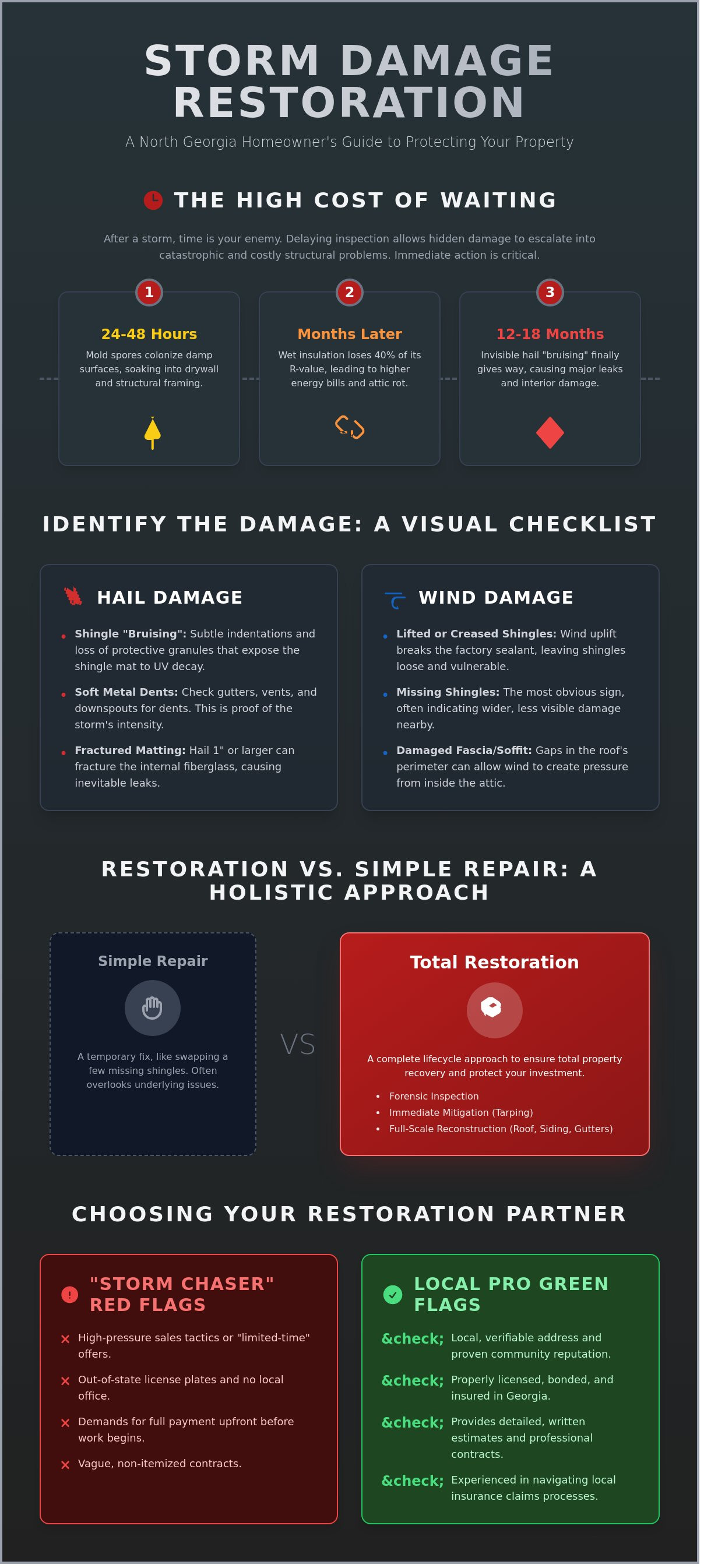
Immediate action is your best defense against secondary damage. When water enters a home, it doesn't stay in one place. It travels through gravity, soaking into drywall and structural framing. Within 24 to 48 hours, mold spores begin to colonize damp surfaces. We treat every storm event as a race against the clock. By securing the property quickly, we prevent a localized roof leak from becoming a total interior renovation. Our goal is to provide a steady hand during a crisis, ensuring your home remains a safe sanctuary for your family.
The Hidden Dangers of Delayed Restoration
Delaying a professional inspection after a North Georgia hail storm is a gamble with your home's structural integrity. Hail often causes "bruising," a subtle indentation that fractures the fiberglass mat under the granules. This damage isn't always visible from the ground, but it leads to leaks within 12 to 18 months. High winds, even those under 60 mph, can create wind uplift. This force breaks the factory-applied sealant strip, leaving your roof vulnerable to the next storm. When water bypasses these defenses, it saturates your attic insulation. Wet insulation loses 40% of its R-value immediately and creates a breeding ground for rot in your ceiling joists.
Restoration vs. Simple Repair: Knowing the Difference
A simple repair might involve swapping out five missing shingles. True storm damage restoration is a holistic approach to your home’s exterior health. It addresses every component, including your gutters, downspouts, siding, and even exterior paint finishes that may have been sandblasted by wind-borne debris. Our team prioritizes emergency tarping within 4 hours of a call to stop active leaks. We then move toward a permanent solution that restores your home to its pre-storm condition, or better. This level of care protects your investment and simplifies the insurance process by providing a clear, documented path from damage to recovery.
Identifying Common Storm Damage in North Georgia
North Georgia weather patterns are notoriously volatile, often leaving behind a trail of subtle destruction that compromises your home's protective envelope. Effective storm damage restoration begins with a meticulous eye for detail. Whether it's a sudden summer thunderstorm or a spring tornado, the impact on your property is often multi-layered and requires a professional assessment to uncover hidden vulnerabilities.
Hail Damage Markers for Cumming Homeowners
Hail 'bruising' is the loss of protective mineral granules that leads to rapid UV degradation and the eventual failure of the asphalt shingle mat. Size is a critical factor in your home's survival. Hail measuring 1 inch or larger carries enough terminal velocity to cause catastrophic roofing failure by fracturing the internal fiberglass reinforcement. You should also inspect your soft metals. Check gutters, box vents, and downspouts for impact marks. These dents serve as permanent evidence of a storm's intensity and suggest that your shingles sustained similar force.
High Wind and Tornado Aftermath
Wind damage is frequently deceptive because you can't always see the extent of the problem from the ground. The 'unsealed shingle' problem occurs when high winds create a suction effect that breaks the thermal sealant bond. These shingles may lay flat once the wind dies down, but they no longer provide a water-tight seal against the next rain. You must also examine the fascia and soffit. When wind enters the attic space through these gaps, it creates internal pressure that can lift the roof deck from the inside. Our team always assesses the integrity of the roof's perimeter and starter strips, as these are the first components to fail during 60 mph gusts.
Fallen limbs from heavy Georgia pines often cause structural fractures that aren't immediately obvious. A branch impact can crack a rafter or joist without puncturing the shingle surface. Additionally, your gutters and siding serve as the first line of defense. When these systems fail, water intrusion typically begins within 24 to 48 hours. When you're hiring a reputable contractor, ensure they perform a full 360-degree inspection of these secondary systems. Professional storm damage restoration ensures every bruise and lift is documented. If you suspect your home took a hit, you can schedule a comprehensive inspection with our local team to secure your property's future.
Professional Restoration vs. Storm Chasers: How to Choose
After a severe weather event hits Forsyth County, your doorbell will likely ring within 24 hours. These individuals, often called "storm chasers," follow hail paths identified by radar data to target vulnerable neighborhoods. You can spot them by their out-of-state license plates or high-pressure tactics that demand an immediate signature. Supreme Roofing and Reconstruction operates differently. We maintain permanent offices in Marietta and Gainesville, ensuring we're here to honor our warranties five or ten years from now. A "fly-by-night" crew cannot offer that same level of local accountability.
Verifying a contractor's credentials is your first line of defense. Always ask for a copy of their Georgia contractor license and a certificate of insurance showing at least $1,000,000 in general liability coverage. We recommend asking for three references within a 10-mile radius of your Cumming home. This level of diligence is a critical step when navigating the insurance claim process and ensuring your property's long-term safety. Choosing a local expert means choosing someone who values their reputation in the North Georgia community.
The Importance of Local Expertise
Local building codes in Forsyth and Fulton Counties are specific, especially regarding ice and water shield requirements and shingle attachment patterns. A contractor with deep roots in Cumming understands these nuances, whereas an out-of-state crew might overlook them. Our team has spent over 15 years building professional rapport with local insurance adjusters. This established trust often leads to a more efficient storm damage restoration process because adjusters know our estimates are accurate, honest, and grounded in local labor costs.
Forensic Roof Inspections: The Supreme Standard
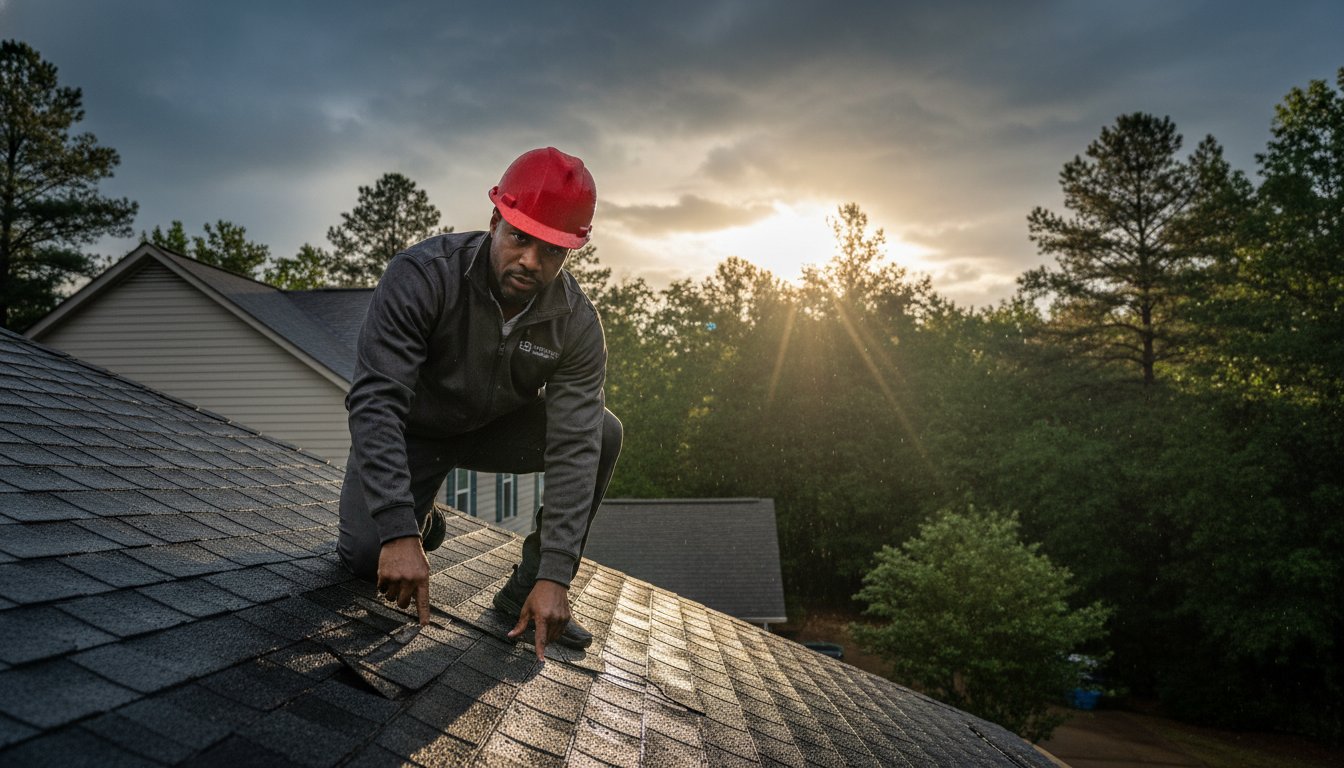
A general contractor might give your roof a five-minute glance and call it "fine." Our Supreme standard involves a forensic approach that identifies damage the naked eye often misses. We use high-resolution photo documentation to capture granular loss and bruised shingle mats, building an undeniable case for your insurance provider. As your Expert Protector, we look for potential failure points that could lead to leaks 12 months down the road. This proactive storm damage restoration strategy ensures your roof remains a solid barrier against the next round of Georgia thunderstorms.
Navigating the Roof Insurance Claim Process in Georgia
Dealing with insurance carriers requires a steady hand and technical precision. Most homeowners in Cumming find the paperwork confusing; we exist to simplify it. Follow these five steps to ensure your home returns to its pre-storm condition without the headache. Successful storm damage restoration depends on early, accurate documentation.
- Step 1: Document the damage. Take clear photos of bruised shingles, dented downspouts, or fallen debris. Note the exact date of the weather event, such as the severe hail storms that hit North Georgia on March 26, 2023.
- Step 2: Professional Assessment. Contact us before calling your carrier. We provide a forensic inspection to determine if the damage exceeds your deductible. This prevents you from filing unnecessary claims that could affect your record.
- Step 3: File the Claim. Submit the claim with your carrier and include our detailed damage report. This technical data provides the proof adjusters need to move quickly.
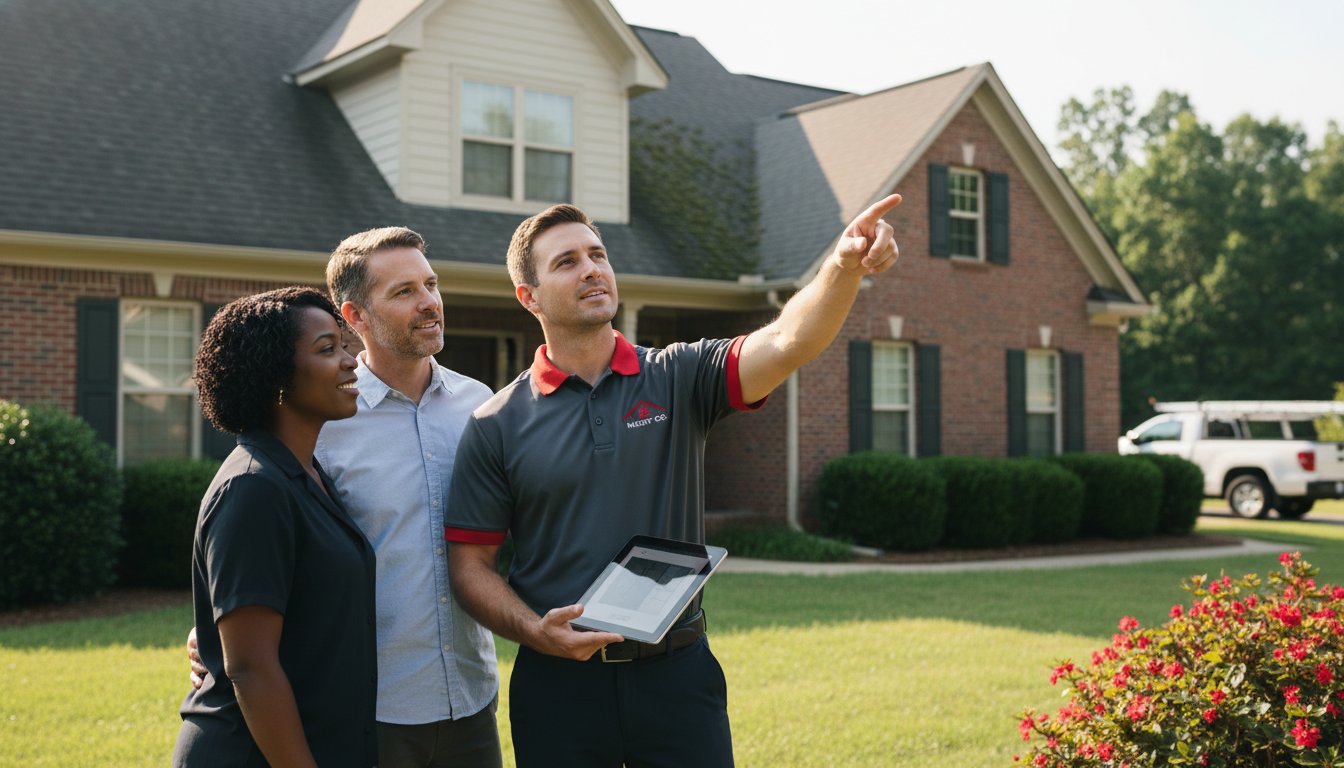
- Step 4: The Adjuster Meeting. We'll be on-site when the insurance adjuster arrives. We speak their language and point out subtle issues like fractured fiberglass mats or compromised flashing that they might overlook.
- Step 5: Review and Restore. Once the estimate arrives, we review it for accuracy. Only then do we begin the meticulous work of rebuilding your home to Supreme standards.
The Contractor's Role in Insurance Advocacy
We act as your technical liaison. Our team deciphers complex insurance estimates to ensure nothing is missed. We focus on "Like Kind and Quality" (LKQ) standards; this means your 30-year architectural shingles aren't replaced with inferior 3-tab alternatives. If we find hidden rot or structural issues during the tear-off, we manage the supplement process. We submit the necessary photos and documentation to the insurer so they cover the additional costs, keeping your project on track and within budget.
Common Insurance Misconceptions
Many homeowners worry that filing a claim will automatically spike their individual rates. In Georgia, insurance companies generally can't raise your premiums based solely on a "no-fault" weather claim. Instead, rates are adjusted by zip code based on regional risk. You also need to understand the difference between Actual Cash Value (ACV) and Replacement Cost Value (RCV). An ACV policy only pays the depreciated value of your old roof, while RCV covers the full cost of a brand-new installation. Most carriers actually prefer you work with a reputable local contractor because it reduces the risk of future leaks and secondary claims. Integrity in storm damage restoration saves everyone money over time.
Don't face the insurance adjusters alone. Contact our team today for a comprehensive storm damage assessment and professional claim support.
Total Property Recovery: Beyond the Roof
A major storm rarely stops at your shingles. High winds and hail often compromise the entire building envelope. Our data shows that 70% of homes requiring storm damage restoration also show significant damage to gutter systems or siding. At Supreme Roofing and Reconstruction, we treat your home as a single, integrated unit. We don't just patch a hole; we restore the structural and aesthetic harmony of your property. Our team manages the transition from heavy construction to fine finishing work, ensuring you don't have to juggle multiple contractors during a crisis.
This comprehensive approach is the hallmark of a professional renovation firm. To see examples of this kind of integrated work on various projects, you can visit Colindres Enterprise.
Gutters and Siding: The Protective Shell
Your gutters are the first line of defense for your foundation. We coordinate gutter replacement with your new roof installation to ensure 100% drainage efficiency. This prevents the common mistake of installing new shingles over failing or clogged troughs. In neighborhoods across John's Creek and Lawrenceville, we use precision color-matching technology to ensure new siding maintains your home's architectural integrity. Since 2018, we've helped over 500 local families restore their home's protective shell after severe weather events. We focus on two key areas:
- Seamless Integration: Aligning gutter pitch with new roof lines to eliminate standing water.
- Moisture Barriers: Replacing compromised siding to prevent hidden mold growth behind your walls.
The Finishing Touch: Professional Painting
Curb appeal is often the last thing on a homeowner's mind after a disaster, but it's vital for long-term property value. We use weather-resistant paints specifically rated for 15 years of Georgia's intense humidity and UV exposure. If your home suffered leaks, our team addresses unsightly interior water stains with professional painting that makes your living space look untouched by the storm. We don't consider the job done until the final walkthrough is complete and your home meets our meticulous "Supreme" quality standards.
Our commitment to excellence means we provide a comprehensive guarantee on all craftsmanship. We act as your steady hand throughout the process, from the first shingle to the final coat of trim paint. Don't settle for a partial fix when your home deserves a complete recovery. Schedule your free Supreme storm damage inspection today to begin your storm damage restoration with a team that values your property as much as you do.
Secure Your Property’s Future Today
Navigating the aftermath of a North Georgia storm requires more than just a quick fix; it demands a meticulous eye for shingle integrity and a steady hand during the insurance claim process. Since 2016, Supreme Roofing and Reconstruction has served homeowners across Georgia and Alabama, delivering unmatched quality in both residential and commercial projects. We focus on identifying hidden vulnerabilities that transient storm chasers often overlook, ensuring your property remains a safe haven. By choosing a local ally with expert insurance claim assistance, you transform a stressful recovery into a seamless restoration of your home's value.
Don't let hidden leaks compromise your structure's foundation. Our team provides the authoritative guidance you need to navigate adjusters and complex paperwork without the typical headaches. We've built our reputation on transparency and the "Supreme" standard of craftsmanship since our founding nearly a decade ago. Every storm damage restoration project we undertake is backed by our commitment to community and technical excellence. Let’s get your property back to its peak condition. Get Your Free Supreme Storm Damage Assessment
Your home is your most significant investment, and we're here to protect it with the care it deserves.
Frequently Asked Questions
Does homeowners insurance cover storm damage to my roof in Georgia?
Yes, most Georgia homeowners insurance policies cover roof damage caused by wind, hail, or fallen trees. Your coverage typically pays for the full replacement cost minus your deductible, provided the damage was sudden and accidental. We recommend checking your policy for Replacement Cost Value (RCV) versus Actual Cash Value (ACV) to understand your specific payout. Our team provides a meticulous inspection to document every detail for your carrier.
How long do I have to file a storm damage claim after a hurricane or hail storm?
You generally have 12 months from the date of the storm to file a property claim in Georgia. While the legal limit varies, local providers like State Farm often require notification within 365 days to guarantee coverage. Starting the storm damage restoration process within the first 30 days is vital. This prevents secondary issues like mold or wood rot from complicating your claim or causing further structural loss.
Can I repair my roof myself after a storm to save money?
You shouldn't attempt DIY roof repairs because uncertified workmanship often voids your manufacturer warranty and can lead to insurance claim denials. Statistics show that improper repairs can reduce a home's resale value by 20% during a professional inspection. Furthermore, the US reports over 34,000 ladder-related injuries annually. Trusting a professional ensures your GAF or Owens Corning warranty remains intact while keeping your family safe.
What should I do if my insurance claim is denied or underpaid?
You should immediately request a re-inspection and provide a detailed, line-item estimate from a licensed contractor. Industry data indicates that 25% of initial claims are underpaid or wrongfully denied. We provide a 50-point inspection report to your adjuster to justify the full scope of repairs. If the second inspection is unsuccessful, you have the right to invoke the appraisal clause found in Section I of your policy.
How long does the storm damage restoration process typically take?
A comprehensive storm damage restoration project usually takes 7 to 14 days from the initial inspection to the final cleanup. The actual roof replacement often finishes in just 1 or 2 days. The remaining time accounts for the 3-day insurance approval window and material logistics. We coordinate every phase of the project to ensure a seamless, stress-free experience that restores your home's integrity without unnecessary delays.
Is it worth fixing a small leak after a storm if I don't see major damage?
Yes, a leak as small as 1/8 of an inch can cause over $5,000 in interior water damage within six months. Small leaks are often symptoms of compromised flashing or shingle integrity that isn't visible from the ground. Ignoring these minor issues leads to attic mold and structural decay. Addressing them immediately protects your home's foundation and prevents a total roof failure during the next North Georgia storm.
What are the signs of hail damage that I can see from the ground?
You can identify hail damage by checking for dented gutters, cracked siding, or dark, circular "bruises" on your shingles. Look at your 6-inch downspouts for small indentations or check your driveway for piles of shingle granules. If you find 3 or more dents per square foot on your soft metals, your roof's integrity is likely compromised. Our experts use high-resolution drone imagery to confirm these findings accurately.
Why is it important to have my contractor present during the insurance adjuster's visit?
Having your contractor present ensures the adjuster doesn't overlook technical details like damaged drip edges or ridge vents. Adjusters often manage 5 to 7 appointments per day and might miss subtle signs of structural stress. We act as your expert advocate, pointing out 100% of the damage to ensure your claim covers the full cost of repairs. This collaborative approach leads to a more accurate settlement and higher quality craftsmanship.