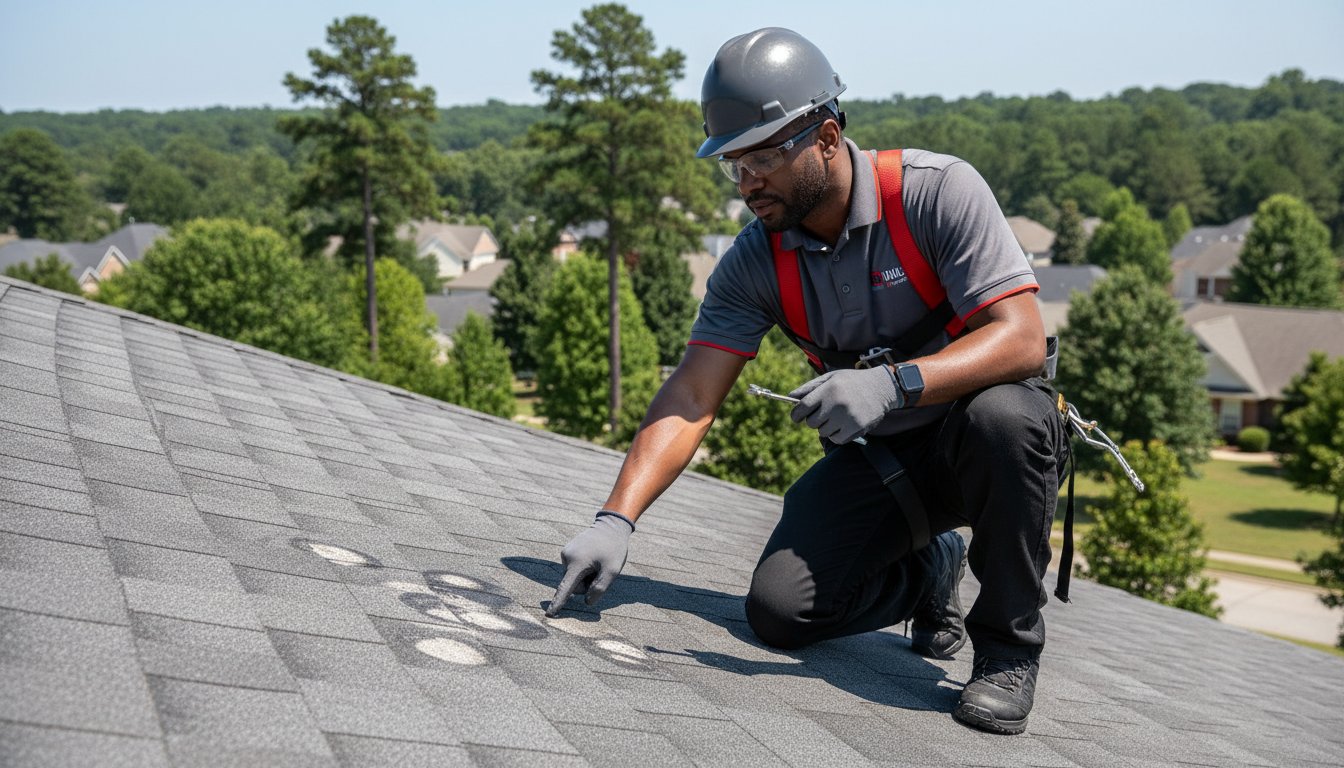
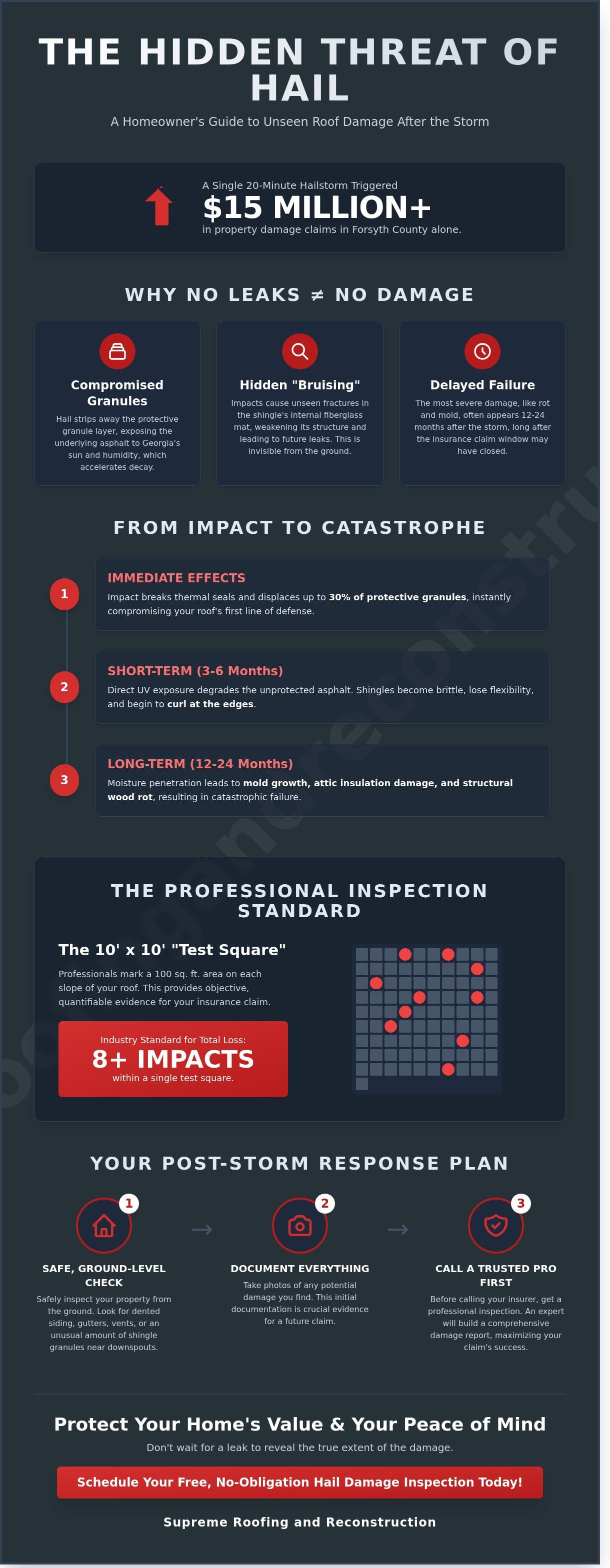
On March 26, a single 20-minute hailstorm in Forsyth County triggered over $15 million in property damage claims, yet dozens of homeowners didn't realize their shingle integrity was compromised until the first heavy rain of summer. What if the most destructive damage to your home is currently invisible from your driveway? A professional hail damage roof inspection isn't just about finding obvious dents; it's about securing your home's future against hidden leaks and structural decay before they become costly emergencies.
This philosophy of protection through expert inspection is shared by other industry leaders across the country. For example, Bob Romea Roofing leverages over 50 years of experience to provide similar high-standard assessments for homeowners in the Pittsburgh area, emphasizing that meticulous forensic roofing is a universal necessity for long-term property health.
You've likely seen "storm chasers" knocking on doors after a front passes, and it's natural to feel anxious about who to trust or how to handle a complex insurance claim. We understand those concerns and promise to show you exactly how to spot subtle signs of granule loss, avoid common insurance pitfalls, and protect your home's long-term value. This guide outlines our meticulous 12-point inspection process and provides a clear roadmap for restoration, ensuring you have a steady hand and a local ally to guide you through every step of the recovery.
Key Takeaways
- Recognize why a lack of leaks doesn't guarantee safety, as hidden granule loss can silently compromise shingle integrity after a North Georgia storm.
- Discover the forensic "test square" method professionals use during a hail damage roof inspection to provide the technical evidence required for a successful claim.
- Learn how to perform a safe, ground-level assessment to spot subtle indicators on your siding and yard that suggest significant roof-level damage.
- Follow a structured response plan that prioritizes expert documentation over immediate insurance calls to protect your home’s value and your peace of mind.
- Understand the "Supreme Standard" of meticulous, multi-point inspections that ensure your restoration process is seamless, transparent, and built to last.
The Hidden Threat: Why Hail Damage in North Georgia is Deceptive
Residents in Cumming, Alpharetta, and Gainesville live in what local meteorologists often call North Georgia’s "Hail Alley." In 2023 alone, this specific corridor experienced over 15 recorded hail events with stones exceeding 1.25 inches in diameter. Many homeowners assume their roof is intact because they don't see water dripping from the ceiling. This is a dangerous misconception that leads to denied insurance claims later. A professional hail damage roof inspection reveals that damage is often invisible to the untrained eye. We define hail damage as the physical compromise of a shingle’s protective granule layer. When these ceramic-coated granules are displaced, the underlying bitumen is left defenseless.
Georgia’s humid climate accelerates this decay. Our state maintains an average relative humidity of 71%, which turns small impact points into entry ways for rot. As your Expert Protector, Supreme Roofing and Reconstruction identifies these latent defects before they become catastrophic failures. We look for "bruising," which is a structural fracture in the shingle's internal fiberglass mat. You can't see this from the ground, but it's a primary indicator that your home’s first line of defense has failed.
How Hail Impacts Different Roofing Materials
Every material reacts differently to high-velocity impact. Asphalt shingles suffer from immediate granule loss and deep bruising. Metal roofing may show "dimpling." While some adjusters call this cosmetic, deep dents can stress the fasteners and compromise the watertight seals at the seams. Wood shakes are particularly vulnerable in the South. Hail causes clean vertical splits that bypass the wood's natural shedding ability, leading to rapid rot in the roof decking within 12 months of the storm.
The Timeline of Damage: From Impact to Failure
Roof failure is a process, not a single event. It follows a predictable, destructive timeline that we meticulously document during every hail damage roof inspection:
- Immediate Effects: Impact breaks the thermal seals between shingles and displaces up to 30% of the protective granules.
- Short-term Effects (3 to 6 Months): Direct UV exposure degrades the unprotected asphalt. The shingles become brittle, lose flexibility, and begin to curl.
- Long-term Consequences (12 to 24 Months): Recurring moisture penetration leads to mold growth, attic insulation damage, and structural wood rot.
Our proactive approach ensures you address these issues during the vital window for insurance recovery. We act as your skilled advocate, ensuring no detail is overlooked and your home remains a safe haven.
The Forensic Hail Damage Roof Inspection: What Professionals Look For
A professional hail damage roof inspection relies on the "test square" methodology to provide an objective assessment of storm impact. We mark a 10-by-10-foot area on each directional slope of your roof. If our technicians identify 8 or more impacts within this 100-square-foot space, it typically meets the industry standard for a total loss. We don't leave this to chance. We use specialized contrast-enhancing chalk to highlight strikes and high-resolution cameras to capture the evidence your insurance adjuster needs to see.
We distinguish between functional and cosmetic damage to protect your long-term investment. Functional damage occurs when a strike compromises the shingle's ability to shed water or shortens its expected 30-year lifespan. Cosmetic damage, such as a small dent in a metal vent, might not cause an immediate leak but serves as vital proof of the storm's intensity. Our experts document both to build a comprehensive case for your claim.
Identifying Shingle Bruising and Granule Loss
Shingle bruising is a circular indentation that feels soft to the touch, indicating that the internal fiberglass mat has fractured under the force of the ice. These impacts dislodge the protective mineral granules that act as your roof's primary defense against the 95-degree Georgia sun. When these granules wash away, they often accumulate in your gutters, leaving the raw asphalt exposed to rapid UV degradation. We carefully differentiate these hits from "blistering." Blisters are caused by trapped gases that pop outward over time, while hail creates distinct, downward craters that immediately threaten your home's integrity.
Inspecting the "Soft Metals" and Perimeter
We view your vents, valleys, and flashing as the "canaries in the coal mine" for storm damage. Because aluminum and lead are softer than asphalt shingles, they record the history of a hailstorm with 100% accuracy. During our audit, we focus on several key areas:
- Chimney Caps and Attic Fans: Dents in these heavy-duty components prove the kinetic energy of the hail was sufficient to cause structural damage.
- Valleys and Flashing: We check for creases in these critical water channels where leaks are most likely to start.
- Gutters and Downspouts: We look for "spatter marks" and dings that indicate 1.25-inch or larger hail hits.
Our team provides a meticulous assessment to ensure no hidden vulnerability goes unnoticed. By identifying these perimeter issues early, we help you avoid the stress of secondary water damage that often follows the spring storm season.
Ground-Level Signs vs. Roof-Level Reality in Cumming Homes
After a North Georgia storm, your first instinct is to look up. While a visual check from the driveway is a smart first step, it rarely tells the whole story. You don't need to risk a fall to get an initial assessment. Our team at Supreme Roofing and Reconstruction recommends a systematic ground-level survey to identify red flags before you call for a professional hail damage roof inspection. This proactive approach helps you gather evidence without compromising your safety.
The 5-Minute Perimeter Walkthrough
Start at your front door and move clockwise around your property. You're looking for collateral damage that indicates the storm's intensity. Focus on these specific areas:
- Soft Metals: Check your AC condenser fins. These thin aluminum slats dent easily; if they look flattened, your shingles likely suffered similar impacts.
- Siding and Screens: Look for "half-moon" cracks in vinyl siding or small punctures in window screens. These are clear signs of high-velocity hail.
- Downspouts: Inspect the area where your gutters drain. A heavy accumulation of granules, which looks like coarse dark sand, indicates that your shingles are shedding their protective layer.
- Outdoor Living Spaces: Check metal patio tables or mailboxes for fresh dings. If the paint is chipped or the metal is pitted, the impact was strong enough to compromise roof integrity.
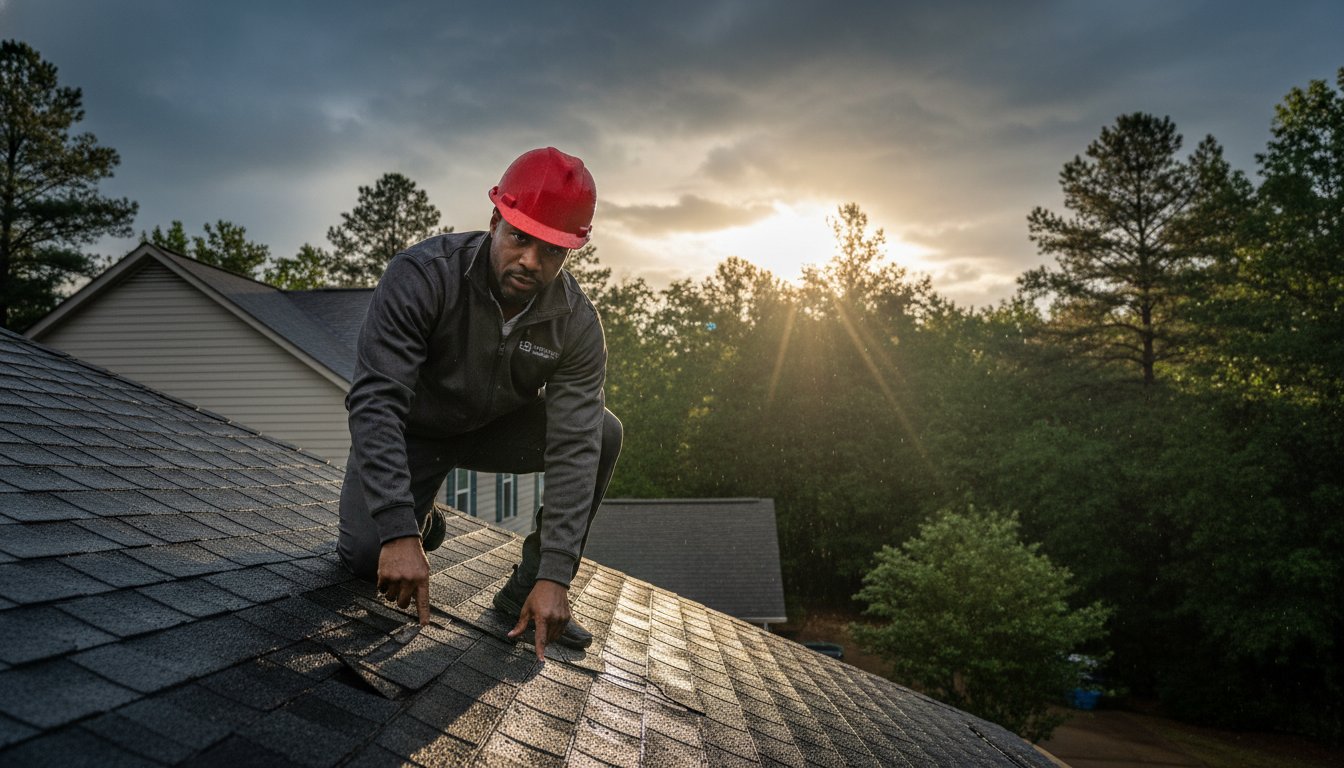
Stay off the roof during this process. The Consumer Product Safety Commission reports that more than 90,000 people receive emergency room treatment for ladder-related falls annually. We utilize specialized fall-arrest systems and high-traction footwear to perform meticulous evaluations. Let our experts handle the heights while you stay safely on the ground.
Why Ground Signs Can Be Misleading
A pristine yard doesn't guarantee a healthy roof. Wind direction during a storm, like the severe cells that hit Forsyth County in March 2023, often creates "shadow zones" where one side of a house remains untouched while the other is battered. Your siding might look perfect simply because it was shielded by the wind, while the windward slope of your roof took the full brunt of the ice.
The "clean gutter" myth is another common trap for homeowners. Granules don't always wash away instantly. It often takes 3 or 4 heavy rain cycles for loosened sediment to migrate into your downspouts. A professional hail damage roof inspection is the only way to identify "bruised" shingles that haven't started leaking yet. These bruises represent fractured fiberglass mats that will eventually fail, typically within 12 to 24 months of the initial strike. We provide the ladder-assist documentation you need to ensure your insurance carrier sees the full scope of the damage, not just what's visible from the curb.
The Homeowner’s Response Plan: From Storm to Restoration
The moments following a severe weather event are often chaotic, but your first actions determine the success of your property recovery. You should immediately document the exact date and time of the hail event. Insurance adjusters cross-reference claims with meteorological data to verify that a storm actually occurred at your address. Before you pick up the phone to call your insurance carrier, contact Supreme Roofing and Reconstruction for a professional hail damage roof inspection. We identify the specific technical markers that adjusters often overlook; this proactive step prevents you from filing a meritless claim that might increase your premiums without providing a payout.
You must remain vigilant against "storm chasers" who knock on doors within 48 hours of a weather event. These out-of-state operators often use high-pressure tactics and lack the community accountability that a local partner provides. In Georgia and Alabama, homeowners must understand "Proof of Loss" requirements. This is a formal statement detailing the amount of money you're requesting. Most policies require this document within 60 days of the carrier's request, and missing this window can result in a total claim denial.
Navigating the Insurance Claim Process
Having an expert contractor present during the adjuster’s meeting is your greatest advantage. We act as your technical advocate, ensuring every bruised shingle and compromised valley is documented in the initial report. When you receive your estimate, don't let the complex line items overwhelm you. We help you distinguish between Actual Cash Value (ACV) and Replacement Cost Value (RCV) so you aren't left with unexpected out-of-pocket expenses. Our priority is a seamless storm damage restoration that restores your home’s integrity and market value.
Deadlines and Documentation Requirements
In Georgia, the statute of limitations for filing a property damage claim is typically one to two years depending on your specific policy language. However, "waiting and seeing" is the most expensive mistake a homeowner can make. Small hail impacts can lead to a 25% increase in shingle degradation over just one summer. To ensure a smooth process, maintain a "Storm File" that includes:
- High-resolution photos of hail stones next to a ruler for scale.
- Our detailed hail damage roof inspection report and estimate.
- A log of all dates, times, and names of insurance representatives you speak with.
- Receipts for any temporary repairs made to prevent further water intrusion.
The Supreme Standard: Professional Inspections in North Georgia
When storms roll through the Atlanta metro area, you need more than a quick glance at your shingles. Supreme Roofing and Reconstruction delivers a meticulous, multi-point hail damage roof inspection designed to catch the microscopic fractures that others miss. We operate with deep local accountability in Cumming and Marietta, treating every property as if our own families lived beneath its rafters. Our "Expert Protector" philosophy means we don't just find leaks; we identify structural vulnerabilities before they become $10,000 emergencies.
Our team analyzes 100% of the roof surface, including flashing, ventilation systems, and gutter integrity. We document every "bruise" on your shingles with high-resolution photography to provide undeniable evidence for your records. This process includes a detailed review of:
- Impact patterns on soft metals like box vents and flashing.
- Granule loss collected in gutters and downspouts.
- Hidden fractures in the underlying fiberglass matting.
- Integrity of chimney caps and skylight seals.
This proactive approach ensures your home remains a fortress against Georgia’s unpredictable weather. We provide a comprehensive report within 24 hours, giving you the facts needed to make informed decisions about your property's future.
Why Local Expertise Matters for GA/AL Homeowners
Navigating building codes in John’s Creek, Roswell, and Alpharetta requires precision. We ensure every repair meets the 2018 International Residential Code standards adopted across North Georgia. Because we've spent over 12 years working in these neighborhoods, we've built professional relationships with regional insurance adjusters. This rapport helps streamline your claim because they trust our "Supreme" quality materials and unmatched craftsmanship. We prioritize shingles rated for 130 mph winds, providing a level of protection that generic contractors often overlook.
Your Next Steps to Peace of Mind
Don't wait for a ceiling stain to tell you there's a problem. A no-obligation professional audit provides a clear, documented status of your roof’s health. We've simplified the recovery process to make it entirely stress-free for you. Our team handles the technical heavy lifting, acting as your skilled advocate from the initial hail damage roof inspection to the final shingle placement.
We believe in transparency and results. Our crews maintain a clean job site and use specialized equipment to protect your landscaping during any necessary repairs. Contact Supreme Roofing and Reconstruction today to schedule your comprehensive assessment and secure your home’s future with the local experts who care.
Secure Your Home’s Future and Restore Your Peace of Mind
Your roof is your home’s first line of defense against North Georgia’s unpredictable weather. While ground-level checks might suggest your property is safe, the reality of shingle bruising and compromised flashing is often only visible during a forensic assessment. Since 2016, Supreme Roofing and Reconstruction has provided homeowners in Cumming with the technical expertise needed to identify these hidden vulnerabilities before they turn into costly leaks. We don't just find damage; we provide a clear roadmap for restoration and long-term safety.
A professional hail damage roof inspection ensures your investment remains protected by meticulous craftsmanship and our signature Supreme standards. Our team acts as your dedicated advocate, bringing 8 years of local experience to every insurance claim to ensure you receive the full coverage you deserve. You don't have to navigate the complexities of storm recovery alone. We handle the technical details and the paperwork so you can enjoy a stress-free restoration process. Your home deserves a permanent solution that stands up to the next storm.
Schedule Your Supreme Hail Damage Audit Today
We're ready to help you protect what matters most with the honesty and reliability your family deserves.
Frequently Asked Questions
How much hail is needed to damage a roof in Georgia?
Hail measuring 1 inch in diameter, roughly the size of a quarter, typically causes functional damage to asphalt shingles in Georgia. While smaller stones might knock off granules, 1-inch hail strikes with enough kinetic energy to bruise the matting or crack the fiberglass layer. Our team often identifies structural compromises from stones as small as 0.75 inches when wind speeds exceed 50 miles per hour during a storm.
Will my insurance rates go up if I file a hail damage claim?
Your individual insurance rates typically won't increase solely because you filed a claim for hail damage. Georgia law prevents insurers from raising premiums for "Acts of Nature" that are beyond your control. However, your rates might change if your entire zip code experiences a 15% or higher increase in claims. We guide you through the process to ensure your claim is handled fairly and accurately.
How long do I have to file a roof insurance claim after a storm?
Most Georgia insurance policies require you to file a claim within 365 days of the date of loss. Some carriers extend this window to 2 years, but waiting longer than 12 months often complicates the approval process. A professional hail damage roof inspection provides the dated documentation you need to prove the damage occurred during a specific weather event. We recommend acting within 30 days of the storm.
Can I inspect my own roof for hail damage safely?
You shouldn't climb onto your roof to check for damage because falls from heights account for 34% of construction-related fatalities. You can safely spot signs from the ground, such as dented gutters or 2-inch dings in your downspouts. Professional inspectors use specialized tools and safety harnesses to find subtle bruising that's invisible from a ladder. We provide these detailed assessments at no cost to keep you safe.
What happens if I ignore hail damage on my shingles?
Ignoring hail damage leads to water infiltration and wood rot within 6 to 18 months after the initial impact. When hail bruises a shingle, it creates a weak spot where UV rays degrade the exposed asphalt. This eventually causes the shingle to become brittle and leak during heavy rain. Fixing a $500 leak today prevents a $15,000 structural repair later, so prompt action is essential for your home's integrity.
Is a free roof inspection from a contractor really "free"?
A free hail damage roof inspection from Supreme Roofing and Reconstruction is 100% complimentary and carries no hidden obligations. We provide this service to help our Georgia neighbors understand the health of their homes after a storm. You'll receive a digital report with high-resolution photos and a clear explanation of our findings. This transparency ensures you have the facts before deciding whether to involve your insurance company.
What is the difference between a roof repair and a full replacement after hail?
A roof repair addresses localized damage affecting less than 25% of the surface area, while a replacement involves removing all old materials down to the deck. If your roof has more than 8 to 10 hits per 100 square feet, insurance carriers usually approve a full replacement. We meticulously evaluate every slope to determine which solution protects your home's integrity and fits your budget while meeting Supreme quality standards.