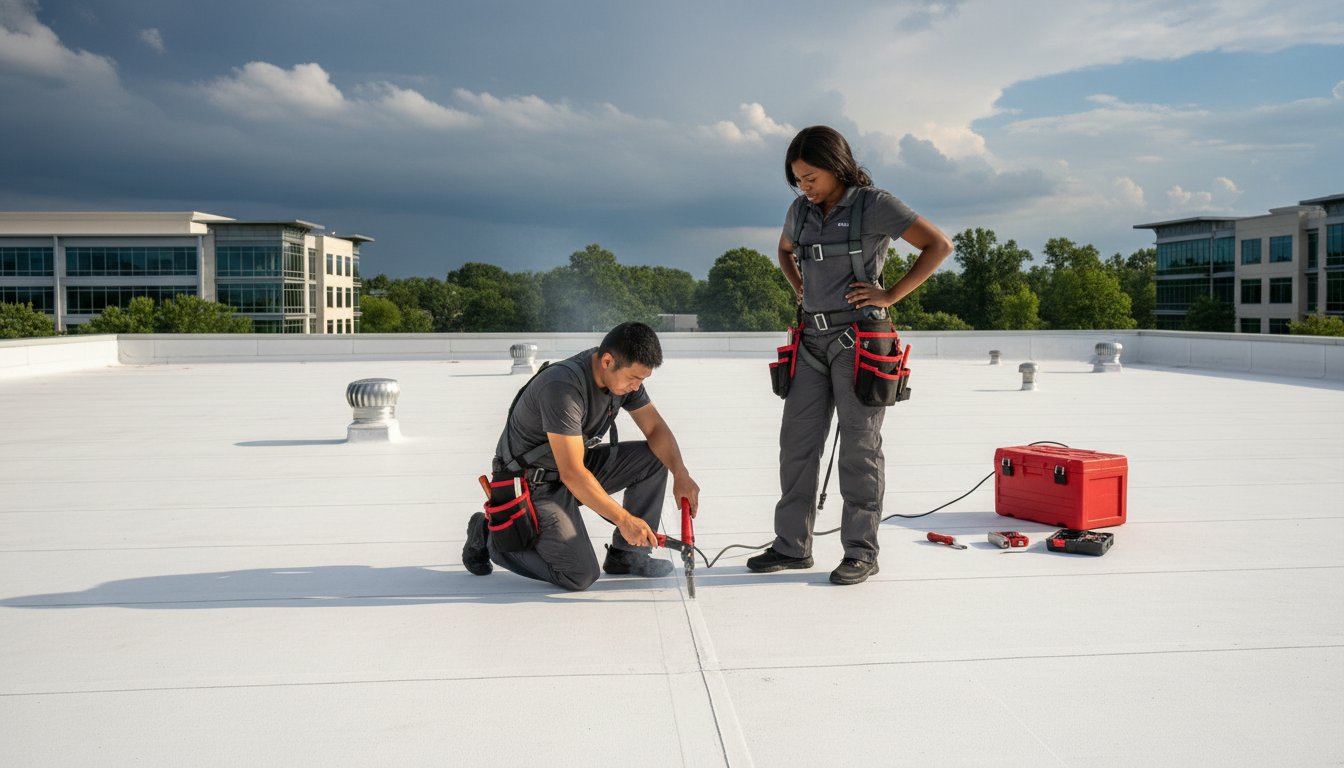
Is that recurring damp spot on your ceiling a simple $350 patch or the first sign that you need a $14,800 replacement? For property owners in Alpharetta, the line between a minor fix and a major investment often blurs during the intense 2026 storm season. If you're dealing with recurring leaks or rising energy bills, you aren't alone; many local building owners feel the same anxiety as Georgia's new building codes, effective January 1, 2026, tighten the standards for flat roof repair Alpharetta GA.
We understand the stress of watching a previous repair fail while material prices from manufacturers like GAF and CertainTeed rise by up to 8% effective April 15, 2026. You deserve a solution that stops the cycle of temporary fixes and protects your investment with meticulous craftsmanship. This guide provides expert clarity on identifying damage, executing "Supreme" standard repairs, and navigating the complex insurance claim process with expert guidance from Supreme Roofing and Reconstruction. We'll break down current 2026 repair costs, explain the new mandatory state minimum standard codes, and show you how to achieve a leak-free building without the typical construction headaches.
Key Takeaways
- Learn how Alpharetta’s unique humidity levels trigger membrane blistering and organic growth, and how to spot these signs before they cause structural damage.
- Understand the critical "25% Rule" to determine whether your low-slope system requires a targeted repair or a full commercial roof replacement.
- Discover the technical importance of material compatibility, such as why applying asphalt-based products to TPO membranes can lead to immediate system failure.
- Master the complexities of insurance claims for flat roof repair Alpharetta GA by learning how to document "sudden and accidental" damage versus standard wear and tear.
- Explore the Supreme Standard for meticulous inspections that go beyond surface-level leaks to ensure the long-term integrity of your TPO, EPDM, or Modified Bitumen system.
Common Flat Roof Issues in Alpharetta, GA
Professional flat roof repair involves much more than simply applying a patch to a visible leak. It's a technical process of restoring the structural integrity of low-slope membranes, including Thermoplastic Polyolefin (TPO), Ethylene Propylene Diene Terpolymer (EPDM), and Modified Bitumen systems. Flat roofs are common in both residential and commercial North Georgia architecture, but they require a specific maintenance approach to handle our unique climate. While these systems are designed for durability, the environmental stressors in Alpharetta demand meticulous attention to detail to prevent premature failure.
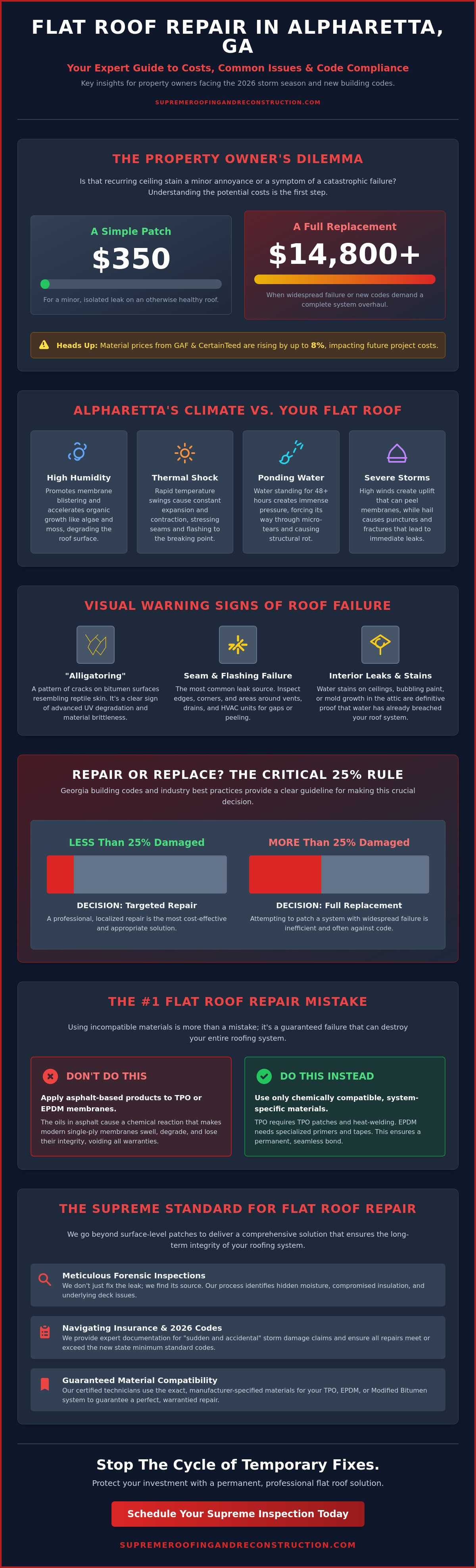
The high humidity levels in Alpharetta act as a catalyst for several common roofing problems. Excessive moisture in the air often leads to membrane blistering, where pockets of air or water vapor become trapped beneath the roofing layers. As the Georgia sun heats the roof, these pockets expand, stretching the material and eventually causing it to crack or puncture. This same moisture promotes rapid organic growth, such as algae and moss, which can trap debris and accelerate the degradation of your roof’s protective surface.
Thermal shock is another localized challenge that frequently necessitates flat roof repair Alpharetta GA. Our region often experiences rapid temperature shifts, sometimes swinging 30 to 40 degrees within a single day. These fluctuations cause constant expansion and contraction of the roofing membrane. Over time, this movement stresses the seams and flashing, leading to small separations that allow water to bypass the primary barrier. This is why we prioritize the use of high-grade, flexible materials that can withstand Georgia's intense thermal cycles without losing their seal.
Ponding water remains the primary enemy of flat roofing systems in North Georgia. When water sits on a roof for more than 48 hours after a rain event, it creates immense pressure on the membrane. This standing water can eventually seep through microscopic imperfections, causing significant structural damage to the decking below. Ensuring proper drainage is a core component of our "Supreme" standard of repair.
Signs of Flat Roof Failure to Watch For
Building owners should stay alert for "alligatoring" on bitumen surfaces, which appears as a pattern of small cracks resembling reptile skin. This is a clear sign of advanced UV damage. You should also inspect the flashing around HVAC units and roof penetrations, as these are the most common points for seam separations. Inside the building, look for water stains on ceiling tiles or evidence of mold growth in attic spaces, which often indicate a slow, persistent leak that has bypassed the insulation.
The Impact of North Georgia Storms
Spring storms in Alpharetta bring high winds that can create significant uplift at the roof perimeters. If the edges aren't properly secured, the wind can peel back the membrane, exposing the building to immediate water intrusion. Hail also poses a threat, though the impact varies by material; TPO may show subtle fractures, while EPDM might suffer hidden punctures. If your property has recently endured a severe weather event, you can follow our guide for storm damage restoration to ensure your recovery process is seamless and fully documented for insurance purposes.
Flat Roofing Systems and Repair Techniques
Effective flat roof repair Alpharetta GA requires a deep understanding of the specific chemistry and installation methods of different membrane systems. In our local market, most commercial and residential low-slope structures utilize Thermoplastic Polyolefin (TPO), Ethylene Propylene Diene Terpolymer (EPDM), or Modified Bitumen. Each material reacts differently to environmental stressors, and applying the wrong repair technique can lead to catastrophic system failure. Understanding these Common Flat Roof Issues is the first step toward a permanent solution rather than a temporary patch.
Material compatibility is the most critical factor in a successful restoration. We frequently see DIY attempts or cut-rate repairs where asphalt-based sealants are applied to TPO membranes. This is a costly mistake. The oils in asphalt cause TPO to degrade and swell, effectively melting the membrane and voiding any existing warranties. Our "Supreme" standard ensures that every patch, sealant, and adhesive used is chemically compatible with your specific roof type. This meticulous attention to detail preserves the long-term value of your property. If you suspect your current roof was repaired with the wrong materials, you can schedule a professional inspection to assess the integrity of the seals.
We differentiate between emergency stop-gap measures and permanent structural restoration. During a heavy Georgia storm, a temporary sealant might prevent immediate interior damage. However, these are not long-term solutions. A permanent repair involves restoring the membrane's ability to shed water and withstand thermal expansion. This often requires removing saturated insulation and mechanical fasteners that have lost their grip due to moisture intrusion.
TPO and PVC Membrane Repair
For TPO and PVC systems, heat welding a new membrane patch is the only industry-accepted permanent fix. We use specialized robotic or hand-held welders to fuse the new material to the old at temperatures exceeding 800 degrees. This creates a monolithic bond that's stronger than the surrounding material. Before welding, we meticulously clean the aged membrane with weathered membrane cleaner to ensure a perfect chemical bond. We never seal a patch until we've verified the insulation beneath is 100% dry, preventing trapped moisture from rotting your roof deck.
EPDM and Modified Bitumen Solutions
EPDM, or "rubber roofing," cannot be heat-welded. Instead, we repair these systems using specialized primers and heavy-duty EPDM cover tape. We focus heavily on the seams, as these are the most common failure points. For Modified Bitumen, we choose between cold-process adhesives or traditional torch-down methods based on the building's insurance requirements and safety protocols. You can find more detailed information on these specific materials in our guide to commercial roofing, which breaks down the lifespan and performance of every major system used in Georgia.
Flat Roof Repair vs. Replacement: Making the Decision
Deciding between a localized fix and a total overhaul is the most critical choice a property owner faces. We use the "25% Rule" as a transparent benchmark for our clients. If the quoted cost of a flat roof repair Alpharetta GA exceeds 25% of the system's total replacement value, the investment shift toward a new system usually makes more financial sense. This is especially relevant in 2026, as material price increases of 5% to 8% from manufacturers like GAF and CertainTeed mean that delaying a necessary replacement often results in significantly higher future costs.
System age is your second metric. While a well-maintained TPO or EPDM system typically lasts 20 to 30 years, a roof approaching its second decade often suffers from widespread seam fatigue. At this stage, patches become a game of "whack-a-mole" where solving one leak simply shifts the hydrostatic pressure to the next weakest point. While an initial repair is always cheaper upfront, frequent patches are a clear indicator of systemic failure rather than isolated damage.
The "Wet Insulation" factor is the ultimate dealbreaker in the repair versus replacement debate. If moisture has bypassed the membrane and saturated the insulation boards, a surface patch won't stop the underlying rot. Trapped moisture degrades the roof deck and can lead to structural instability or mold growth. In these cases, our "Supreme" standard dictates a full replacement to ensure the safety of the building's occupants and the long-term integrity of the structure.
Energy efficiency gains also play a major role in your decision. A new white TPO "cool roof" can pay for itself through reduced utility bills during intense Georgia summers. These highly reflective surfaces can lower roof surface temperatures by up to 50 degrees compared to traditional dark materials. This isn't just about comfort; it's about reducing the mechanical strain on your HVAC systems and extending their lifespan.
Cost Factors for Alpharetta Property Owners
Several variables influence your final quote. Building height and roof access in dense areas like downtown Alpharetta or near the Avalon development can increase labor costs due to specialized safety equipment needs. Additionally, the new Georgia Building Codes effective January 1, 2026, require all permit applications to comply with updated standards. If your current roof already has two or more existing layers, local regulations often mandate a complete tear-off rather than a simple recovery, which impacts the total project scope and labor requirements.
Long-Term ROI of a Full Overhaul
A new roof is a strategic asset that protects your property's value. Modern membranes qualify as "cool roofs" under recent energy ordinances, which may make you eligible for federal tax incentives or local energy credits. When you partner with experienced roof repair contractors, you gain the peace of mind that comes with a multi-decade manufacturer warranty and a meticulous installation process. This long-term protection far outweighs the stress and recurring costs of maintaining a failing system.
Navigating Insurance Claims for Flat Roof Damage
Filing an insurance claim for a flat roofing system is significantly more complex than a standard shingle claim. While hail impact on an asphalt shingle is often visible to the naked eye, damage to TPO or EPDM membranes is frequently subtle and requires technical proof to secure coverage. Many insurance adjusters’ initial reaction is to categorize leaks as "wear and tear" or "lack of maintenance." To successfully secure a flat roof repair Alpharetta GA through your policy, you must provide clear evidence of "sudden and accidental" damage, such as wind uplift from a specific 2026 storm event or a documented hail strike.
Understanding the difference between Actual Cash Value (ACV) and Replacement Cost Value (RCV) is vital for your financial planning. An ACV policy only pays out the depreciated value of your roof based on its age, which can leave you with a significant out-of-pocket expense if your membrane is 15 years old. Conversely, an RCV policy covers the full cost of restoring your roof to its original condition. We meticulously review your policy details with you to ensure you understand exactly what your carrier owes for your specific restoration. If you're facing a complex claim, contact our insurance restoration team for a professional consultation.
Supreme Roofing and Reconstruction acts as your dedicated advocate during the entire process. We don't just find the damage; we document it with high-resolution photos and moisture mapping to present a factual, undeniable case to your carrier. Our presence during the adjuster walkthrough ensures that critical issues, such as compromised flashing or wind-scoured perimeters, aren't overlooked. This "Expert Protector" approach minimizes the risk of claim denials and ensures your property is restored to our "Supreme" standards of safety and quality.
Steps to Take After a Storm
- Step 1: Conduct a safe visual inspection from the ground or a secure ladder. Look for displaced ballast, ponding water that wasn't there before, or loose perimeter metal. If you find active leaks, we provide emergency tarping to prevent interior damage.
- Step 2: Contact a local expert for a professional assessment. We provide a detailed report that links the physical damage to the specific weather date, which is essential for a successful filing.
- Step 3: Review your policy for flat roof exclusions. Some 2026 policies have added specific clauses regarding "cosmetic" hail damage that doesn't cause a leak, and you need to know these details before the adjuster arrives.
Working with Adjusters in Alpharetta
Adjusters often overlook wind uplift on fully adhered or ballasted systems because the membrane may lay back down after the wind subsides. However, the seal is often broken, leaving the roof vulnerable to the next storm. We use physical uplift tests and seam inspections to prove the loss of structural integrity. If you receive a claim denial or a partial approval that doesn't cover the full scope of work, we provide the necessary technical documentation and building code references to request a re-inspection or file a supplement. We ensure your carrier accounts for the new Georgia Building Codes effective January 1, 2026, which often mandate full system upgrades rather than simple patches.
The Supreme Standard for Flat Roof Repair
We believe that a roof is only as strong as the standard behind its installation. At Supreme Roofing and Reconstruction, our "Supreme" standard means we refuse to settle for industry minimums. When you hire us for flat roof repair Alpharetta GA, you're partnering with an Expert Protector who views your property as a long term investment. Our meticulous inspection process doesn't just stop at the visible leak. We utilize advanced moisture detection tools to scan your entire membrane, ensuring we identify hidden saturation before it compromises your structural decking. This proactive approach prevents the cycle of recurring leaks that many property owners face after cut-rate repairs.
We prioritize materials specifically engineered for the intense Georgia climate. While some contractors use standard grade membranes to cut costs, we favor high performance options like 80-mil thick TPO for superior hail resistance and White EPDM for unmatched energy efficiency. These materials reflect up to 85% of solar radiation, directly addressing the high energy bills caused by Alpharetta's summer heat. Our local roots mean we're your neighbors, and our community-focused accountability ensures we stand by every seam we weld and every flashing we install. We manage every project with a stress-free philosophy, providing transparent pricing and a clear timeline from the initial quote to the final walkthrough.
Our Comprehensive Maintenance Plans
Preventative care is the single most effective way to protect your investment. Regular maintenance can often double the lifespan of a flat roofing system, pushing a TPO or EPDM roof toward a 30-year life cycle. We recommend a professional assessment at least twice per year to clear debris from drains and test seam integrity. Our "Supreme" professional inspection includes a 25-point checklist covering perimeter metal, HVAC flashing, and drainage efficiency. You can explore our detailed roof maintenance plan for homeowners to see how we provide ongoing protection against the 2026 storm season.
Ready for a Supreme Solution?
You don't have to face the stress of property damage alone. Whether you're dealing with a complex insurance claim or a localized leak, we provide the steady hand and technical expertise you need for a permanent solution. We combine the confidence of seasoned craftsmen with a neighborly accessibility that makes the construction process simple and transparent. It's time to trade your roofing anxiety for the peace of mind that comes with a meticulously restored building. Schedule your free Alpharetta flat roof assessment today to secure your property's future.
Contact Supreme Roofing and Reconstruction for your expert flat roof repair today.
Secure Your Alpharetta Property with a Supreme Restoration
Your property's safety shouldn't be left to chance during the unpredictable 2026 storm season. We've explored how Georgia’s humidity and rapid temperature shifts demand more than a simple patch; they require a technical understanding of membrane chemistry and local building codes. Whether you’re deciding if a system has reached the 25% Rule for replacement or you're navigating a complex insurance claim for wind uplift, expert guidance is your best defense against recurring damage.
Supreme Roofing and Reconstruction brings over 10 years of Georgia roofing expertise to every project. We specialize in storm damage restoration and insurance navigation, acting as your local ally and skilled craftsman. Our A+ rated team ensures that your flat roof repair Alpharetta GA meets the "Supreme" standard for durability and energy efficiency. You don't have to face property stress alone when a permanent, professional solution is just a phone call away.
Get Your Free Flat Roof Inspection in Alpharetta Now. Let's build a safer, leak-free future for your building together.
Frequently Asked Questions
How long does a flat roof repair typically last in Alpharetta?
A professional flat roof repair Alpharetta GA typically lasts between 5 and 10 years when executed with compatible materials. The lifespan depends heavily on the underlying insulation’s dryness and the quality of the seam fusion. We prioritize permanent fixes over temporary patches to ensure your investment remains protected through multiple Georgia storm seasons. Regular maintenance visits can further extend the life of these repairs by identifying minor stressors early.
Does insurance cover flat roof leaks caused by rain?
Insurance typically covers leaks resulting from sudden and accidental events, such as a 2026 hail storm or wind uplift, rather than standard wear and tear. Most policies exclude damage caused by neglected maintenance or simple age. We assist you by providing the technical documentation adjusters require to differentiate between storm-related loss and gradual membrane degradation. Documenting the specific weather event is the key to a successful claim.
Can I walk on my flat roof to inspect for damage myself?
We strongly advise against walking on your flat roof because foot traffic can easily puncture aged membranes or compress insulation. Sharp debris trapped under a shoe can create microscopic tears that lead to significant water intrusion. A professional inspection utilizes specialized equipment and safety protocols to identify issues without compromising the roof’s integrity. Our team identifies subtle damage that is often invisible to an untrained eye.
What is the best flat roofing material for Georgia heat?
White TPO (Thermoplastic Polyolefin) is widely considered the best material for the intense Georgia heat due to its high solar reflectance. These cool roof systems reflect up to 85% of UV rays, which significantly reduces the thermal load on your building. This choice helps lower cooling costs and prevents the thermal shock that often leads to seam failure. It's a durable solution that handles Alpharetta's 90-degree summer days with ease.
Why is water ponding on my flat roof after an Alpharetta storm?
Ponding water occurs when your drainage system is blocked or the roof deck has developed structural depressions. If water remains on the surface for more than 48 hours after a North Georgia rain event, it creates hydrostatic pressure that forces moisture through small imperfections. We resolve this by clearing internal drains or installing tapered insulation to restore a proper slope. Addressing ponding quickly is essential to prevent structural rot.
How much does flat roof repair cost in the Alpharetta area?
The typical cost for flat roof repair Alpharetta GA in 2026 ranges from $350 to $1,500 for most standard projects. Minor sealant work may cost as little as $150, while complex structural repairs can exceed $4,000. These figures reflect current market rates documented in March 2026 industry reports for the North Georgia region. Every project receives a transparent quote based on the specific material needs and labor required.
Can a flat roof be repaired during the winter months in Georgia?
Yes, flat roofs can be repaired during Georgia's winter months, provided the contractor uses temperature-appropriate installation methods. While some adhesives require warmer weather, heat-welding TPO membranes remains effective in colder temperatures. We adjust our techniques to ensure every seal achieves a Supreme level of integrity regardless of the season. Emergency repairs are always possible to prevent interior damage during winter rain cycles.
What is the difference between a roof coating and a roof repair?
A roof repair addresses specific points of failure like punctures or separated seams, while a coating is a monolithic liquid layer applied across the entire surface. Coatings act as a preventative measure to extend the life of a structurally sound roof by adding UV protection. We only recommend coatings after all active leaks and wet insulation have been professionally repaired. A coating is a restoration tool, not a fix for active structural leaks.