Imagine waking up on a humid Tuesday morning in Cumming to a faint, tea-colored stain on your guest room ceiling. It is barely the size of a nickel, but in North Georgia’s 70 percent average morning humidity, that tiny spot can quickly evolve into a costly mold issue. You know that ignoring a minor drip today leads to a major structural headache tomorrow. It is stressful to wonder if you should climb a 20 foot ladder or if you are even looking at the right shingle. This 2026 guide shows you exactly how to fix a small roof leak in cumming ga with professional precision and safety.
We agree that your home is your most significant investment, and protecting it shouldn't feel like a guessing game. You will learn how to pinpoint the source of water intrusion, evaluate shingle integrity, and apply a meticulous, weather-tight patch. We also provide clear markers for when a repair requires the unmatched expertise of a seasoned professional. By the end of this article, you will have a dry ceiling and the confidence to maintain your home’s value against Georgia's 50 inches of annual rainfall. Our goal is to make your maintenance process stress-free while ensuring your roof remains a sturdy shield for your family.
Key Takeaways
- Learn how to pinpoint elusive water entry points using the "Garden Hose Test" to simulate the impact of intense North Georgia thunderstorms.
- Master essential safety protocols for navigating uneven Georgia red clay and steep roof pitches to ensure your repair process remains secure and stress-free.
- Discover professional techniques for how to fix a small roof leak in cumming ga, including the precise way to replace shingles and apply roofing cement.
- Apply the "Rule of Three" to determine if a simple patch is enough or if structural red flags indicate your roofing system is nearing failure.
- Protect your home’s long-term value by implementing maintenance strategies specifically designed to combat Cumming’s heavy pollen and pine needle seasons.
Finding the Source of a Small Leak in Cumming, GA
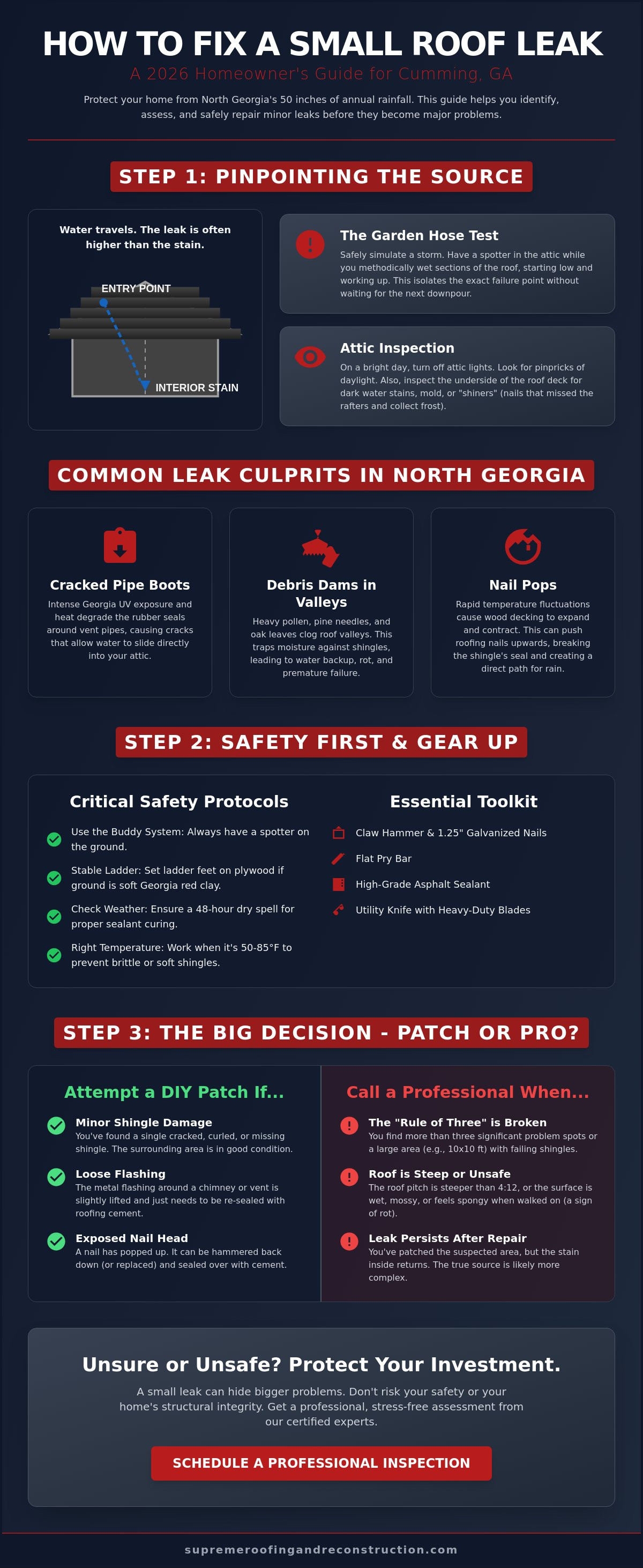
Identifying the entry point of water in your Forsyth County home requires more than just looking at a ceiling stain. Gravity pulls water down the roof pitch, meaning the actual leak often starts several feet higher than where you see the damage inside. You're searching for a needle in a haystack, but a systematic approach makes the process manageable. Understanding how to fix a small roof leak in cumming ga begins with a meticulous inspection of your home's exterior and attic space.
If the weather is dry, use the Garden Hose Test to simulate a Cumming thunderstorm. Have a family member stay in the attic with a flashlight while you run water over specific sections of the roof. Start at the bottom near the gutters and work your way up slowly. This method isolates the failure point without waiting for the next 2026 spring storm to cause more damage. It's a proactive way to maintain the integrity of your shelter.
Perform your attic inspection during daylight hours. Turn off all lights and look for pinpricks of sun coming through the roof deck. Daylight shining through is a guaranteed sign of a compromised roof. If you can't find light, look for dark stains or mold growth on the underside of the plywood. These signs indicate a long-term moisture problem that needs immediate attention.
Common Leak Culprits in North Georgia
Cumming's high UV exposure and intense Georgia heat degrade pipe boots quickly. These rubber seals crack over time, allowing water to slide down the vent pipe into your living space. Local pine needles and oak leaves also create debris dams in roof valleys. These dams trap moisture against shingles, leading to rot and premature failure. In 2026, we've seen rapid temperature fluctuations that cause nail pops. As the wood expands and contracts, nails push upward and break the shingle seal, creating a direct path for rain.
Tracing the Water Path
Inside the attic, look for shiners. These are nails that missed the rafter during installation. On cold mornings, they collect frost which then melts, creating a phantom leak. Follow water tracks along the rafters or look for matted, wet insulation. You should also check the roof vent leak repair in Cumming, GA for common failure points. If you can't find the source, hiring a professional roofer ensures a meticulous inspection of hail bruising, which often looks like small, dark soft spots on shingles. Knowing how to fix a small roof leak in cumming ga requires identifying these subtle signs before they turn into a major restoration project.
Essential Tools and Safety for DIY Roof Repair
Roofing is inherently dangerous; your safety remains the top priority throughout this process. You should never step onto a roof that is wet, mossy, or has a pitch steeper than 4:12 unless you have professional fall protection and experience. A damp shingle is a slipping hazard that can lead to catastrophic falls. Before you begin learning how to fix a small roof leak in cumming ga, secure a reliable partner to utilize the buddy system. This person serves as your ground spotter and ensures your ladder remains stable.
Proper ladder placement is a specific challenge in North Georgia. Our local red clay becomes incredibly slick and unstable after a rainstorm. Ensure your ladder feet are set on a wide, solid piece of plywood if the ground is soft, or use a ladder stabilizer to prevent lateral movement against the gutters. Always maintain three points of contact while climbing.
Timing your repair is just as critical as your technique. Check the Cumming weather forecast for a clear 48-hour dry spell. Most asphalt sealants and "wet-patch" products require at least 24 hours of dry weather to cure properly. Furthermore, shingles are more flexible and less likely to crack when temperatures are between 50 and 85 degrees Fahrenheit. If the weather is too cold, the shingles become brittle; if it is too hot, the asphalt can become overly soft and susceptible to scuffing.
Your basic toolkit for a successful repair should include:
- A 16-ounce claw hammer for securing nails.
- A flat pry bar to carefully lift damaged shingles without tearing the surrounding material.
- 1.25-inch galvanized roofing nails to resist rust.
- A high-grade asphalt sealant or roofing cement.
- A utility knife with heavy-duty blades for trimming shingles.
Personal Protective Equipment (PPE)
Protecting yourself requires the right gear. Wear soft-soled shoes, such as basketball sneakers or specialized roofing boots, to maximize your grip on the asphalt granules. Heavy-duty work gloves are essential because shingle edges are sharp and can cause deep abrasions. Always wear eye protection when prying up old nails or applying sealants to prevent debris or chemicals from contacting your eyes.
Selecting the Right Materials
A seamless repair requires matching your existing materials. Determine if your home uses standard 3-tab shingles or the thicker, layered architectural shingles common in newer Cumming developments. Using the wrong type will create an uneven surface that invites future leaks. For emergency situations, "wet-patch" sealant is superior because it contains additives that allow it to bond even if a small amount of moisture is present. Before you invest in these supplies, consult the cost of minor roof repair in Cumming, GA to see if purchasing specialized tools is the most cost-effective path for your specific damage. If the scope of the work feels overwhelming, a professional inspection can provide the clarity you need to move forward with confidence.
Step-by-Step Fixes for Common Minor Roof Leaks
Taking immediate action when you spot a drip is the best way to maintain the integrity of your home. Understanding how to fix a small roof leak in cumming ga allows you to address minor vulnerabilities before they escalate into costly structural repairs. Our local weather, characterized by sudden Forsyth County summer storms and shifting temperatures, demands a proactive approach to maintenance. By following these professional steps, you can provide your home with the meticulous care it deserves.
Minor cracks in flashing or small holes from removed satellite dishes can often be resolved with high-grade roofing cement. Apply the cement using a small putty knife, ensuring you fill the entire void and smooth the edges to create a watertight bond. For nail pops, which occur when shingles expand and contract, you should drive the nail back into the solid wood or replace it with a slightly larger galvanized roofing nail. Always seal the nail head with a dab of sealant to prevent moisture from seeping through the puncture point.
Replacing a Damaged Shingle
If a single shingle is cracked or missing its granules, you can replace it without disturbing the rest of your roof's layout. Start by using a flat pry bar to carefully break the sealant bond on the shingle directly above the damaged one. This gives you clear access to the nails holding the compromised piece in place. Remove the old nails with the pry bar and slide the damaged shingle out of its slot. Slide your new, color-matched shingle into position, secure it with four new roofing nails, and apply a small amount of sealant to the tabs to ensure it stays put during the next windstorm.
Sealing a Leaky Pipe Boot
Plumbing vents are common culprits for mystery leaks in Georgia homes. To fix a failing seal, first remove any old, brittle caulking from the base of the vent with a putty knife. Clean the area thoroughly to ensure the new material adheres correctly. Apply a generous bead of high-grade silicone or specialized roofing sealant around the entire base where the pipe meets the rubber boot. This temporary seal buys you time to schedule a professional inspection, but a cracked or weathered boot requires eventual replacement to ensure long-term safety.
When you're dealing with an active leak during a heavy downpour, safety is the priority. Emergency tarping is a vital skill for any homeowner. Use a heavy-duty, 6-mil polyethylene tarp that covers the damaged area and extends at least 3 feet over the roof ridge. Secure the tarp using wooden 2x4 strips nailed into the shingles to prevent the wind from lifting the plastic. Learning how to fix a small roof leak in cumming ga through these temporary measures keeps your interior dry until a professional crew can provide a permanent, Supreme-quality solution.
When to Patch vs. When to Call a Pro
Deciding whether to handle a repair yourself or hire an expert depends on the scale of the damage and your personal safety. We use the "Rule of Three" as a standard benchmark for homeowners. If your roof has more than three active leak points, your roofing system is likely reaching the end of its functional lifespan. At this stage, patching individual spots is like plugging holes in a sinking ship. You need a comprehensive assessment to prevent total system failure.
Watch for structural red flags that demand immediate professional attention. A sagging roof deck or rotted fascia boards indicate that moisture has already compromised the integrity of your home's skeleton. These aren't just cosmetic issues; they represent a safety hazard. If your home is a two-story structure or has a steep pitch, the risk of a fall is too high for a DIY attempt. Professionals use specialized safety harnesses and high-reach equipment to navigate these areas securely. If you are researching how to fix a small roof leak in cumming ga, remember that safety and systemic health must come first.
You must also consider your long-term financial protection. An improper repair can void your manufacturer warranty or lead an insurance adjuster to deny a future claim. When you look into how to fix a small roof leak in cumming ga, the potential for a denied claim often outweighs the small savings of a DIY patch.
The Risks of DIY in Cumming
Before you climb a ladder, understand the specific DIY roof repair in Cumming, GA: Risks, Rewards, and When to Call a Pro. Georgia's humid climate is unforgiving. A patch that isn't perfectly sealed traps moisture, creating a breeding ground for hidden mold within 48 to 72 hours. Amateurs often cause "shingle scuffing" by walking on the roof during high temperatures. This knocks off protective granules and accelerates the aging of your shingles by several years.
Professional Diagnosis
Expert roof repair contractors bring tools that the average homeowner doesn't own. We use high-resolution thermal imaging cameras to detect moisture pockets trapped beneath the surface that the naked eye cannot see. In the competitive 2026 Forsyth County real estate market, having a certified repair record is essential. A professional fix ensures your home maintains its maximum resale value and passes any future home inspection with ease. Our meticulous approach guarantees that the repair is seamless and permanent.
Don't let a small leak turn into a major structural headache. Contact our expert team for a stress-free roof inspection today.
Long-Term Protection: Maintenance for North Georgia Homes
Cumming's environment presents unique challenges for local roofs. Heavy pollen in April and a constant rain of pine needles from North Georgia’s dense canopy create a layer of organic debris that acts like a sponge. This trapped moisture accelerates shingle decay and can cause premature granule loss. Cleaning your gutters twice a year prevents water from backing up under the roof's edge, which is a primary reason homeowners eventually search for how to fix a small roof leak in cumming ga. If you allow pine needles to accumulate in valleys, you're inviting rot that can penetrate the decking within a single season.
Trimming overhanging limbs at least 6 feet away from your roof line eliminates direct physical damage from wind-driven branches. It also increases sunlight exposure, which prevents moss and algae from taking hold in shaded areas. Scheduling a professional roof tune-up every 12 to 18 months allows experts to seal pipe boots and secure loose flashing before water finds its way inside. This proactive approach saves you thousands of dollars by extending the life of your current roofing system.
Seasonal Roof Checklist
Spring and Fall require different approaches to maintain your home’s integrity. Georgia weather is unpredictable, so staying ahead of the seasons is vital.
- Spring: Focus on March and April storm recovery. High winds and hail during these months often cause subtle shingle bruising that leads to leaks by mid-summer.
- Fall: Clear all debris to prevent ice damming. While Georgia freezes are rare, the 2026 winter forecasts suggest temperature swings that can trap ice in clogged gutters and force water under the shingles.
Homeowners should follow a roof maintenance plan for homeowners in Cumming, GA to stay ahead of these seasonal shifts and ensure their warranty remains valid.
The Supreme Quality Standard
Supreme Roofing and Reconstruction delivers a stress-free restoration process by focusing on the details others overlook. We don't believe in temporary patches. We use matching, high-quality materials for every repair, ensuring your fix is invisible and durable. Small leaks don't require guesswork; they require a meticulous eye and a commitment to shingle integrity. Our team acts as your local ally, providing the technical expertise needed to secure your property against the elements. If you've been wondering how to fix a small roof leak in cumming ga without the headache of a full replacement, we provide the permanent solution. Contact Supreme Roofing and Reconstruction today for a meticulous, professional inspection to protect your home for the long term.
Secure Your Home Against the Next North Georgia Storm
Maintaining your roof's integrity ensures your family stays dry during the unpredictable weather patterns we face in Forsyth County. You now have the roadmap to identify moisture intrusion, gather the right safety gear, and understand how to fix a small roof leak in cumming ga before it escalates into a major restoration project. Since 2016, Supreme Roofing and Reconstruction has served this community with meticulous craftsmanship and transparent communication. We treat every property like our own because your safety is our primary mission. Our team specializes in Georgia storm damage and navigating the complexities of insurance claims to keep your process stress-free. Whether you're inspecting shingles after a heavy downpour or need a professional to verify your DIY repairs, we provide the steady hand you need. Don't let a minor drip compromise your home's structural value. We bring 9 years of local expertise to every shingle and flashing detail, ensuring your roof meets our "Supreme" standards for long-term protection. Your home deserves an expert protector who values quality as much as you do.
Schedule your 'Supreme' roof inspection in Cumming today!
You've got the knowledge to keep your home safe; we're ready to provide the professional backup that gives you total peace of mind.
Frequently Asked Questions
Can I fix a roof leak from the inside of my attic?
You can't permanently fix a roof leak from inside your attic. While you might stop water from dripping onto your ceiling for a short time, moisture still penetrates the shingles and saturates your wooden decking. This trapped water leads to wood rot and mold growth within 48 hours. A professional repair requires sealing the entry point on the exterior to protect your home’s structural integrity and long-term value.
How much does it cost to have a pro fix a small leak in Cumming?
Minor roof repairs in Georgia typically range from $150 to $400 according to 2024 data from industry sources like Angi. This price varies based on the height of your roof and the specific materials needed for the fix. Investing in a professional repair now prevents the much higher $10,000 cost of a full replacement. Our team ensures every repair meets Supreme standards for durability and safety.
Will my homeowners insurance cover a small roof leak repair?
Your homeowners insurance covers a small roof leak if a covered peril like a 60 mph wind gust or a fallen limb caused the damage. Policies generally exclude repairs for leaks caused by age or lack of maintenance. We recommend reviewing your specific policy's deductible; many Cumming homeowners find that small repairs cost less than their $1,000 deductible. We act as your advocate during the claims process to ensure you receive fair treatment.
How long does a temporary roof patch last in Georgia weather?
A temporary roof patch generally lasts between 30 and 90 days in the intense Georgia sun. High humidity and summer temperatures exceeding 90 degrees cause temporary mastics to crack and lose their seal quickly. You should treat any patch as a short-term bridge until our experts can implement a permanent solution. This proactive approach prevents secondary water damage to your insulation and interior drywall during the next heavy downpour.
What is the best sealant to use for a minor roof leak?
Polyurethane-based sealants provide the best results for learning how to fix a small roof leak in cumming ga because they offer superior UV resistance. Products like NP1 or specialized roofing cements create a watertight bond that expands and contracts with Georgia's temperature swings. Avoid cheap clear silicone from big-box stores. Those products often peel away from asphalt shingles within 6 months, leaving your home vulnerable to the next major storm.
Is it safe to walk on my roof if I have a harness?
A harness significantly reduces your risk of a fatal fall, but it doesn't make roof work entirely safe for a homeowner. Professional roofers use OSHA-compliant anchor points and specialized boots to maintain traction on steep slopes. Even with a harness, you risk damaging your shingles by scuffing the protective granules. Most falls occur during the transition from the ladder to the roof surface, which requires expert precision and training.
How do I know if my small leak is actually storm damage?
You can identify storm damage by looking for circular bruises on shingles or wind-creased tabs that have lifted during a weather event. If you see a cluster of 3 or more damaged shingles, it's likely a result of recent storms rather than simple wear. We provide meticulous inspections to document these specific indicators. This detailed evidence helps you secure the coverage you deserve from your insurance provider while we restore your home's protection.