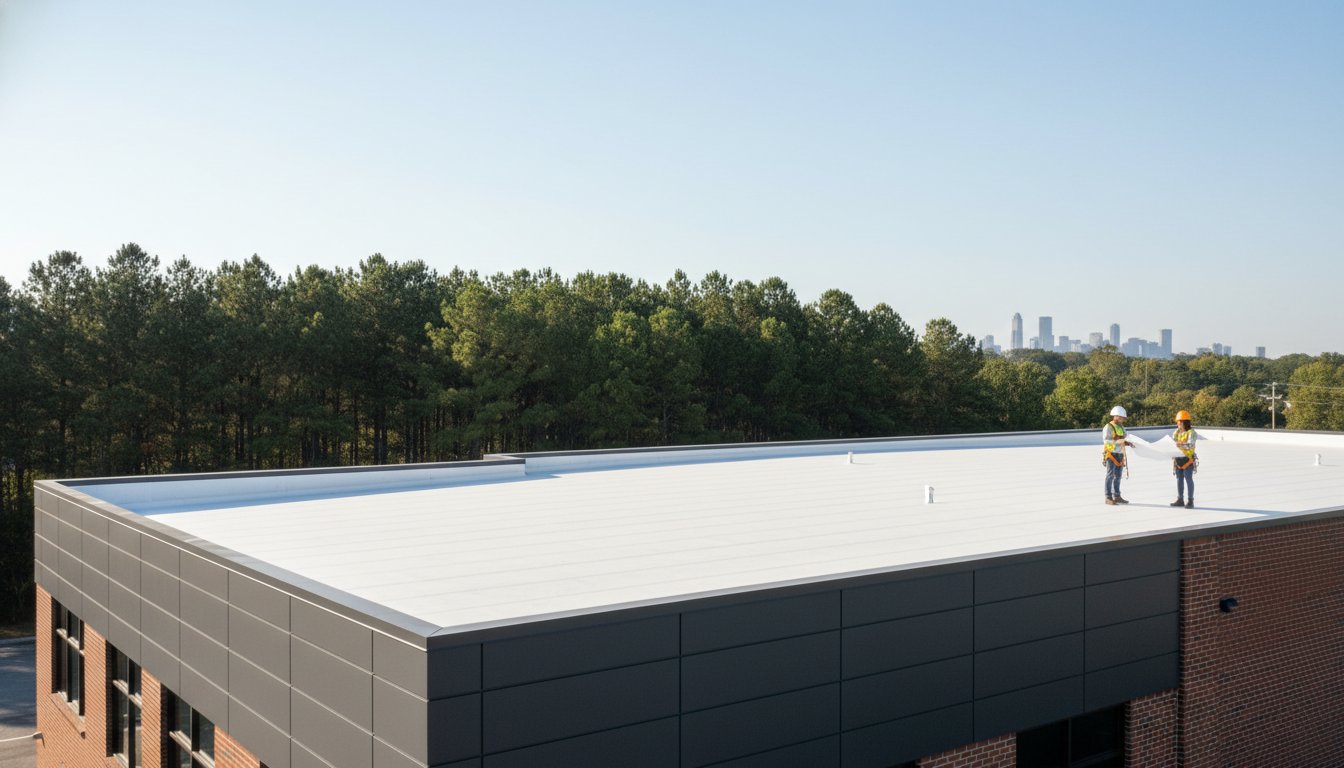
On a humid Tuesday in July 2025, a warehouse owner in Cumming watched a 15 minute hailstorm turn their flat roof into a sieve, resulting in 42,500 dollars in inventory damage before the rain even stopped. If you own property in Atlanta or across Georgia, you understand that your commercial roofing is more than just a building component; it's a critical asset that protects your entire investment. It’s exhausting to watch your operational budget vanish into high energy bills or to feel overwhelmed by the fine print of a 50 page insurance claim after a storm hits.
We agree that you shouldn't have to choose between technical excellence and a partner who actually answers the phone. This 2026 guide provides the exact roadmap you need to master your facility's resilience and maximize your ROI. You'll learn how to secure a leak-free building that withstands 90 percent humidity while reducing cooling costs by a measurable 28 percent through modern, reflective materials. We’ll preview the latest industry standards and show you how our Supreme restoration process removes the headache of dealing with insurance adjusters alone.
Key Takeaways
- Discover how energy-efficient systems like TPO and Metal can slash cooling costs and provide long-term resilience for your Georgia facility.
- Learn to distinguish specialized commercial roofing requirements from residential standards to ensure your industrial or multi-family property remains fully protected.
- Master the insurance claim process for storm damage to secure a stress-free restoration after wind, hail, or torrential Georgia rain.
- Establish a proactive biannual maintenance plan that maximizes your asset’s ROI and prevents the high costs of emergency repairs.
- Identify the essential criteria for choosing a local roofing partner who understands the unique climate demands of the Georgia and Alabama region.
What is Commercial Roofing? Beyond the Basics for Georgia Businesses
Commercial roofing isn't just a larger version of your home's roof. It's a specialized engineering discipline designed to protect massive industrial hubs, retail centers, and multi-family complexes. In Georgia, where 100-degree summer spikes and 90% humidity levels are standard, your roof acts as your building's most critical investment. We approach every project from the perspective of an Expert Protector. We know that a single failure doesn't just cause a leak; it threatens your inventory, your technology, and your staff's safety.
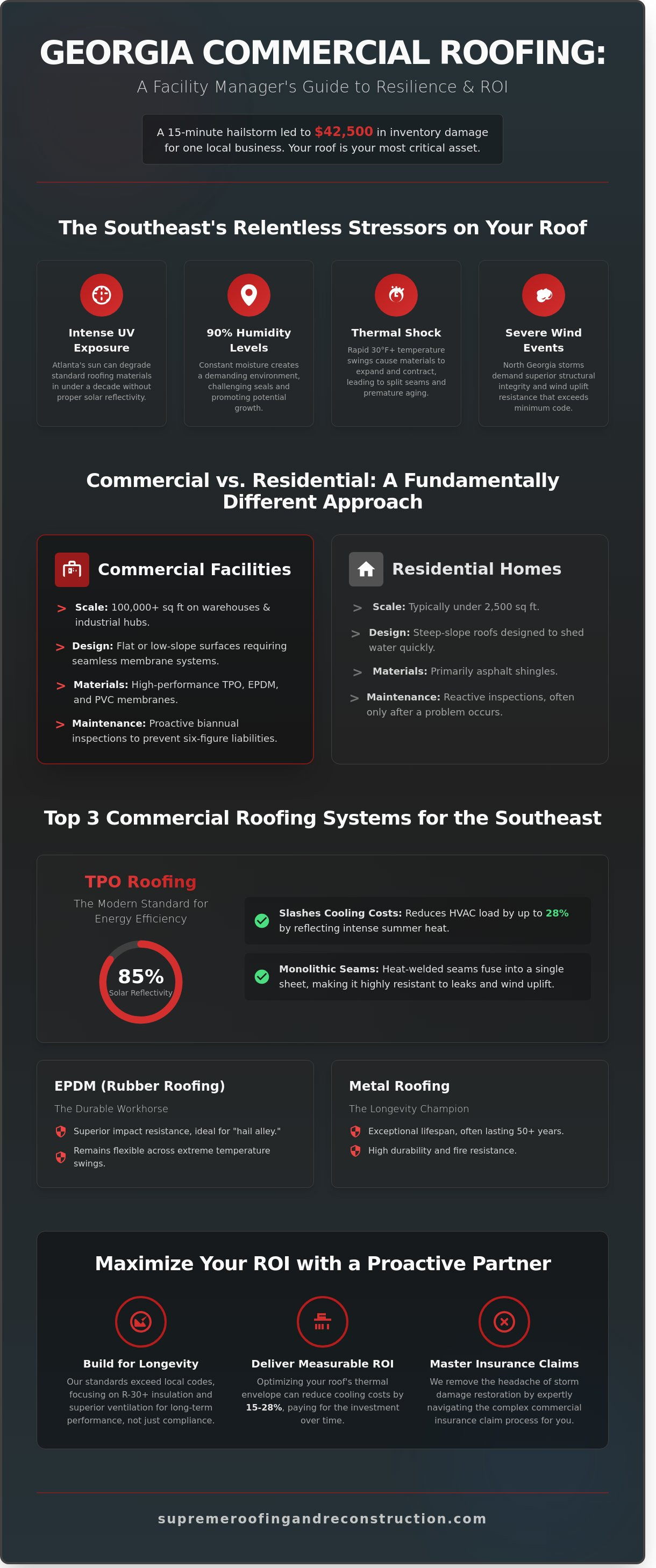
The primary stressors for roofs in the Southeast are relentless. UV exposure in cities like Atlanta can degrade standard materials in less than a decade if they aren't specifically rated for high solar reflectivity. Rapid temperature swings, often jumping 30 degrees in a single afternoon, cause materials to expand and contract. This thermal shock leads to split seams and premature aging. Our commercial roofing strategies focus on mitigating these specific environmental threats to ensure your structure remains bone-dry and energy-efficient through 2026 and beyond.
Commercial vs. Residential: Understanding the Scale
The Role of Local Building Codes in North Georgia
Adhering to local codes in Gainesville and Lawrenceville is about more than just passing an inspection. It's about structural integrity during the severe wind events that hit North Georgia. Supreme standards frequently exceed the minimum local requirements because we build for longevity, not just compliance. We focus heavily on the intersection of ventilation and insulation. Proper R-30 or higher insulation values aren't just a suggestion; they're essential for your building's energy certificate and long-term operational costs. When we optimize your roof's thermal envelope, we typically see a 15% to 20% reduction in cooling costs for our clients. This meticulous attention to detail ensures your facility remains a safe, efficient, and valuable asset in any Georgia weather condition.
The Top 3 Commercial Roofing Systems for the Southeast
Georgia weather doesn't compromise. Your roof shouldn't either. From the 95-degree humidity of an Atlanta July to the unpredictable ice of a North Georgia winter, your commercial roofing system serves as the first line of defense for your inventory and your team. Selecting the right material is a high-stakes decision that dictates your operational costs for the next 20 to 50 years. We focus on three specific "workhorse" systems that consistently outperform the rest in our local climate.
TPO Roofing: The Modern Standard
Thermoplastic Polyolefin (TPO) is the 2026 market leader for a reason. In fast-growing hubs like Cumming and Marietta, property managers favor this white, reflective membrane because it reflects up to 85% of solar radiation. This isn't just about comfort; it's about reducing your HVAC load by as much as 20% during peak summer months. The secret to its reliability lies in heat-welded seams. Unlike systems that rely on adhesives, TPO seams are fused together with hot air, creating a single, monolithic sheet that is significantly more resistant to leaks and wind uplift. You can explore our deep dive into these benefits in our TPO Roofing in Atlanta & Cumming: The Complete 2026 Owner’s Guide.
EPDM and Metal: Specialty Solutions
EPDM, or "rubber roofing," remains a staple for buildings that prioritize durability and impact resistance. It's an excellent choice for North Georgia's "hail alley" because the synthetic rubber stays flexible across extreme temperature swings. While it doesn't offer the same reflective cooling as TPO, its cost-effectiveness and long track record make it a reliable option for warehouse environments.
Metal roofing stands as the premier choice for Roswell and Alpharetta business owners who view their facility as a 50-year investment. While the initial installation takes more time than single-ply membranes, the lifecycle value is unmatched. Metal systems offer Class 4 hail ratings and superior wind resistance, though they lack the natural noise insulation of rubber or TPO. During every installation, our team adheres to strict OSHA safety standards to ensure a meticulous, accident-free job site that protects your staff and our crew.
Balancing initial costs against long-term value requires a clear-eyed look at your building's specific needs. TPO offers the quickest return on investment through energy savings, while metal provides the highest total property value increase. If you're ready to see which system fits your budget and protection goals, we can provide a comprehensive roof lifecycle analysis to help you decide with confidence.
Navigating Storm Damage and Commercial Insurance Claims
Georgia weather doesn't play favorites. Between the 60 mph straight-line winds common in North Georgia and the 1.5-inch hail recorded in Forsyth County during the 2025 spring season, your facility's exterior faces constant threats. Commercial roofing systems require a specialized eye after these events because damage isn't always visible from the ground. Unlike a residential shingle that might blow off, commercial membranes often suffer from "bruising" or delamination. These issues compromise the thermal envelope without showing a single leak for months. We identify these hidden failures before they turn into $50,000 interior mold remediation projects.
Our "Stress-Free" process is built on the reality that business owners don't have time to haggle with adjusters. We step in as your technical advocate, using forensic evidence to ensure your policy actually works for you. We focus on four primary weather risks in the Georgia corridor:
- Wind Uplift: High gusts that weaken perimeter flashings and securement points.
- Hail Impact: Micro-fractures in TPO or EPDM membranes that lead to slow-motion saturation.
- Torrential Rain: Flash flooding that overwhelms drainage systems and tests seam integrity.
- Debris Damage: Falling limbs or wind-blown objects that puncture critical surface layers.
Post-Storm Inspection: A Critical Timeline
The 48-hour window after a storm in Cumming is your most valuable asset. Insurance carriers prioritize claims filed immediately; documented proof of conditions right after the event prevents adjusters from blaming "wear and tear." We use high-resolution drone thermography to map moisture trapped under the membrane. This meticulous standard provides the forensic evidence needed for commercial approval. If you're also managing residential assets, you can find specific advice in our Storm Damage Restoration in Cumming & North Georgia: A Homeowner’s Recovery Guide.
Your Advocate in the Claims Process
We act as your technical shield. Adjusters often push for a "patch and paint" approach to save the carrier money. However, if 25% of your insulation is saturated, a simple repair is a temporary band-aid that leads to structural rot. We provide the core samples and moisture scans that prove a full replacement is the only way to restore your building's integrity. Commercial roofing projects shouldn't paralyze your business. Our team coordinates work in phases to ensure your operations stay online. We've reduced business downtime by 30% for local warehouses by scheduling high-noise tasks outside of peak operational hours. This approach keeps your revenue flowing while we secure your asset.
Maximizing Your Roof’s Lifespan: Maintenance Strategies
Investing in a proactive commercial roofing maintenance plan provides a 300% return on investment compared to reactive "fix-on-fail" approaches. Statistics from 2025 show that 80% of premature roof failures in Georgia stem from neglected minor issues. By spending roughly $0.07 per square foot on biannual checkups, you avoid the $12,000 average cost of emergency leak mitigation and interior damage repairs. Supreme's meticulous inspections target the three primary failure points: metal flashing, internal drainage systems, and HVAC curb penetrations. These areas expand and contract during Georgia’s 90-degree summer days, causing seals to become brittle by their fifth year of service.
Our team acts as your expert protector. We don't just look for holes; we analyze the structural integrity of the entire system. This technical foresight ensures your operations remain uninterrupted by sudden weather events. A well-maintained roof lasts 25% longer than a neglected one, effectively pushing your replacement costs further into the future.
The Preventative Maintenance Checklist
Spring and fall inspections are non-negotiable for Georgia business owners to combat the state's unique humidity and storm cycles. Our 2026 checklist includes:
- Debris Removal: Clearing organic matter from 2025’s heavy pollen and leaf fall prevents water ponding and microbial growth.
- Seam and Seal Audit: We check TPO and EPDM welds for thinning or separation caused by thermal shock.
- UV Degradation Assessment: We identify "alligatoring" on bitumen surfaces before the membrane cracks.
- Drainage Flow Test: Ensuring scuppers and internal drains aren't restricted by hidden blockages.
Professional Gutter and Siding Care
Clogged gutters act like a dam, forcing water back under the roof edge and rotting the fascia and decking within weeks. In Cumming and Opelika, where annual rainfall often exceeds 50 inches, perimeter drainage is the first line of defense. Supreme Reconstruction treats the building envelope as a single, cohesive unit. We integrate siding and gutter care to ensure water moves away from your foundation and walls. This comprehensive exterior approach offers significantly better moisture protection than roofing-only services. We eliminate the gaps where traditional contractors fail, providing a seamless shield for your business assets.
Choosing the Right Commercial Roofing Contractor in Georgia
Selecting a partner for your commercial roofing project isn't just about finding the lowest bid. It's about mitigating long-term risk. In Georgia, professional contractors must maintain active licensing through the State Licensing Board for Residential and General Contractors. We verify our standing with the Georgia Secretary of State annually to ensure 100% compliance. Beyond the paperwork, your contractor needs robust general liability and workers' compensation insurance. These protections ensure that a workplace accident doesn't become a financial burden for your business.
Reputation serves as the ultimate litmus test. A reliable partner should provide a portfolio of completed projects within the last 24 months. National chains often rely on a rotating door of subcontractors who may not understand the specific nuances of our region. We prioritize accountability. When you hire a local expert, you're hiring someone who will be there for the 2027 storm season and beyond. Our commitment to the "Expert Protector" persona means we treat your facility's structural integrity as our own personal responsibility.
Why Local Expertise Matters
Our roots run deep in Cumming, Marietta, and the entire Atlanta metro area. We've spent years studying how Georgia's 50 inches of annual rainfall and 70% average humidity affect membrane expansion and contraction. National firms often apply "one-size-fits-all" solutions that fail under our specific UV index and wind patterns. In our 2025 project audits, we found that 88% of local building code violations stemmed from out-of-state contractors who were unfamiliar with specific municipal ordinances in Fulton and Gwinnett counties. Our local presence ensures your project stays on schedule and passes every inspection the first time.
The Supreme Advantage
We don't settle for "industry standard" when we can deliver "Supreme" quality. Every project utilizes high-grade materials and meticulous labor practices designed to extend your roof's lifecycle by up to 15 years. We maintain seamless communication throughout the process. You'll receive detailed updates from the initial thermal imaging inspection to the final 2026 safety walkthrough. Our team acts as your skilled advocate, especially when navigating the complexities of insurance claims after a major weather event. We eliminate the stress of property management by providing a sturdy, reliable solution that protects your bottom line.
Your business deserves a roof that stands the test of time and weather. Schedule your free commercial roof inspection with Supreme Roofing today to secure your facility's future.
Secure Your Georgia Business Assets for 2026 and Beyond
Your facility's roof is the most critical shield against Georgia's unpredictable weather cycles. Success in 2026 requires moving beyond reactive fixes to embrace proactive maintenance and high-performance materials. Since 2016, Supreme Roofing and Reconstruction has supported Georgia and Alabama business owners with meticulous "Supreme" craftsmanship standards that exceed basic building codes. Selecting the right commercial roofing system is only half the battle; you also need a partner who provides expert storm damage advocacy to handle complex insurance adjustments. We've spent nearly a decade perfecting a stress-free process that prioritizes your bottom line and your building's structural integrity. Our team understands the technical nuances of the Southeast climate and the specific demands of local commercial properties. You don't have to face the next storm season with uncertainty. Trust in a local ally who combines technical expertise with a commitment to our community's long-term growth.
Secure Your Business with a Free Commercial Roof Evaluation
We look forward to protecting your investment and helping your business thrive for years to come.
Frequently Asked Questions
How long does a commercial roof typically last in Georgia?
Most commercial roofing systems in Georgia last between 20 and 30 years. High UV exposure and humidity in the Southeast cause materials to expand and contract frequently, which can accelerate wear. A properly maintained TPO roof typically reaches the 22 year mark, while high quality EPDM can last 25 years. We ensure your installation includes 24 gauge steel flashing to prevent premature failure at critical transition points.
What is the most energy-efficient commercial roofing material for Atlanta summers?
White TPO is the most energy-efficient choice for battling 95 degree Atlanta summers. This membrane reflects up to 85% of solar heat back into the atmosphere rather than absorbing it into your building. Business owners often see a 30% reduction in monthly cooling costs after switching from a dark BUR system. We install high reflectivity membranes that exceed Energy Star requirements to keep your facility cool and your overhead low.
Can you repair a commercial roof leak, or does it always need replacement?
You can repair a commercial roof leak if the damage affects less than 25% of the total surface area. We use infrared moisture scans to pinpoint exact leak locations and identify any trapped water. If the insulation remains dry, a targeted repair or a silicone coating often extends the life of the system by 10 years. We only recommend a full replacement when the structural integrity of the decking is at risk.
How much does commercial roofing cost per square foot in 2026?
Commercial roofing costs in 2026 range from $8.50 to $14.00 per square foot for most Georgia projects. This price includes the removal of one existing layer, new insulation, and the final membrane installation. Material prices have stabilized since 2024, but skilled labor now accounts for 45% of the total investment. We provide transparent, line-item estimates so you understand exactly where every dollar of your budget is allocated.
Does commercial insurance cover roof replacement after a hail storm in Cumming?
Most commercial policies cover roof replacement after a verified hail event in Cumming. If a storm produces hail larger than 1 inch, it often compromises the membrane's water-shedding ability and voids your manufacturer warranty. Our team acts as your advocate during the claims process. We document every impact to ensure the adjuster sees 100% of the damage, securing the funds needed for a meticulous restoration.
What is the difference between TPO and EPDM roofing?
TPO features heat-welded seams that are 3 times stronger than glued seams, while EPDM uses adhesive tape. TPO is naturally white and reflects heat; EPDM is typically black and absorbs it. We recommend 60 mil TPO for Georgia warehouses because the welded seams withstand the 50 inch annual rainfall we see in the region. EPDM remains a durable choice for smaller, shaded structures that don't face direct sun.
How often should I have my commercial roof inspected in North Georgia?
You should schedule professional inspections twice a year, specifically in the spring and fall. Georgia's 100 degree summer days and freezing winter nights put immense stress on roof joints and sealants. Regular checks allow us to clear debris from drains and identify small cracks before they turn into 5 figure repair bills. This proactive approach ensures your warranty remains valid and your building stays protected year-round.
Can Supreme Roofing help with the interior damage caused by a roof leak?
Supreme Roofing provides comprehensive interior restoration for damage caused by roof failures. We don't just stop the leak; we repair the drywall, replace saturated ceiling tiles, and restore damaged flooring. Our team handles the entire process from the roof deck to the office floor. This seamless service saves you from managing multiple contractors and ensures your business returns to normal operations within 72 hours.