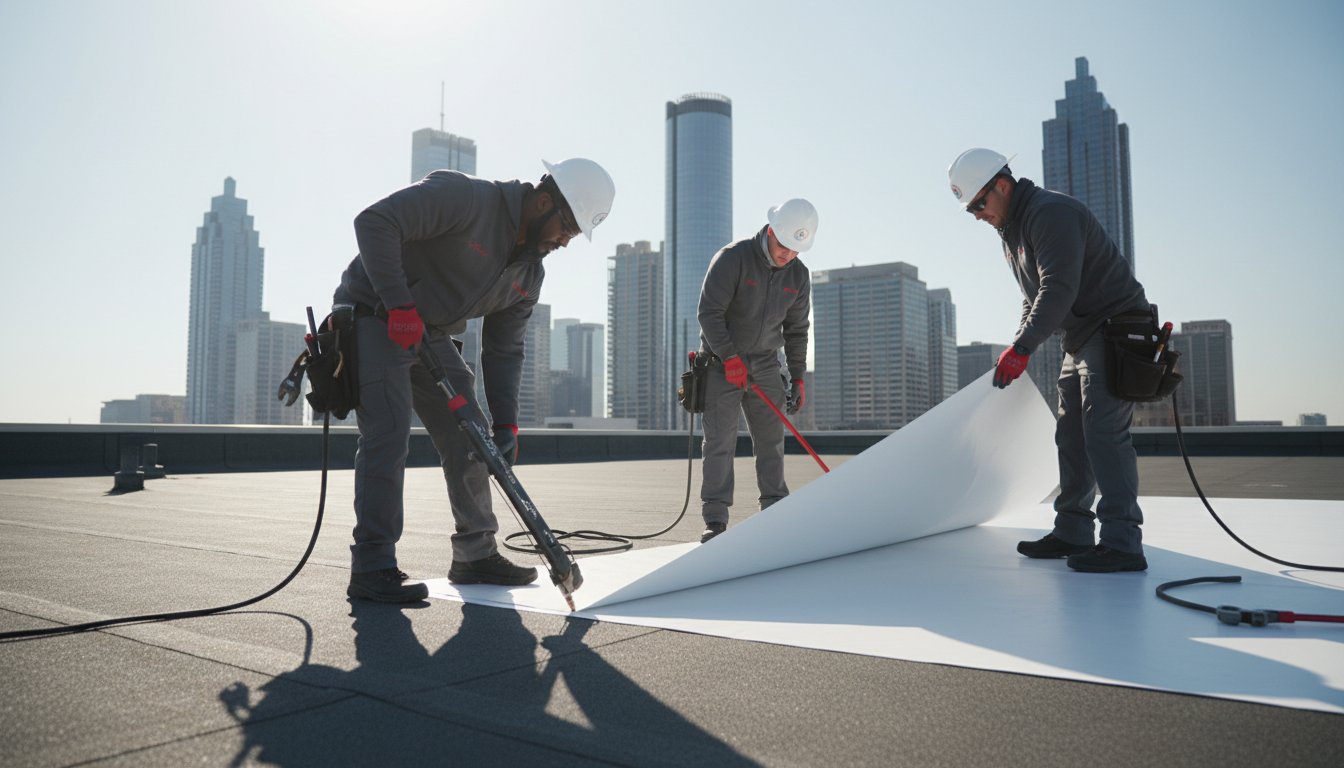
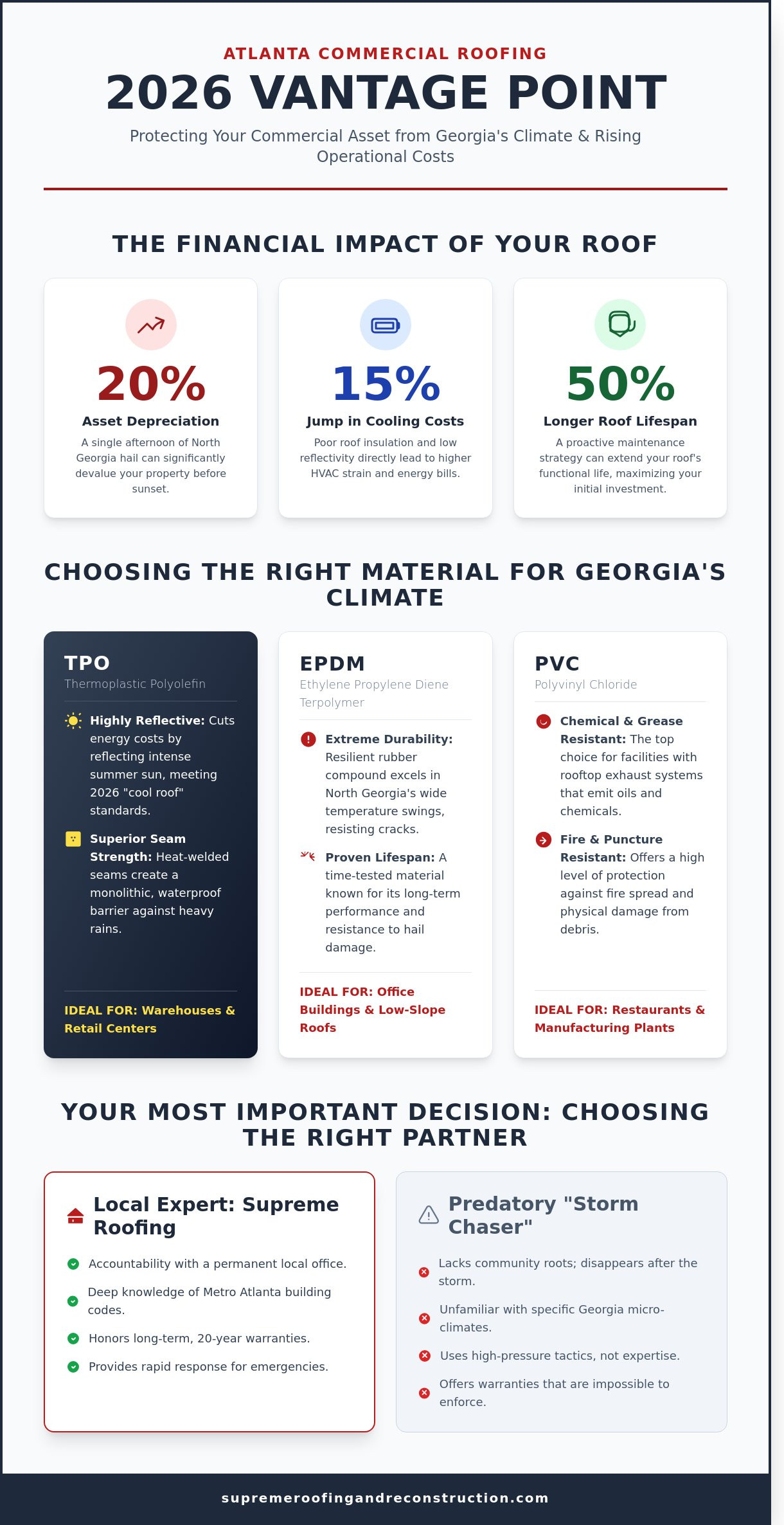
Did you know that a single afternoon of North Georgia hail can depreciate a commercial asset by 20% before the sun even sets? For property owners managing commercial roofing in Atlanta, the stakes have never been higher as we move into 2026. You already understand that a leaking roof is more than a maintenance headache; it is a direct threat to your daily operations and your bottom line. We agree that you shouldn't have to choose between a durable roof and an affordable energy bill, especially when cooling costs in the Southeast can jump by 15% due to poor insulation alone.
This expert-led guide promises to simplify the complexities of modern roofing systems and the specific Georgia regulations that govern them. We provide a meticulous breakdown of how to handle insurance claims after a storm without the usual stress or delays. You will learn how to select high-performance materials that offer unmatched protection while keeping your facility running smoothly. We preview the latest 2026 standards for reflectivity and the step by step process for a seamless restoration that meets Supreme standards and protects your investment for decades.
Key Takeaways
- Understand the critical engineering differences between residential and commercial projects to ensure your facility meets the latest 2026 Metro Atlanta building standards.
- Secure your property by identifying the essential licensing and local credentials that protect Georgia business owners from predatory "storm chaser" tactics.
- Evaluate the 20-year lifecycle costs of TPO, EPDM, and PVC systems to choose the most resilient solution for commercial roofing atlanta and the Southeast's humidity.
- Simplify the complex commercial insurance claim process with expert guidance on documenting damage from Georgia’s unique microburst and hail events.
- Learn how a proactive maintenance strategy can extend your roof's functional life by up to 50%, maximizing your investment through "Supreme" standards of care.
Navigating the Atlanta Commercial Roofing Landscape in 2026
In 2026, the Metro Atlanta commercial landscape demands more than just a leak-free building. Local building codes now prioritize structural resilience and extreme thermal efficiency. Commercial projects require a specialized engineering mindset because they manage massive surface areas and complex drainage systems. For a deeper look at the engineering principles used in industrial structural design, check out Romvolt. This differs significantly from residential work. Your roof acts as a silent partner in business continuity. It protects your inventory and your workforce. A high-quality installation can boost property valuation by 10% to 15% over a ten-year period. At Supreme Roofing and Reconstruction, we serve as your Expert Protector. We provide the technical mastery needed to secure your investment against the unpredictable Georgia climate.
The Impact of Georgia Weather on Commercial Roofs
Atlanta's weather is relentless on large-scale structures. Humidity levels often peak at 80% during July and August; this creates a breeding ground for biological growth on poorly maintained systems. The UV index frequently reaches 11 in the summer. This radiation breaks down chemical bonds in roofing materials. North Georgia businesses must also prepare for the spring storm season. High-velocity winds and hail are common. Large flat roofs face extreme thermal expansion. A 100,000-square-foot roof can shift significantly when temperatures drop 40 degrees in six hours. Our meticulous installation techniques account for this movement to prevent cracks and flashing failures.
Primary Roofing Systems for Atlanta Businesses
Choosing the right material is a critical financial decision. Most local warehouses and retail centers utilize membrane roofing systems like TPO, EPDM, or PVC. These options provide a seamless barrier against moisture. We've seen a 25% increase in metal roofing installations for industrial properties in Cumming and Marietta since 2024. Metal offers unmatched longevity for retail hubs. Modern Atlanta building codes also emphasize "cool roof" standards. These systems reflect sunlight to lower internal temperatures. This reduces HVAC strain and cuts energy costs by an average of 15% for local facilities. Investing in professional commercial roofing atlanta ensures your building meets these 2026 energy mandates while remaining structurally sound.
- TPO (Thermoplastic Polyolefin): Highly reflective and heat-weldable for superior seam strength.
- EPDM (Ethylene Propylene Diene Terpolymer): Durable rubber compound that excels in North Georgia's temperature swings.
- PVC (Polyvinyl Chloride): Resistant to chemicals and grease, making it ideal for Atlanta's restaurant and manufacturing sectors.
Our approach is grounded in transparency. We don't just install a product; we implement a long-term protection strategy. This ensures your operations remain stress-free regardless of the forecast. By focusing on the Supreme quality of materials and labor, we provide a steady hand for business owners navigating the complexities of property maintenance.
Choosing the Right Commercial Roofing Contractor in Atlanta
Selecting a partner for commercial roofing atlanta projects requires more than just looking at a price tag. You need a local ally who stays long after the final nail is driven. Storm chasers often swarm Georgia after a hail event, but these companies lack the community roots necessary to honor a 20-year warranty. They don't understand the specific micro-climates of North Georgia or the high humidity levels that impact adhesive curing during the summer months. Hiring a contractor with a permanent local office ensures accountability and a rapid response if an emergency arises.For those with holdings in other major Southeast markets, such as Florida, partnering with established firms like Rainier Roofing LLC ensures you receive the same commitment to local expertise and high-quality commercial roofing standards.
Local Expertise vs. National Chains
Local expertise creates a seamless path through local bureaucracy. A contractor rooted in the region understands that Lawrenceville building codes differ from Roswell's specific zoning requirements. Our teams have managed over 150 projects across these municipalities, ensuring every permit is filed correctly to avoid work stoppages. Local knowledge also helps you maximize your investment. We often recommend energy-efficient cool roofs to combat the urban heat island effect common in downtown Atlanta. These systems can reduce peak cooling demand by up to 15%, providing a direct benefit to your operating budget.Evaluating Credentials and Safety Standards
Credentials protect your bottom line and your peace of mind. Every contractor must provide proof of Georgia licensing, bonding, and a minimum of $2 million in general liability insurance to shield you from risk. As we prepare for 2026 projects, OSHA compliance is more rigorous than ever. A top-tier contractor uses specialized equipment like the Equipter RB4000 to manage debris and prevent landscape damage. You should always verify a contractor's manufacturer-certified status. This certification allows them to offer "no-dollar-limit" warranties that national chains often skip. A detailed, professional proposal is another sign of integrity. It should include:- Specific material specifications (e.g., 60-mil TPO thickness).
- Clear timelines for staging and completion.
- Meticulous cleanup protocols.
- Safety plans for high-traffic commercial zones.
Comparing Flat Roof Systems: TPO, EPDM, and PVC for Georgia’s Climate
Georgia's humidity and solar intensity demand a roof that does more than shed water. For commercial roofing atlanta facility managers, the choice usually comes down to three primary membranes: TPO, EPDM, and PVC. Each material offers distinct advantages for the 2,800 average annual sunshine hours North Georgia receives. Choosing the right system requires balancing the initial installation cost against a 20-year lifecycle performance. While a cheaper membrane might save capital upfront, the wrong choice can lead to skyrocketing utility bills or premature failure under the intense Southern sun.
Most Atlanta businesses prioritize energy savings. White membranes like TPO and PVC reflect up to 80% of solar radiation, keeping the building's core temperature stable. This reflectivity is a cornerstone of energy-efficient cool roof systems, which can reduce peak cooling demand by 10% to 15% according to the U.S. Department of Energy. In a climate where summer temperatures regularly exceed 90 degrees, these savings often pay for the roof's cost difference within the first seven years of operation.
TPO Roofing: The Energy-Efficient Favorite
Thermoplastic Polyolefin (TPO) currently dominates the market, accounting for more than 50% of new single-ply installations in the Southeast. It's the top choice for Atlanta warehouses and retail spaces due to its exceptional UV resistance and cost-effectiveness. We install TPO using heat-welded seams, creating a physical bond that's stronger than the membrane itself. This eliminates the need for adhesives that often fail in high-humidity environments.
To keep TPO roofing performing at its peak, maintenance is straightforward but essential. Dirt and microbial growth can dull the surface over time, reducing its reflective properties. A professional bi-annual cleaning ensures the membrane stays bright and continues to deflect heat, protecting your interior assets and your bottom line.
EPDM and PVC: Durability and Chemical Resistance
While TPO is a versatile powerhouse, specific industries require specialized protection. We recommend PVC roofing for Atlanta restaurants and manufacturing facilities. PVC's unique chemical composition makes it impervious to animal fats, oils, and harsh exhaust chemicals that would dissolve other materials. It provides a level of integrity that general-purpose membranes simply can't match in a kitchen or factory setting.
EPDM, often called "rubber roofing," offers a different set of benefits. It's renowned for its puncture resistance and ability to handle the thermal expansion of North Georgia’s fluctuating temperatures without cracking. While EPDM can last up to 30 years, it's typically black and absorbs heat. For Atlanta businesses, we often apply a reflective coating to EPDM to bridge the gap between its legendary durability and modern energy requirements.
- TPO: Best for retail and warehouses; highest reflectivity; moderate cost.
- PVC: Essential for food service and chemicals; highest resistance; higher initial investment.
- EPDM: Superior longevity; best for high-traffic roofs; requires coatings for energy efficiency.
Commercial Storm Damage and the Insurance Claim Process
Georgia weather presents a constant threat to industrial properties. In 2023 alone, the National Weather Service recorded over 40 significant hail events across North Georgia, ranging from localized microbursts to large-scale storms. While a homeowner might worry about a few missing shingles, a business owner faces much higher stakes. Commercial insurance claims are often three times more complex than residential ones because they involve massive square footage, specialized roofing assemblies, and potential business interruption costs. If you wait for a visible ceiling leak to appear, you've likely waited too long. Trapped moisture under a TPO or EPDM membrane can rot a structural roof deck in less than six months. Supreme acts as your expert protector, ensuring your commercial roofing atlanta assets are fully restored without the typical stress of the claims process.
Identifying Industrial Storm Damage in Atlanta
- Membrane Bruising: Hail creates microscopic fractures in flat roof membranes that allow water to seep into the insulation layers.
- Wind Uplift: High-velocity winds in areas like Alpharetta create suction that pulls flashing away from the roof edge, breaking the watertight seal.
- HVAC Impact: Large hail dents cooling fins on rooftop units, which restricts airflow and can increase your monthly energy bills by 15% or more.
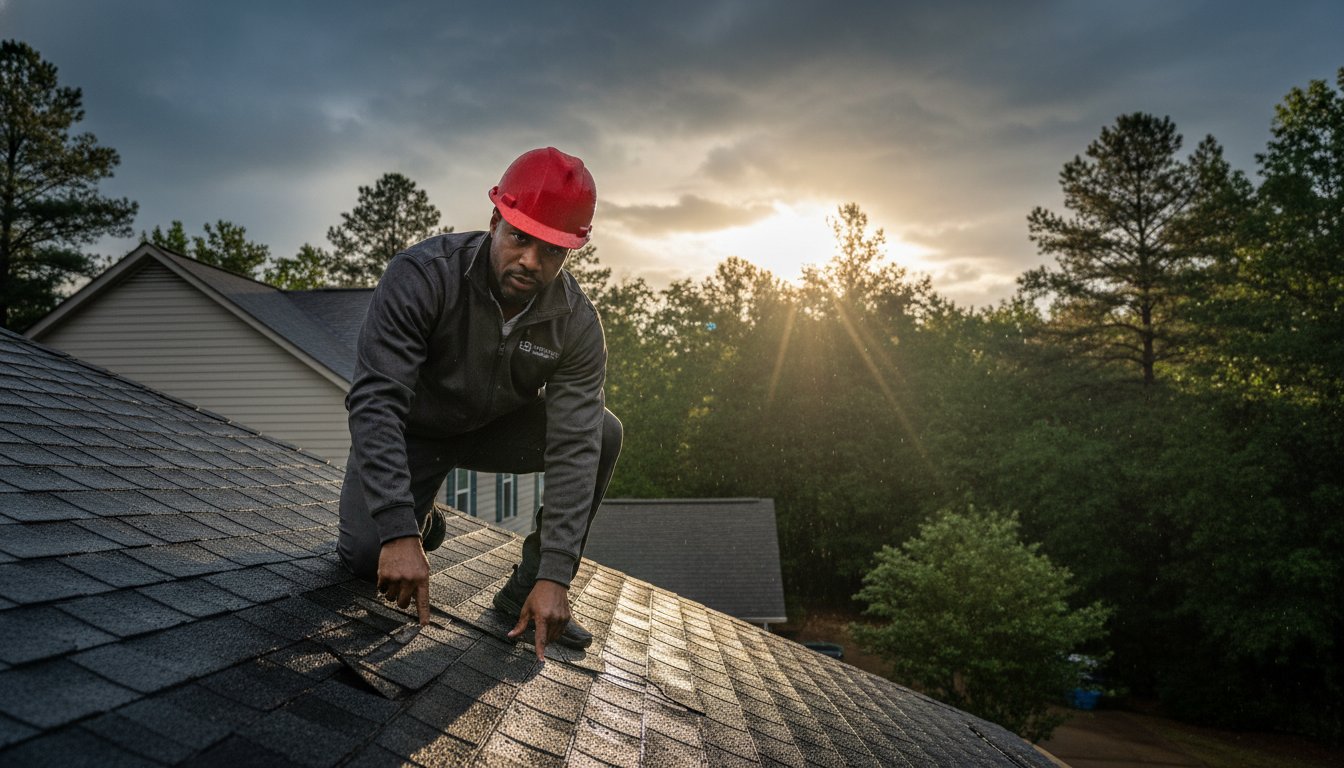
A professional storm damage restoration assessment is the only way to catch these silent killers. Our team uses thermal imaging and moisture probes to find damage that isn't visible to the naked eye, providing a clear roadmap for recovery. We don't just look for holes; we look for compromised integrity that could lead to catastrophic failure during the next Georgia thunderstorm.
Navigating Commercial Insurance with an Expert Advocate
The insurance restoration process requires a technical, evidence-based approach. We don't just guess at the damage; we document it with meticulous detail. Our process moves through three distinct phases to ensure a seamless settlement:
- Documentation: We create a comprehensive evidence package including high-resolution photos, thermal scans, and core samples to prove the extent of the loss.
- Adjuster Collaboration: We meet your insurance adjuster on-site to walk the roof together. This ensures every technical detail is acknowledged and included in their initial report.
- Final Settlement: We provide detailed, line-item estimates that align with industry standards, leaving no room for ambiguity or underpayment.
We take pride in our role as your local ally. By handling the complex paperwork and technical justifications, we allow you to focus on your operations while we restore your facility's integrity. We've seen how delayed claims lead to denied coverage, so we move quickly to secure your property. Our goal is a stress-free experience that yields a better, stronger roof than you had before the storm.
Protect your investment and schedule a professional commercial roof inspection with our expert team today.
Maximizing Your Investment with Supreme Maintenance and Restoration
A commercial roof is a major capital investment. It's a critical asset that requires strategic management to maintain its long-term value. Implementing a consistent commercial roof maintenance plan provides an immediate return by preventing minor issues from escalating into catastrophic failures. In Georgia's humid and storm-prone climate, proactive care typically extends a roof's functional life by 25% to 50%. This longevity allows you to allocate capital toward business growth rather than premature, expensive replacements. A well-maintained roof in Atlanta isn't just a building component; it's a competitive advantage that protects your inventory and your people. For those managing the inherent risks of industrial work, Special Risk Term offers specialized life insurance solutions tailored to individuals in hazardous occupations.
Proactive Roof Asset Management
Supreme Roofing and Reconstruction provides bi-annual inspections tailored to the specific environmental stressors found in Gainesville and John's Creek. We clear organic debris and ensure drainage systems remain unobstructed to prevent water ponding. Our 2026 "Supreme" maintenance checklist focuses on the following critical areas:
- Membrane Integrity: We monitor for punctures, blisters, or thinning areas before they leak.
- HVAC and Curb Seals: We inspect the areas most prone to vibration-induced seal failure.
- Drainage Flow: We ensure gutters and scuppers are clear to prevent structural weight strain.
- Predictive Budgeting: We provide detailed reports that allow you to plan for future costs rather than reacting to emergency 300% markups during a crisis.
Beyond Roofing: Enhancing Atlanta Commercial Curb Appeal
A well-maintained facility provides the perfect backdrop for corporate gatherings, grand reopenings, and tenant appreciation events. To ensure your property's atmosphere matches its professional exterior, partnering with a seasoned vendor like Easy Cee Entertainment can help you create a vibrant and engaging experience for your employees and clients alike.
In addition to entertainment, the visual state of your building's exterior is a key factor in first impressions. If you are considering a fresh look for your facility's facade, you can read more about the professional pros and cons of painting exterior brick.
To further enhance the experience for your team and guests, consider offering premium refreshments. You can learn more about The Roast Haus Coffee Co. to discover their small-batch, roasted-to-order beans that bring an artisan touch to any office or event.
Secure Your Commercial Investment for 2026 and Beyond
Managing a business property requires more than just reactive fixes. It demands a proactive strategy focused on longevity and resilience. You've learned how selecting high-performance TPO or PVC systems helps mitigate Georgia's intense heat, often extending a roof's service life toward the 20 year mark. Navigating the complexities of commercial roofing atlanta doesn't have to be a solo effort. Since 2016, our local family-owned team has provided the technical expertise and expert insurance claim advocacy needed to turn stressful storm damage into a seamless restoration process.
We apply meticulous Red Dot standards of craftsmanship to every project, ensuring your facility remains a safe, dry environment for your operations. Protecting your bottom line starts with a clear understanding of your roof's current health. Don't wait for a leak to disrupt your daily business. Schedule your professional commercial roof assessment today with Supreme Roofing and Reconstruction to gain the peace of mind that comes with expert protection. Your building is a vital asset, and we're here to help you defend it with integrity and precision.
Frequently Asked Questions
How much does a commercial roof replacement cost in Atlanta?
Commercial roof replacement costs in Atlanta typically range from $5 to $15 per square foot based on industry data from platforms like Angi. Your final investment depends on the specific material chosen and the total square footage of the facility. We provide a meticulous line-item estimate to ensure you understand every cost associated with securing your business's future. This transparent approach eliminates financial surprises and keeps your project on budget.
How long does a commercial roof typically last in Georgia?
A commercial roof in Georgia lasts between 20 and 30 years depending on the material and maintenance schedule. Systems like TPO often reach the 25-year mark, while metal roofing can exceed 50 years with proper care. Our Supreme maintenance programs extend this lifespan by identifying minor flashing issues before they become structural threats. We focus on maximizing your asset's longevity through consistent, high-quality craftsmanship and regular inspections.
Will my business have to close during the roofing installation?
You don't need to close your doors because we coordinate our workflow to minimize operational disruptions. Our team implements a phased installation strategy that allows 100% of your daily business activities to continue safely. We manage noise levels and debris removal with precision to protect your employees and customers. This seamless process ensures your revenue stays protected while we upgrade your building's defense against the elements.
Does insurance cover commercial roof leaks caused by age?
Standard commercial insurance policies generally don't cover leaks resulting from wear and tear or age-related deterioration. Most carriers, such as State Farm or Travelers, require evidence of a sudden, accidental peril like a 60 mph wind gust or 1-inch hail. We act as your expert advocate during the claims process, providing the technical documentation needed to prove storm damage. This proactive support helps you navigate complex paperwork and adjusters.
What is the best roofing material for a flat roof in Atlanta?
TPO (Thermoplastic Polyolefin) is the top choice for commercial roofing atlanta projects due to its high solar reflectance and heat-welded seams. It reflects approximately 80% of UV rays, which significantly lowers cooling costs during Georgia's 90-degree summer days. Our technicians install these membranes with meticulous attention to detail to ensure a watertight seal. This material provides a durable, energy-efficient solution that stands up to the intense local climate.
How often should I have my commercial roof inspected in North Georgia?
You should schedule professional inspections at least twice a year, specifically in the spring and fall. The National Roofing Contractors Association recommends this frequency to identify damage from winter freezes or heavy summer thunderstorms. Regular checkups allow us to maintain the integrity of your roof and catch small leaks before they require expensive remediation. Our detailed reports give you a clear roadmap for your property's long-term health.
Can you repair a commercial roof instead of replacing the whole thing?
We can often repair a commercial roof if the damage affects less than 25% of the total surface area. If the underlying insulation remains dry and the structural integrity is intact, a targeted repair or a silicone coating is a viable solution. Our experts perform moisture thermography to pinpoint exactly where leaks exist. This data-driven approach saves you money by extending the life of your existing system without a full tear-off.
What is the difference between TPO and PVC roofing for industrial use?
TPO is a cost-effective, heat-reflective membrane, while PVC offers superior resistance to chemicals, greases, and oils. Industrial facilities like restaurants or manufacturing plants often require PVC because it doesn't degrade when exposed to kitchen exhaust or chemical byproducts. Both materials provide a seamless, waterproof barrier for commercial roofing atlanta installations. We help you select the specific material that matches your building's unique environmental demands and performance requirements.