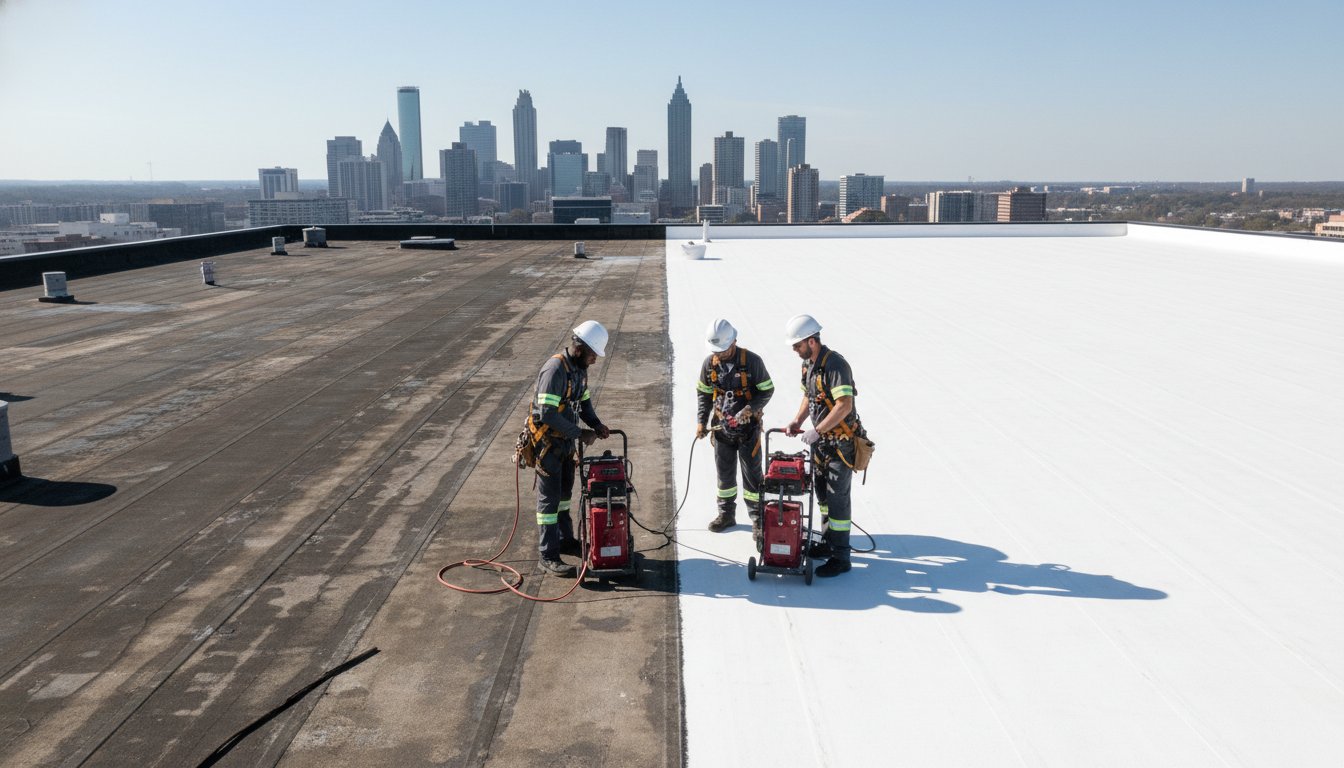
Your commercial roof isn't just a structural necessity; in Georgia’s unpredictable climate, it’s either a high-performing asset or a ticking financial liability. Whether you are managing a warehouse in Atlanta or a retail center in Cumming, the decision to invest in a commercial roof replacement often comes with the heavy weight of projected downtime and complex logistics. You likely feel that a major construction project will inevitably disrupt your tenants or eat into your 2026 quarterly profits, especially since industry data shows that poor roofing decisions can lead to a 40% increase in building energy loss.
We agree that the process feels daunting, especially when you're balancing tight operational schedules with the intricacies of insurance adjusters. This guide ensures you don't have to face those challenges alone. You'll learn how to secure a meticulous, leak-free system while maximizing your insurance claim for storm-related damage. We provide a clear, step-by-step strategy to keep your business running smoothly while choosing materials that offer the best long-term protection for your specific Georgia facility.
Key Takeaways
- Identify the critical threshold between routine maintenance and a necessary upgrade by recognizing how Georgia’s freeze-thaw cycles impact your roof's integrity.
- Select the most efficient materials for the Atlanta heat, such as reflective TPO or durable EPDM, to maximize your facility's long-term energy savings.
- Navigate the financial landscape of a commercial roof replacement by understanding how local building codes and insulation requirements affect your total investment.
- Maximize your insurance recovery by learning how to document storm-related damage and leverage expert advocacy during the claims process.
- Maintain full business continuity with staged installation strategies that protect your customers and operations from construction-related disruption.
Evaluating Your Facility: When to Schedule a Commercial Roof Replacement in Georgia
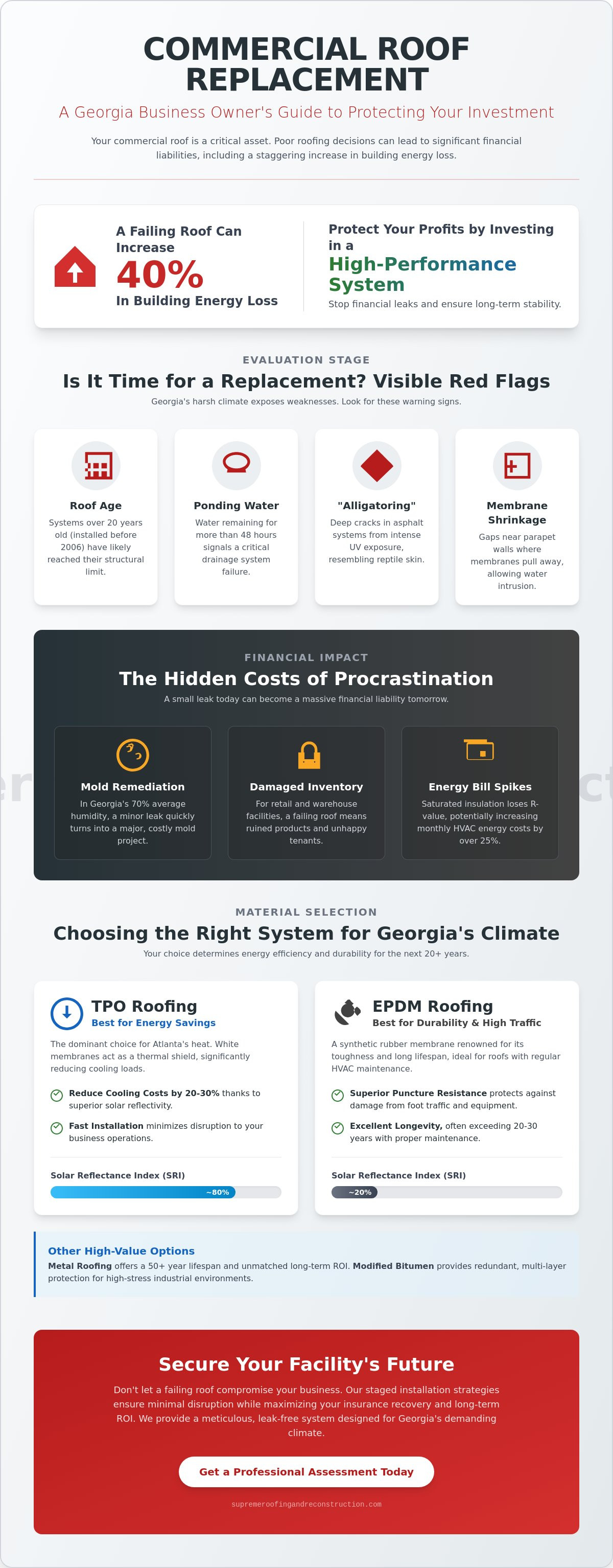
Georgia business owners often struggle to decide if a leak requires a simple patch or a full overhaul. A single storm in the Atlanta area can drop three inches of rain in an hour. This intense pressure exposes weaknesses that minor repairs simply cannot fix. Most commercially available roofing materials, specifically single-ply membranes like TPO or EPDM, have an industry benchmark life expectancy of 20 years. If your system was installed before 2006, it has likely reached its structural limit. We see this threshold as the point where repair costs begin to exceed the value of the protection they provide.
North Georgia’s climate is particularly punishing. Our rapid temperature swings create aggressive freeze-thaw cycles that fatigue materials. These cycles cause constant expansion and contraction, which eventually compromises shingle and membrane integrity. Once moisture penetrates the surface and reaches the structural deck, the risk of rot and collapse increases. In these cases, a commercial roof replacement is the only way to ensure the long-term safety of your facility and its occupants.
Visible Red Flags for Georgia Business Owners
Walk your rooftop after a heavy Cumming, GA thunderstorm. If you notice ponding water that remains for more than 48 hours, your drainage system or substrate has likely failed. Intense Southern UV exposure also causes "alligatoring," a pattern of deep cracks in asphalt systems that resembles lizard skin. You should also inspect your parapet walls. When membranes shrink and pull away from these edges, they create gaps that allow water to bypass your flashing and flood your interior walls.
The Hidden Cost of Delaying Replacement
Procrastination leads to exponential costs. In Georgia’s 70% average humidity, a small leak becomes a massive mold remediation project in just a few days. For Marietta retail spaces, a failing roof means ruined inventory and unhappy tenants who may choose to break their leases. Furthermore, saturated insulation loses its R-value. This saturation can spike your monthly energy bills by 25% because your HVAC system must work harder to maintain a stable temperature. Investing in a new system stops these financial leaks immediately.
Choosing the Right Commercial Roofing System for the Southeast Climate
Selecting the right material for your commercial roof replacement determines your facility's energy efficiency for the next two decades. In Atlanta, where the Urban Heat Island effect can raise temperatures by 10 degrees compared to surrounding rural areas, reflectivity is paramount. White TPO membranes typically boast an initial Solar Reflectance Index (SRI) of 100 or higher. This high rating can reduce cooling costs by 20% to 30% during our humid July afternoons. We prioritize materials that act as a thermal shield for your business, ensuring your HVAC systems don't have to overwork.
EPDM (Rubber Roofing) provides a different set of benefits for Georgia facilities. Its synthetic rubber composition offers superior puncture resistance, which is essential for rooftops with frequent HVAC maintenance or high foot traffic. For property owners along Lawrenceville’s commercial corridors, metal roofing offers an aesthetic appeal that matches its 50 year lifespan. While the initial investment is higher than single-ply options, the long-term ROI is unmatched due to minimal maintenance requirements and high durability against hail. Modified Bitumen remains a staple for high-stress industrial environments. This traditional multi-layer system uses asphalt modified with plastic or rubber polymers to provide redundant protection against leaks.
TPO vs. EPDM: Which Wins in Atlanta?
TPO is often the stress-free choice for active Georgia businesses because it installs quickly and offers immediate energy savings. According to the Cool Roof Rating Council, white TPO reflects approximately 80% of solar radiation. EPDM is traditionally black, which absorbs heat, though it can be coated to improve performance. In the Southeast, TPO’s ability to keep building interiors cool makes it the dominant choice for most 2026 projects. Our crews strictly adhere to OSHA safety standards to ensure every installation is completed without incident, protecting both our team and your property.
Specialty Systems: PVC and Liquid Coatings
PVC membranes are the go-to for Gainesville industrial zones where chemical resistance is required. They withstand grease, oils, and harsh fuels better than other single-ply options. If your current roof is structurally sound but leaking, a liquid-applied coating might serve as a viable restoration alternative. These coatings create a seamless barrier over the existing substrate, extending the life of your roof by 10 to 15 years without the cost of a full tear-off. If you're unsure which system fits your building’s footprint, our team can provide a detailed roof assessment to guide your choice.
Calculating the Investment: Cost Factors and Long-Term ROI for GA Businesses
Every commercial roof replacement bid starts with square footage, but the final investment depends on system complexity. A flat, open roof on a suburban retail strip in Cumming requires less labor than an intricate downtown Atlanta facility with dozens of HVAC penetrations and skylights. We evaluate the cut-up nature of your roof to provide a transparent, fixed-price quote that accounts for every technical detail before we lift the first shingle. This precision prevents the mid-project price hikes that often plague less meticulous contractors.
Local Georgia building codes significantly influence your project's scope. Current state energy codes require specific R-value insulation levels for new commercial installations. If your existing building has aged insulation that doesn't meet these 2026 standards, we must add high-efficiency polyiso boards during the installation. This ensures your facility complies with the law while drastically reducing your monthly overhead through improved thermal retention. We don't just follow codes; we use them to build a more efficient asset for your business.
Accessibility remains a major cost driver for Atlanta businesses. If our crews need specialized cranes or must navigate tight alleyways for debris removal, these logistical factors appear in the labor estimate. We also factor in the meticulous tear-off and disposal of your old system during a commercial roof replacement. Removing two layers of saturated membrane requires more time and higher disposal fees than a single-layer tear-off, but it's the only way to guarantee a clean, sturdy substrate for your new roof.
Beyond the Quote: Energy Savings and Tax Incentives
A new roof provides immediate financial relief through 2026 tax incentives and energy credits. Installing a highly reflective white TPO system can qualify for Section 179 deductions, allowing you to expense the cost of the project in a single year. For Roswell commercial real estate owners, this upgrade increases the overall property value and attracts high-quality tenants who appreciate lower utility costs. You aren't just buying a roof; you're investing in a high-performing climate shield that pays for itself over time.
Warranty Tiers: Manufacturer vs. Workmanship
We believe a warranty is only as strong as the company behind it. While many manufacturers offer No Dollar Limit (NDL) warranties, these often exclude issues caused by poor installation. Our Supreme workmanship guarantee provides an extra layer of security, ensuring our local team is accountable for every seam and flashing. To keep these protections valid, we recommend a proactive roof maintenance plan for homeowners in cumming ga that we have specifically adapted for the heavy-duty needs of commercial properties.
Navigating Insurance Claims and Local Regulations for Your New Roof
Insurance adjusters often aim to minimize payouts by categorizing valid storm damage as "deferred maintenance." We don't let that happen. Our team acts as your expert advocate, ensuring that every wind-lifted seam and hail-impacted membrane is documented correctly. In Georgia, distinguishing between natural aging and sudden storm damage is vital for your claim's success. A commercial roof replacement can often be funded by insurance if you can prove that a specific weather event, such as the severe storms that hit Fulton County in April 2024, compromised the system's structural integrity.
Reading a commercial roofing estimate shouldn't be a source of stress. These documents are often 30 pages long and filled with industry jargon that's difficult to decipher. We break down the line items for you, explaining the difference between Replacement Cost Value (RCV) and Actual Cash Value (ACV). This transparency ensures you know exactly how much capital you need to contribute and how much the insurance carrier will cover. We've found that property owners who understand their estimates are 50% more likely to feel confident in the reconstruction process.
The Insurance Claim Timeline
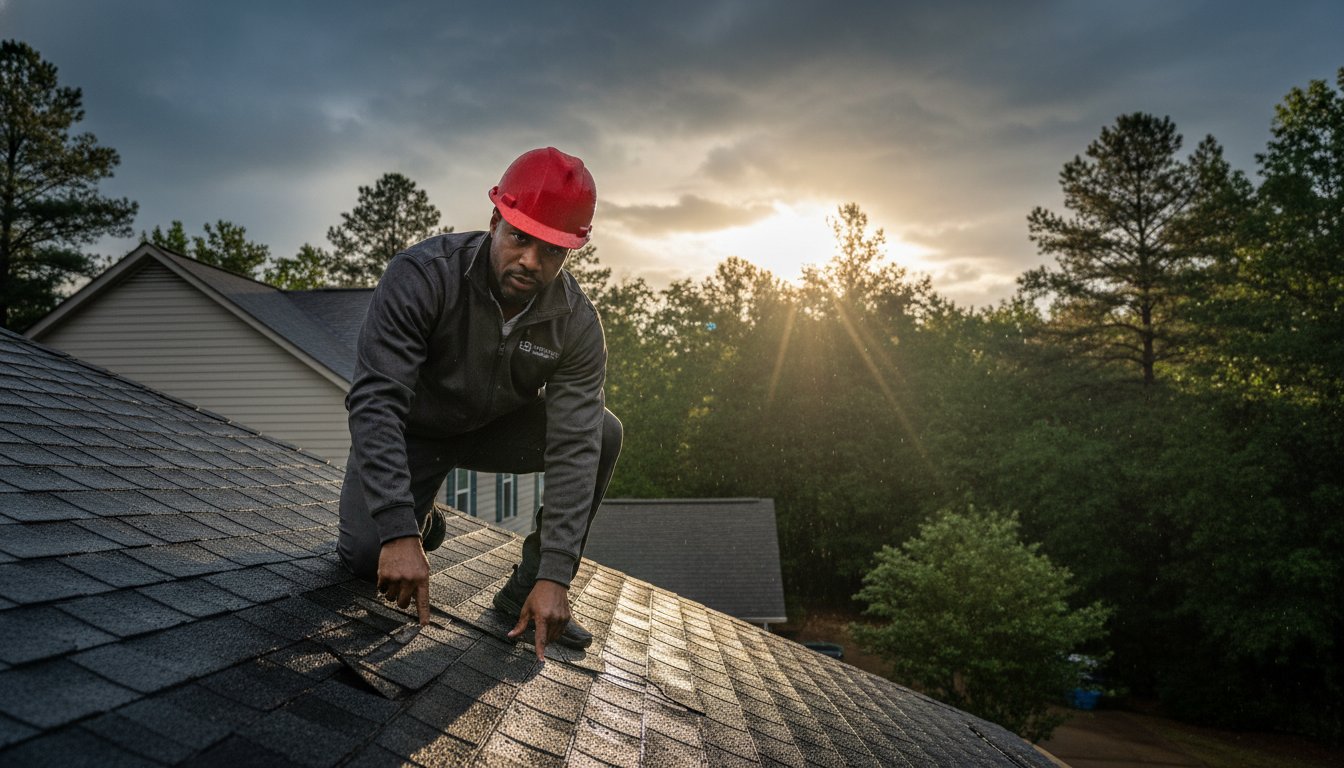
We follow a structured three-step process to secure your claim and protect your investment. First, we conduct a meticulous local inspection. We don't just look for leaks; we examine the microscopic fractures in your roof's surface caused by thermal shock or impact. Second, we document shingle integrity and membrane punctures with high-resolution photography and drone footage. This evidence is undeniable when presented to an insurance carrier. Third, we negotiate the scope of work directly with the adjuster. Our goal is to ensure you receive a full replacement rather than a temporary patch that will fail in the next rainy season.
Compliance and Safety Standards
Commercial projects in Gwinnett and Fulton Counties require specific building permits before any work begins. We manage this paperwork to ensure your project remains in full compliance with the Georgia Department of Community Affairs building codes. Proper roof ventilation is a critical part of these codes, as it prevents the excessive heat buildup that can void your new material warranty. We also maintain strict OSHA safety compliance on every job site. This proactive stance protects your business from the massive liability risks associated with construction accidents. If you're ready to start your claim, contact our insurance specialists today for a professional consultation.
The Supreme Standard: Professional Replacement with Minimal Business Disruption
The biggest fear for any Georgia facility manager is the chaos of a construction site. We understand that your business doesn't stop just because your roof needs an upgrade. To eliminate the typical headaches associated with a commercial roof replacement, we utilize a staged installation process. Our crews work in designated sections, removing only what we can replace and seal within a single day. This strategic approach keeps your building watertight at all times and ensures your tenants or customers can enter and exit without navigating a maze of debris or equipment.
Meticulous site management is a hallmark of the Supreme standard. We don't just focus on the roof; we protect everything beneath it. Our team uses specialized catch-all systems to shield your landscaping, HVAC units, and parking areas from falling materials. We coordinate our staging areas to minimize the footprint on your property, keeping vital parking spaces open for your staff. By maintaining an organized, clean workspace, we preserve your professional image even during the most intensive phases of the project.
Clear communication bridges the gap between technical execution and your peace of mind. You won't have to guess the status of your project or wonder when the next crew will arrive. Your dedicated Georgia project manager provides daily updates, detailing completed milestones and the schedule for the following 24 hours. Once the installation is finished, we conduct a final Supreme inspection. This exhaustive walkthrough ensures every seam is flawless and every piece of scrap is removed, leaving you with a high-performing asset and a pristine property.
Why Local Matters for Atlanta Businesses
Working with a local ally provides a level of accountability that national firms simply cannot match. We are your neighbors in Cumming and Alpharetta, which means we have a vested interest in the longevity of your facility. Our local roots allow for immediate response times when you need emergency storm damage restoration after a sudden North Georgia weather event. We also possess deep knowledge of regional material performance, selecting systems that won't buckle under the specific humidity and heat cycles of the Southeast.
Ready for a Supreme Solution?
Investing in your facility's future starts with an accurate understanding of its current condition. We invite you to request a comprehensive commercial roofing assessment. During your initial consultation, our experts will evaluate your core structure, insulation levels, and drainage efficiency to create a tailored roadmap for your project. We'll provide a transparent proposal that prioritizes your business continuity and long-term ROI. Contact Supreme Roofing and Reconstruction for your free commercial estimate today.
Secure Your Facility’s Future with a Supreme Partnership
Investing in a commercial roof replacement is a strategic move that transforms a structural liability into a high-performing financial asset. We've outlined how selecting climate-engineered materials like TPO can reduce cooling costs by 30% and how leveraging Section 179 tax deductions can improve your 2026 fiscal outlook. By choosing a partner who understands the specific humidity levels of the Atlanta market and the permit requirements of Fulton County, you ensure your building remains protected for decades to come.
Our team stands ready as your local ally, offering 24/7 emergency storm response and expert insurance claim assistance to handle the complexities of property damage on your behalf. As a local Georgia owned and operated company, we take immense pride in delivering meticulous craftsmanship that exceeds industry benchmarks. We don't just install roofs; we build long-term security for your business operations and your tenants.
Take the first step toward a stress-free construction experience today. Schedule Your Professional Commercial Roof Assessment to receive a transparent, data-driven roadmap for your facility. We look forward to providing the unmatched integrity and structural excellence your business deserves.
Frequently Asked Questions
How long does a commercial roof replacement typically take in Georgia?
Most projects for a 10,000 square foot facility take approximately 5 to 7 business days to complete under favorable weather conditions. Larger industrial complexes or buildings with high complexity may require 2 to 3 weeks. We coordinate our schedule with local meteorological data to ensure your facility is never exposed during a North Georgia rain event. Our staged installation process keeps the project moving efficiently without leaving your assets vulnerable.
Can I stay open for business during the roof replacement process?
Yes, your business can remain fully operational throughout the entire construction period. We utilize a section-by-section replacement strategy that minimizes noise and keeps your primary entrances clear for customers. Our crews maintain a meticulous workspace, using specialized debris containment systems to protect your parking areas and landscaping. We prioritize your business continuity so you don't lose a single day of revenue while we secure your building.
Will my insurance cover a full commercial roof replacement after a storm?
Your policy likely covers a full commercial roof replacement if we can document that a specific event, such as the severe hail in April 2024, caused the damage. We act as your expert advocate during the adjustment process to ensure the carrier recognizes the difference between natural aging and storm-related punctures. This meticulous documentation often leads to a full system replacement rather than a simple patch that fails to meet current building codes.
What is the best commercial roofing material for the Atlanta heat?
White TPO (Thermoplastic Polyolefin) is the top-performing material for the intense Atlanta heat island effect. It features a Solar Reflectance Index (SRI) that typically exceeds 100, reflecting nearly 80% of solar radiation away from your building. This superior reflectivity helps businesses meet Georgia’s 2026 energy efficiency standards while significantly lowering the thermal load on your HVAC systems. It is a durable, cost-effective solution for most Southeast facilities.
How much does a commercial roof replacement cost per square foot?
Total investment costs depend on the 2026 market price of materials, the height of your building, and the number of rooftop penetrations like HVAC units and skylights. According to industry data from the National Roofing Contractors Association, the complexity of the tear-off process and the required R-value of new insulation are the primary factors in a final bid. We provide a detailed, fixed-price proposal after a physical assessment to ensure complete financial transparency.
Do you offer warranties on both materials and labor?
We provide dual-layered protection that includes both manufacturer material warranties and our own Supreme workmanship guarantee. Most of our 2026 installations come with a 20 year No Dollar Limit (NDL) warranty from the manufacturer, which covers material defects. Our local workmanship guarantee ensures that if an issue arises from the installation itself, our team returns to fix it at no cost to you. This creates a stress-free experience for years to come.
How do I know if I need a full replacement or just a commercial roof coating?
A full commercial roof replacement is necessary if an infrared moisture scan reveals that more than 25% of your insulation is saturated. If the underlying substrate is wet, a coating will trap that moisture and cause the roof deck to rot. However, if your roof is structurally sound and dry but nearing its 20 year life expectancy, a silicone coating can extend its life by another decade. We perform a meticulous diagnostic to determine the right path.
Are there local Georgia tax credits for installing energy-efficient commercial roofs?
Federal Section 179 tax deductions allow many Georgia business owners to expense the full cost of a new energy-efficient roof in the year it is installed. While specific state-level credits vary, many local utility providers offer rebates for "cool roof" systems that reduce the strain on the electrical grid during peak summer months. Our team provides the necessary documentation of your system's reflectivity and insulation R-value to help you maximize these financial incentives.