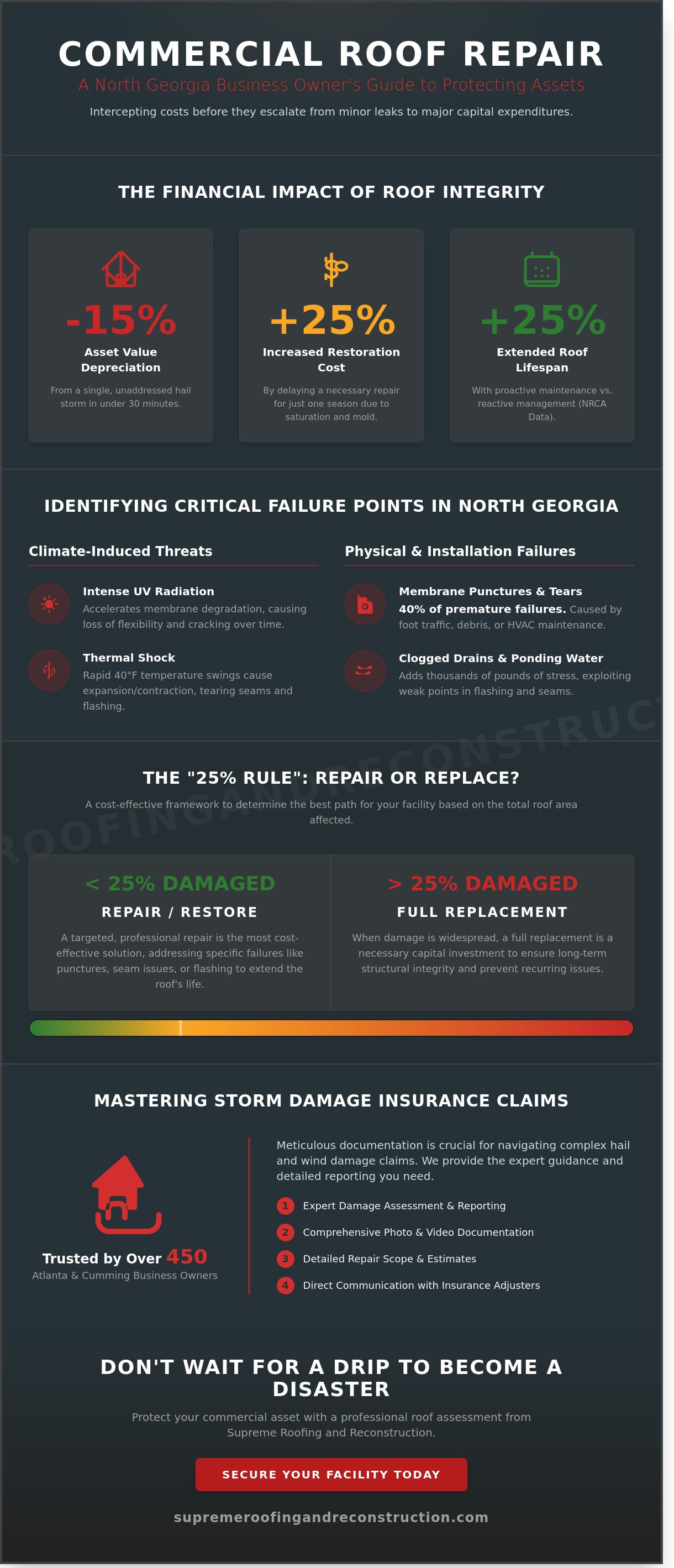
A single 2024 hail storm in North Georgia can depreciate a commercial asset's value by 15% in under thirty minutes if the subsequent moisture intrusion isn't addressed. You realize that a dripping ceiling in your Atlanta warehouse isn't just a nuisance. It's a direct threat to your 2026 operational budget. When you ignore the early signs of wear, you aren't just delaying a service; you're inviting an avoidable capital expenditure. Professional commercial roof repair is the most effective way to intercept these costs before they escalate into a full replacement. Data from the National Roofing Contractors Association indicates that proactive maintenance can extend the functional life of your system by 25% compared to reactive management.
You know that navigating complex insurance adjusters after a Georgia storm feels like a second full-time job you didn't ask for. We've helped over 450 business owners in Cumming and Atlanta move from the stress of a leak to the security of a certified, watertight structure. This guide shows you how to identify hidden damage, evaluate repair options, and secure the documentation you need to protect your assets. We'll break down the specific technical standards for 2026 and provide a step-by-step roadmap to keep your facility leak-free and your insurance claims successful.
Key Takeaways
- Identify how Georgia’s unique humidity and thermal expansion impact specific membrane components to stop leaks before they threaten your business assets.
- Apply the "25% rule" to determine if a professional commercial roof repair or a full replacement is the most cost-effective path for your facility’s future.
- Master the meticulous documentation process required to navigate complex hail and wind damage insurance claims in the Atlanta and Cumming corridor.
- Learn to spot critical failure points in TPO and PVC systems, ensuring your roofing restoration meets the highest standards of durability and craftsmanship.
Understanding Commercial Roof Repair in Atlanta and Cumming
Commercial roof repair is the meticulous process of restoring specific sections of a building's weather barrier. It focuses on the membrane, flashing, or structural components that have succumbed to wear or weather damage. In the Atlanta metro area, these repairs are rarely just about stopping a drip. They represent a strategic intervention to preserve the structural integrity of your facility. Most regional businesses utilize a Flat Roof system, which relies on precise engineering to move water off the surface efficiently. When these systems fail, the financial consequences mount quickly. Industry data suggests that delaying a necessary repair for just one season can increase the eventual restoration price by 25% due to saturated insulation and mold growth.
The most common systems we service in Cumming and North Georgia include TPO (Thermoplastic Polyolefin), EPDM rubber, and modified bitumen. Each material reacts differently to the local environment. A successful commercial roof repair identifies the root cause of failure, whether it's a backed-up drain or a compromised seam, ensuring the solution lasts as long as the original material. Our approach prioritizes longevity, ensuring that a localized fix doesn't become a recurring headache for your maintenance team.
The Impact of the North Georgia Climate
Atlanta's climate is notoriously harsh on commercial materials. Intense UV radiation accelerates the degradation of roof membranes, causing them to lose flexibility and crack over time. We also see significant damage from thermal shock. This happens when Georgia's rapid temperature swings, sometimes shifting 40 degrees in a few hours during spring or autumn, cause materials to expand and contract violently. This movement tears at the flashing and seams. Additionally, the high humidity in North Georgia makes moisture detection critical. We use advanced thermal imaging to find trapped water that isn't visible to the naked eye, preventing hidden rot from spreading through your decking.
Commercial vs. Residential Repair Needs
Commercial systems face challenges that residential sloped roofs never encounter. Drainage is the primary concern. While a home uses gravity and shingles, a commercial building must manage water flow across vast, nearly level surfaces. Load-bearing considerations are also vital. Commercial roofs often support massive HVAC units and heavy ventilation systems that weigh between 500 and 1,500 pounds. These units create localized stress points and potential leak paths. Managing these complexities requires specialized commercial roofing expertise. You need a partner who understands the industrial-grade materials and safety protocols required to keep a business operational during the commercial roof repair process. Our team focuses on providing a stress-free experience that protects your bottom line and your property.
Identifying Common Commercial Roofing Failure Points
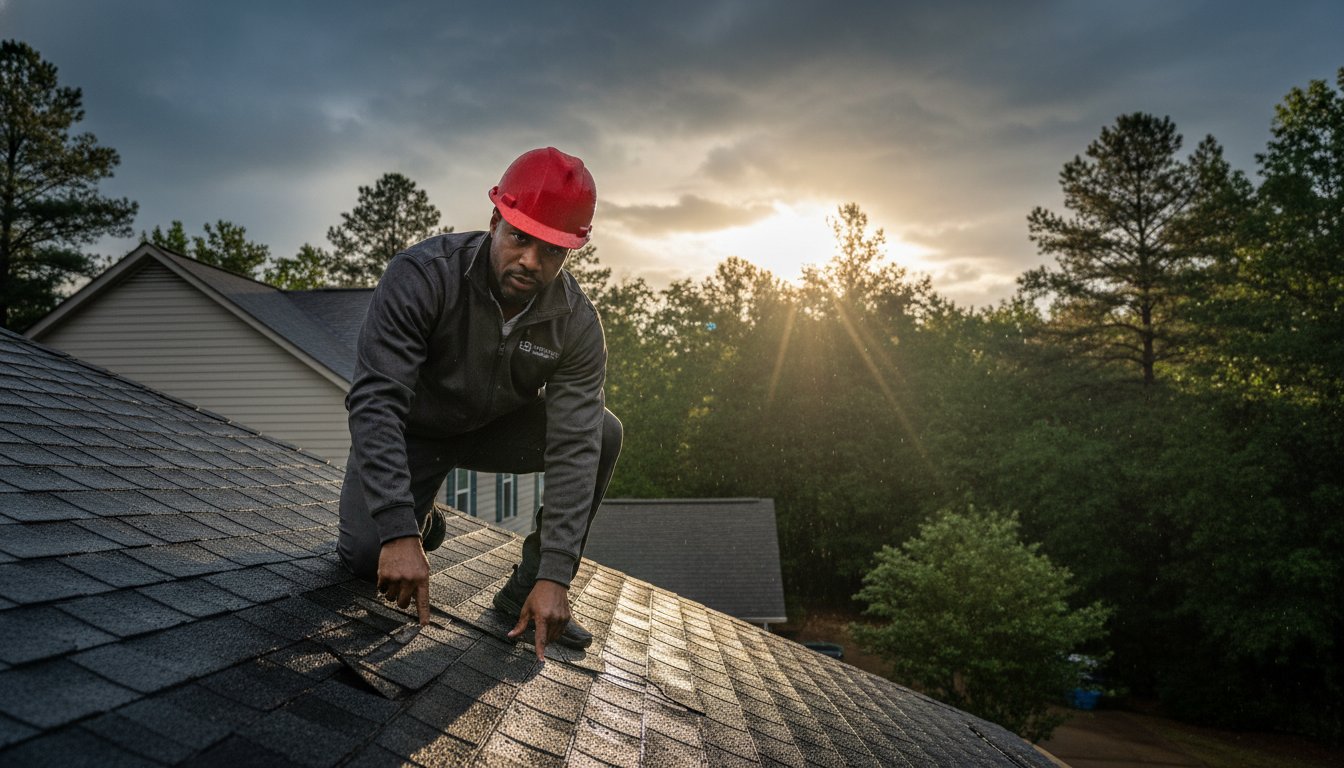
Every commercial roof repair project we handle in Atlanta starts with a meticulous inspection. We've found that 40 percent of premature roof failures stem from simple membrane punctures or tears. These usually occur during HVAC maintenance or after one of Georgia's intense 60-mph wind events. Sharp debris or heavy foot traffic can slice through a membrane, allowing water to saturate the insulation below. Once the insulation is compromised, the structural integrity of your building is at risk.
Clogged drainage systems represent another silent killer for local businesses. When gutters or scuppers fill with debris, ponding water adds thousands of pounds of dead weight to your roof deck. This standing water eventually finds a way through compromised flashing at parapet walls or roof penetrations. We ensure all repairs meet Commercial Roofing Contractor Osha Standards to protect both our technicians and your business assets. Water always wins if it's left to sit; proper drainage is your first line of defense.
TPO and PVC Specific Issues
In modern tpo roofing systems, "cold welds" are a frequent culprit. This happens when the heat-welded seams don't fuse properly during installation, leading to separation within 3 to 5 years. For pvc roofing, look for chemical or oil degradation near kitchen exhausts. You might also notice shrinking membranes. This tension causes the material to pull away from the edges, creating gaps that invite water intrusion. Identifying these issues early prevents a minor fix from becoming a total replacement.
Metal and Built-Up Roof (BUR) Failures
Commercial metal roofing often struggles with fastener back-outs. Over a decade of thermal expansion, screws can loosen and break the watertight seal. Rust is another enemy, especially at the lap joints where moisture gets trapped. If you have an asphalt-based built-up system, watch for "alligatoring." This pattern of deep cracks indicates the bitumen has lost its elasticity due to UV exposure. Maintenance of the pitch pan is also critical. If the filler material inside these pans dries out, it leaves a direct path for water to enter the building. We recommend the following focus areas during your next walk-through:
- Rust spots: Check the lap joints and around fasteners for orange discoloration.
- Fastener integrity: Look for screws that have backed out even a fraction of an inch.
- Surface cracking: Identify any "alligatoring" in BUR systems that signals the end of the roof's lifecycle.
- Pitch pans: Ensure the sealant is flexible and hasn't pulled away from the penetration.
If you suspect your facility is showing these signs of wear, it's time to schedule a professional assessment to secure your property before the next storm hits. A proactive approach to commercial roof repair saves your business time and money in the long run.
The Decision Framework: Repair, Restore, or Replace?
Choosing between a targeted patch and a full overhaul determines your building's operational budget for the next decade. At Supreme Roofing and Reconstruction, we utilize a data-driven framework to help Atlanta business owners avoid the trap of "throwing good money after bad." The primary metric we use is the 25 percent rule. If a commercial roof repair estimate exceeds 25 percent of the total cost of a full replacement, the long-term ROI shifts heavily toward a new system. This calculation accounts for the diminishing returns of patching an aging membrane that will likely fail in a new location within months.
Age is your second critical data point. Most TPO and EPDM systems are engineered for a 20 to 25 year service life. If your Cumming facility was roofed in 2006, you've reached the end of the reliable performance window. Beyond this age, the chemical bonds in the membrane break down, making the surface too brittle for effective heat-welding or adhesive repairs. We also prioritize insulation integrity. Using infrared thermography, we identify trapped moisture under the surface. If moisture saturation exceeds 20 percent of the total roof area, the insulation loses its R-value and begins to compromise the structural deck, making replacement the only safe path forward.
The most effective way to stay on the "repair" side of this framework is through proactive care. A consistent commercial roof maintenance plan can extend the repair-only phase of your roof's life by 5 to 8 years, delaying a six-figure capital expenditure through simple, meticulous upkeep.
When a Professional Repair is Sufficient
We recommend a commercial roof repair when the damage is isolated and the surrounding membrane remains pliable. This typically applies to newer systems still under manufacturer warranty where we apply "Supreme" standards to maintain coverage. Repairs are ideal for fixing punctures from HVAC technicians, minor flashing separations at the parapet walls, or accessory failures like pitch pockets that don't impact the main field membrane. These targeted fixes restore the watertight envelope without the need for a full tear-off.
Signs That Replacement is Unavoidable
Replacement becomes a necessity when the system's core integrity vanishes. If your facility experiences more than three leaks in the same 500-square-foot area over a 12-month period, the substrate is likely compromised. Widespread moisture infiltration creates a breeding ground for mold and causes metal decks to rust or wood decks to rot. Additionally, significant structural damage from a major North Georgia storm can stretch the membrane beyond its elastic limit, making it impossible to achieve a seamless, "Supreme" quality repair that we can confidently stand behind.
Navigating Storm Damage Repairs and Insurance Claims
The Atlanta and Cumming corridor faces an average of 45 severe weather alerts annually. In 2025 alone, North Georgia recorded 12 significant hail events where stones exceeded 1.5 inches in diameter. These impacts often compromise the structural integrity of your facility long before a leak manifests in your warehouse or office. When these storms hit, a rapid commercial roof repair becomes your primary defense against escalating costs. Supreme Roofing acts as your local ally, providing the technical evidence required to satisfy strict insurance requirements.
Insurance adjusters operate on data. They require meticulous, photo-verified documentation that proves the date and cause of loss. We provide this level of detail to ensure your claim reflects the true scope of damage. If you suspect storm damage, take these immediate steps:
- Contact Supreme Roofing for a professional forensic assessment.
- Document any visible interior leaks or fallen debris around the perimeter.
- Avoid DIY inspections on high-slope or damaged commercial surfaces.
The Storm Restoration Process in Georgia
Our restoration process begins with a forensic roof inspection. We differentiate between standard aging and sudden storm damage, which is vital for claim approval. We look for fractured membranes and compromised flashing that a general adjuster might overlook. To prevent interior business loss, we prioritize emergency tarping and temporary seals. This proactive step stops water ingress immediately and demonstrates to your insurer that you've fulfilled your duty to mitigate further damage.
Working with Your Insurance Provider
Commercial insurance estimates are complex documents. We help you read these line items so you understand exactly what's covered. As your Expert Protector, we meet with the adjuster on-site to walk the roof together. This collaboration ensures the scope of work includes everything from the substrate to the top coat. We also verify that your commercial roof repair meets the 2026 Georgia State Minimum Standard Codes, which now mandate specific wind-uplift ratings for commercial properties in the Metro Atlanta area.
Don't face the insurance process alone. Partner with Supreme Roofing for a stress-free restoration and protect your business assets.
The Supreme Standard for Commercial Roof Repair
Choosing a partner for commercial roof repair requires more than just finding a contractor with a ladder. It demands a relationship with an expert protector who understands that your facility is a critical asset. Since 2016, Supreme Roofing and Reconstruction has built a reputation on meticulous craftsmanship and an uncompromising eye for detail. We don't just address surface-level leaks. We evaluate the entire roofing system to ensure every component, from the membrane to the drainage systems, performs at peak efficiency. This commitment to quality prevents minor issues from escalating into structural failures that could halt your operations.
Our stress-free process prioritizes your time and peace of mind. It begins with a rapid response to your initial inquiry and concludes only after a rigorous final inspection. We utilize superior materials that offer documented longevity, ensuring your property value remains protected against the humid Georgia climate. By choosing high-grade solutions over temporary fixes, you're investing in a roof that lasts years longer than industry averages. You'll work with a team that speaks clearly, acts decisively, and delivers results that stand up to the most demanding weather conditions. Our goal is to provide a seamless experience that allows you to focus on your business while we handle the technical heavy lifting.
Our Local Commitment to Cumming and Atlanta
We're deeply rooted in the communities we serve, including Marietta, Roswell, Alpharetta, and the surrounding areas. Hiring a local contractor provides a level of accountability that national chains can't match. We've spent nearly a decade building trust across North Georgia. If a storm hits or an emergency arises, our team is already in your neighborhood. This proximity allows us to maintain a 100 percent follow-up rate on all major projects, ensuring your investment stays secure long after we've packed up our tools. Our history since 2016 proves that we aren't just working in these cities; we're part of them.
Next Steps for Your Commercial Property
Securing your building's future starts with a professional commercial roof repair assessment. When you schedule your first consultation, our experts perform a comprehensive 25-point inspection of your roof's current condition. We provide a transparent report that outlines immediate needs and long-term recommendations. You won't find generic solutions here. Instead, we develop a tailored maintenance plan designed to maximize the lifespan of your specific roofing system. Take the first step toward a permanent solution by contacting our team today to protect your commercial investment and ensure your facility remains a safe, dry environment for your employees and customers.
Secure Your Business with a Supreme Roofing Strategy
Your commercial property represents a significant investment that deserves meticulous protection. Navigating the choice between restoration and replacement becomes simpler when you understand the specific failure points of TPO, PVC, or Metal systems. Since 2016, Supreme Roofing and Reconstruction has served the North Georgia business community with technical expertise and local integrity. We prioritize a stress-free process, especially when managing complex insurance claims after a storm.
Don't let minor issues escalate into costly structural damage. Timely commercial roof repair safeguards your facility and keeps your operations running without interruption. Our team provides the authoritative guidance and sturdy craftsmanship required to meet the highest industry standards. We've spent years perfecting our approach to ensure every client in Atlanta and Cumming feels confident in their building's long-term safety.
Schedule Your Supreme Commercial Roof Inspection Today
We look forward to protecting your property with the professional care it deserves.
Frequently Asked Questions
How long does a typical commercial roof repair take?
Most minor repairs take 1 to 2 days, while extensive restoration projects can span 5 to 7 business days. Weather conditions in Atlanta and Cumming influence this timeline, but we focus on a seamless transition from inspection to completion. Our team works efficiently to minimize downtime. We provide a clear schedule before we start, so you can plan your operations without any surprises.
Does insurance cover commercial roof repairs in Georgia?
Commercial insurance typically covers repairs caused by sudden, accidental damage like the 2025 spring hailstorms or high-wind events. Standard policies don't cover neglect or general wear and tear. We act as your advocate during the claims process. We document every detail to ensure your adjuster sees the full extent of the damage, making the process stress-free for your business and your bottom line.
Can you repair a commercial roof while the business is open?
Yes, we complete 95% of commercial roof repair projects without requiring the business to close its doors. We coordinate our staging areas and loud work phases around your peak hours. This meticulous planning ensures your customers and employees stay safe while we secure your building. You maintain your daily revenue while we restore your roof's integrity with professional, quiet efficiency.
What is the most common cause of commercial roof leaks in Atlanta?
Failed flashing around HVAC units and penetration points causes approximately 70% of commercial roof leaks in the Atlanta metro area. The intense Georgia heat cycles cause materials to expand and contract, which eventually pulls flashing away from the substrate. Regular inspections every 6 months catch these gaps before they turn into costly interior water damage. Prevention is always the most cost-effective strategy.
Is a roof coating considered a repair or a replacement?
A silicone or acrylic roof coating is legally classified as a repair or maintenance expense, not a capital replacement. This distinction allows for a 100% tax deduction in the first year under Section 179 of the IRS code. It adds 10 to 20 years of life to your existing system. It’s a smart way to gain a Supreme level of protection without the cost of a full tear-off.
How much does commercial roof repair cost per square foot in 2026?
According to 2025 industry data from the National Roofing Contractors Association, minor repairs typically range from $3.00 to $6.00 per square foot. Factors like the type of membrane and the height of the building influence the final price. We provide detailed, transparent quotes so you know exactly where your investment goes. This clarity helps you manage your 2026 maintenance budget with total confidence.
What should I do if my commercial roof starts leaking during a storm?
You should immediately move inventory away from the leak, clear any blocked interior drains, and call for emergency tarping services. Don't attempt to go on the roof during active lightning or high winds. We provide 24/7 emergency response to stabilize the situation. Once the storm passes, we perform a meticulous inspection to plan the permanent commercial roof repair that will protect your assets.
How do I know if my commercial roofer is qualified for TPO or PVC repairs?
Verify that your contractor holds a Master-Level certification from manufacturers like GAF or Carlisle, which requires 15+ hours of annual training. Proper TPO and PVC commercial roof repair requires specialized hot-air welding tools rather than simple adhesives. Ask to see their recent project portfolio in Cumming or Atlanta. A qualified expert will always provide proof of their specific membrane expertise and insurance coverage.