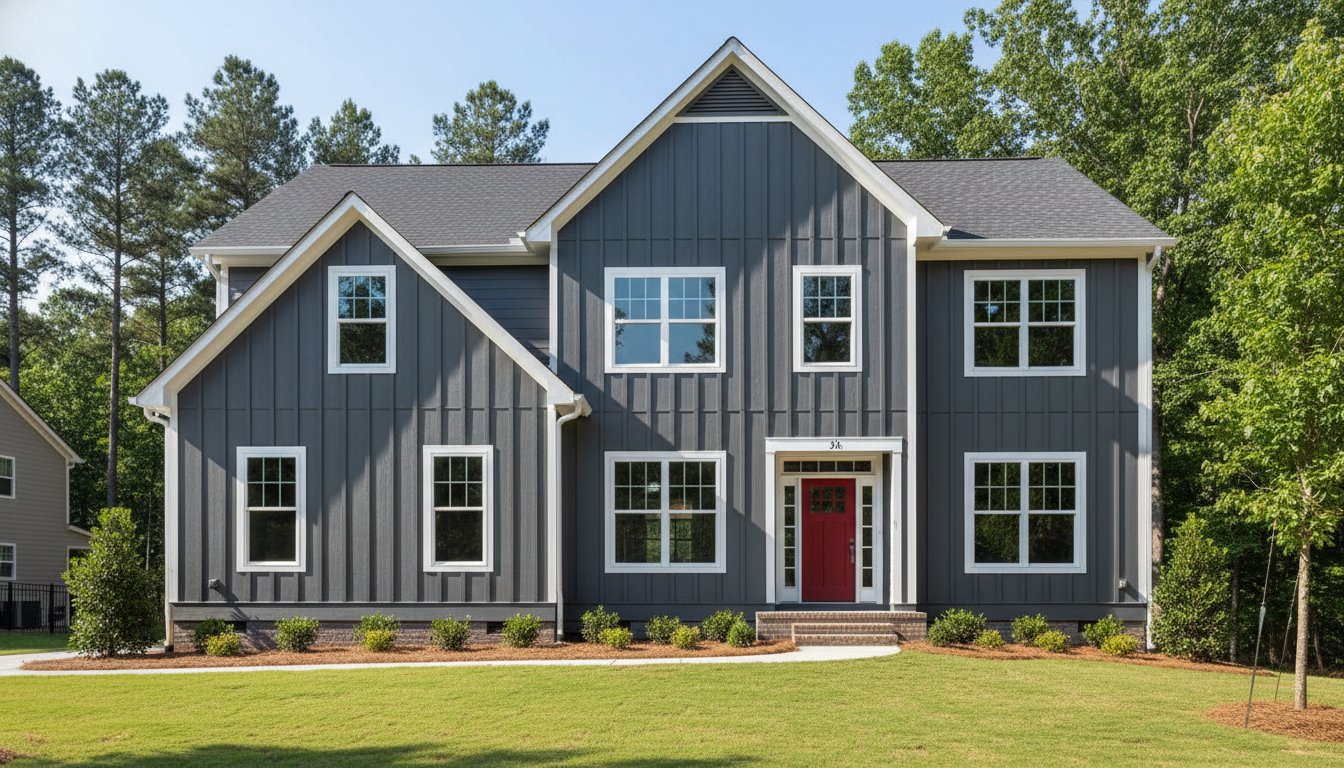
In Georgia, your home's siding is much more than a cosmetic finish; it's a specialized shield against a "triple threat" of relentless humidity, intense UV radiation, and severe storms. Finding the best siding options for Georgia homes requires looking past simple aesthetics to identify materials that can survive 50 inches of annual rainfall without warping or rotting. You've likely felt the stress of rising cooling bills or noticed the telltale signs of woodpecker damage and fading color on your current exterior. These aren't just maintenance nuisances; they're direct threats to your property’s structural integrity and long term value.
This 2026 guide provides the clarity you need to make a lasting investment. We'll show you the most durable, heat-resistant, and cost-effective materials specifically tested for the local climate, including the latest fiber cement innovations and engineered wood alternatives. You'll also learn how to stay compliant with the mandatory State Minimum Standard Codes that went into effect this year. We will break down which materials truly stand up to the Georgia heat so you can secure a home that remains beautiful, efficient, and protected for decades.
Key Takeaways
- Learn how to identify the most resilient materials that prevent structural rot and moisture damage in high-humidity environments.
- Compare the best siding options for Georgia homes by evaluating their long-term performance against intense UV exposure and thermal expansion.
- Understand the impact of hail-resistance ratings and how choosing the right impact-rated material can better protect your property during severe storms.
- Explore 2026 aesthetic trends like Board and Batten to give your home a modern farmhouse look that fits North Georgia's architectural style.
- Discover why a professional installation strategy is the most critical factor in ensuring your siding, gutters, and roof work together as a single protective system.
The Georgia Climate Challenge: Why Your Siding Choice Matters
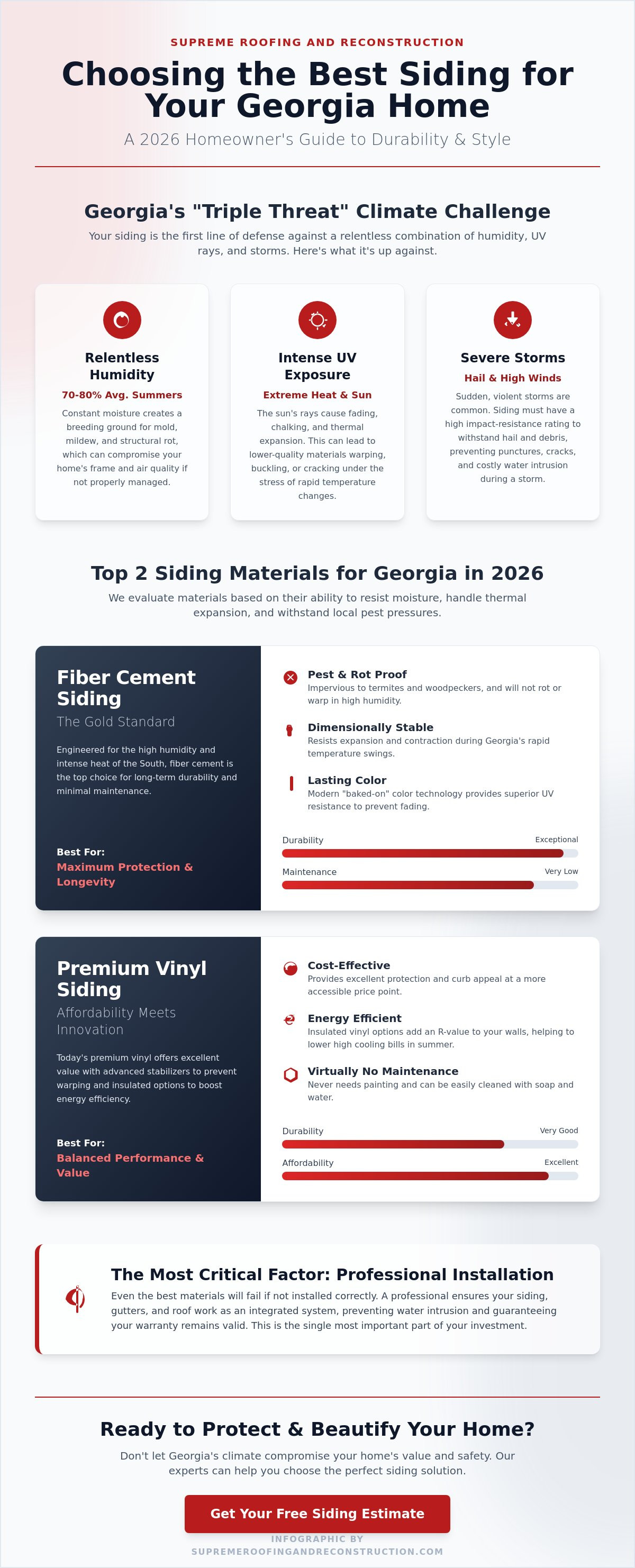
Georgia’s weather is relentless, and your home’s exterior is the first line of defense against what we call the "Triple Threat": oppressive humidity, intense UV radiation, and sudden, violent storms. Selecting the best siding options for Georgia homes isn't a matter of simple aesthetics. It’s a technical decision that impacts your property’s structural integrity for decades. While a specific material might look great in a showroom, its performance in the North Georgia heat tells a different story. If your siding can't handle rapid temperature swings or persistent moisture, you’ll likely face expensive repairs sooner than you think.
A comprehensive overview of siding materials reveals that every product has a specific tolerance for environmental stress. In our region, that stress is constant. Traditional wood siding often succumbs to the "slow kill" of rot, while lower-quality vinyl can warp under the Georgia sun. Understanding these challenges helps you choose a material that remains stable, protective, and beautiful despite the local climate's volatility. We focus on solutions that don't just cover your home but actually shield it from these specific regional pressures.
Humidity and the Rot Factor
Georgia’s summer humidity frequently hovers between 70% and 80%, creating a permanent "wet zone" for your home’s exterior. This environment is a death sentence for untreated or poorly maintained wood. Moisture doesn't just sit on the surface; it infiltrates cracks and seams, leading to deep structural rot that’s often invisible until the damage is severe. When moisture gets trapped behind the siding, it creates a breeding ground for mold and mildew. This compromises your home’s air quality and weakens the wall sheathing. Modern Southern homes require breathable siding systems that allow internal moisture to escape while blocking external rain from entering the wall cavity.
UV Exposure and Thermal Expansion
The "baked-on" heat effect of a Georgia July can be devastating. Darker siding colors absorb massive amounts of solar energy, leading to significant thermal expansion. In North Georgia, we see rapid temperature shifts where a cool morning quickly transitions into a scorching afternoon. This causes materials to grow and shrink rapidly. If the siding isn't engineered for this movement, it will buckle, crack, or pull away from the fasteners. Many 2026 siding innovations now feature "Cool Color" technology and advanced UV-resistant coatings. These specialized finishes reflect infrared rays, keeping the material cooler and preventing the unsightly fading or "chalking" that plagued older siding installations.
Top 3 Siding Materials for Georgia Homes in 2026
Selecting the right exterior material requires balancing immediate curb appeal with long term structural resilience. Identifying the best siding options for Georgia homes involves more than just picking a color; it’s about choosing a system that complies with the 2024 International Residential Code (IRC) updates that took effect in January 2026. We evaluate materials based on their ability to resist moisture, handle thermal expansion, and withstand the local pest pressures that define our region. While initial costs vary, the 30 year lifecycle cost often reveals that durability is the most cost effective choice.
Fiber Cement Siding: The Gold Standard
Fiber cement remains the dominant choice for roof replacement companies and exterior specialists across the state. Products like James Hardie’s HZ10 line are specifically engineered for the high humidity and salty air of the South. This material is non combustible and provides a formidable barrier against Georgia’s aggressive woodpeckers and termites. For 2026, the trend has shifted toward deep, sophisticated tones like Iron Gray, which utilize "baked-on" color technology to prevent the UV fading common in North Georgia. It’s a sturdy, reliable investment that holds its shape regardless of the temperature.
Premium Vinyl: Affordability Meets Innovation
Modern vinyl technology has moved far beyond the thin, brittle panels of the past. The latest 2026 premium vinyl options feature advanced chemical stabilizers that prevent the warping and buckling once caused by intense afternoon sun. Insulated vinyl acts as an extra layer of thermal protection, which helps lower those high Georgia Power bills during July and August. One of its greatest perks is how it handles our notorious pollen season. A simple seasonal wash is usually all it takes to keep the exterior looking fresh, making it the most low maintenance option for busy homeowners.
Engineered Wood: Aesthetics Without the Rot
If you want the classic "Southern Colonial" look without the constant threat of rot, engineered wood is a strong contender. Unlike traditional cedar, products like LP SmartSide use wood strands treated with zinc borate. This treatment is a secret weapon against Georgia’s subterranean termites and fungal decay. It offers the authentic texture of real wood but with a much higher resistance to the moisture infiltration we discussed earlier. It's a hardworking material that provides excellent impact resistance against small hail and windborne debris during spring storm cycles.
Choosing between these materials depends on your specific neighborhood and how long you plan to stay in your home. If you're weighing these options for your own property, consulting with a specialist in siding installation can help clarify which material fits your specific micro-climate. Each of these top tier choices provides a steady, grounded solution to the unique environmental demands of our community.
Durability and Storm Resistance: Protecting Your Investment
Georgia's spring storm season brings more than just heavy rain; it brings high-velocity winds and hail that can compromise your home's envelope in minutes. When we evaluate the best siding options for Georgia homes, we're really analyzing impact resistance and structural resilience. A standard thunderstorm in North Georgia can launch debris at speeds that easily puncture lower-grade materials. If wind manages to get behind a single loose panel, it creates uplift that can peel away entire sections of your exterior. This creates an immediate opening for water to flood your wall cavities and insulation.
Precision in installation is your primary defense against this wind uplift. We ensure every fastener is placed to meet or exceed the updated 2024 International Residential Code requirements, preventing the "zipper effect" where one failure leads to total exterior loss. This structural integrity is a core component of long term storm damage restoration and prevention. It's far more efficient to install a wind-resistant system today than to dry out a water-logged interior after a storm has passed.
Hail and Impact Performance
Hail damage is a consistent threat for Georgia homeowners, often leading to hidden cracks or dents that compromise your siding's lifespan. Materials are tested and rated from Class 1 to Class 4 for impact resistance, with Class 4 representing the highest level of protection. Fiber cement is exceptionally dense and handles typical Georgia hail without a mark, though extremely large stones can cause localized cracking. Premium vinyl relies on panel thickness and "flex" to resist dents. We recommend vinyl panels with a thickness of at least 0.044 to 0.048 inches for better impact performance. Choosing impact-rated materials often makes your next insurance claim smoother and can even lead to lower annual premiums with certain providers.
Energy Efficiency and Solar Heat Gain
Your siding acts as a critical thermal barrier between the Georgia sun and your living room. The R-value measures a material's resistance to heat flow; higher numbers mean your AC system doesn't have to work as hard during a 95-degree July afternoon. We always integrate a high-quality house wrap or moisture barrier beneath the siding to regulate temperature and prevent air leaks. This layer is essential for managing the thermal pressure that builds up on south-facing walls. The solar heat gain coefficient defines the fraction of solar radiation admitted through your siding material, where lower values indicate a more heat-reflective exterior that keeps your home naturally cooler.
Aesthetic Trends: Choosing the Right Style for North Georgia
Aesthetic choices in North Georgia aren't just about personal taste; they're about maintaining property value in high-demand markets like Alpharetta and Marietta. The best siding options for Georgia homes must balance current architectural trends with the long-term realities of our local environment. A well-designed exterior significantly boosts resale potential, especially when you're competing with the high-end new construction common in the sprawling Atlanta suburbs. We focus on styles that provide a steady, professional look while standing up to the regional climate's unique pressures.
Choosing a color palette requires careful consideration of the Georgia sun. While deep, moody tones like Iron Gray are the defining trend for 2026, these dark pigments absorb more heat. You'll need to select materials with advanced "Cool Color" technology to ensure your home stays efficient and the finish doesn't "chalk" or fade prematurely. A smart design integrates these modern colors with traditional Southern elements to create a look that feels both fresh and grounded in our community's architectural roots.
Southern Charm: Lap Siding and Shingle Accents
Traditional estates in Roswell and Marietta often favor classic horizontal lap siding. It provides a timeless, structured appearance that respects the region's historical character. We often use cedar-look shingles in gables or as accent walls to add texture and visual interest without the rot risk associated with real wood. For a truly professional exterior, you must coordinate your siding selection with your roofing and ventilation systems. This ensures your home’s "hat" and "coat" work together to manage airflow and heat while maintaining a cohesive, high-end appearance.
The Modern Georgia Farmhouse Look
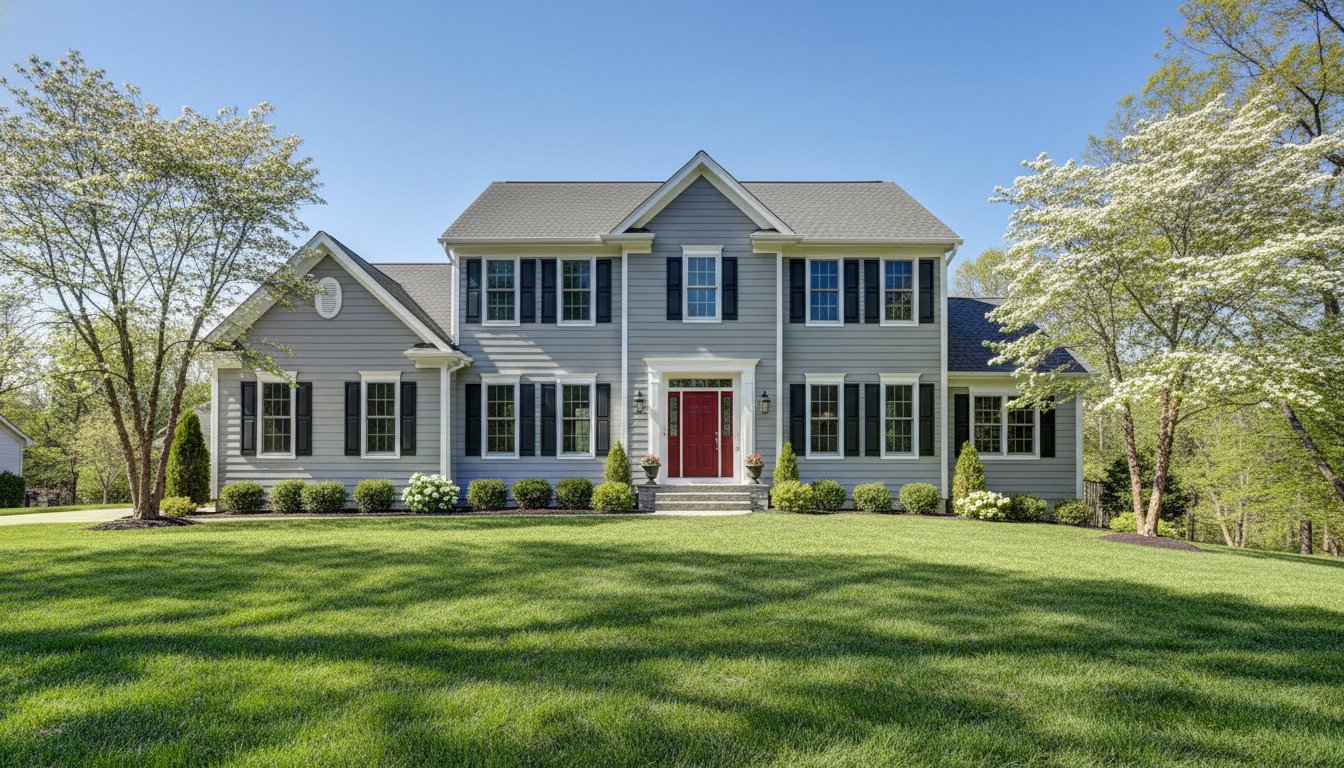
In newer Cumming developments, vertical Board and Batten siding has become the dominant style for the "Modern Georgia Farmhouse" aesthetic. This vertical orientation creates clean, tall lines that make a home appear more substantial and modern. We frequently see homeowners mixing materials, such as combining fiber cement vertical panels with stone or brick water tables to ground the structure. Using high-contrast trim, such as black or dark bronze against white or light gray panels, creates a sharp finish that makes your property stand out. If you're ready to update your home’s look, our team specializes in precision siding installation that brings these modern trends to life with elite craftsmanship.
The Supreme Advantage: Expert Siding Installation in Georgia
The performance of your home’s exterior depends entirely on the precision of its installation. You can invest in the highest-grade fiber cement or engineered wood, but without expert labor, even the best siding options for Georgia homes will fail prematurely. Improperly fastened panels or poorly sealed joints allow Georgia’s relentless humidity to seep in, leading to the exact rot and mold issues we discussed in previous sections. We treat your siding as one part of a comprehensive protective system. Our team integrates siding installation with high-performance gutter systems and roof maintenance plans to ensure water is channeled away from your foundation and wall cavities. This holistic approach is why we’re considered a steady hand for homeowners looking for permanent solutions.
Our expertise extends beyond the initial installation. When severe weather hits, we act as your knowledgeable advocate during the storm damage restoration process. We understand how to document material failure and navigate the complex requirements of insurance claims to ensure your property is restored to its full value. Because we also provide professional exterior painting, we deliver a finished product that is technically sound and aesthetically perfect. We don't just leave you with new boards; we leave you with a fully realized, high-caliber home exterior that is ready to face the next decade of Georgia weather.
Why 'Local' Matters for Your Warranty
Choosing a locally rooted Cumming business over "storm chaser" contractors is the best way to protect your long term warranty. Out-of-state crews often disappear once the storm season ends, leaving you with no recourse if a leak develops or a panel buckles. We live and work in this community. We understand the specific HOA requirements in neighborhoods across Alpharetta, Marietta, and Cumming, ensuring your project meets local standards without friction. Our commitment to high-caliber labor means we never cut corners on the small details that preserve your home's structural integrity. We source only premium materials that we know can survive the regional "Triple Threat" of humidity, UV, and storms.
Ready to Transform Your Home’s Exterior?
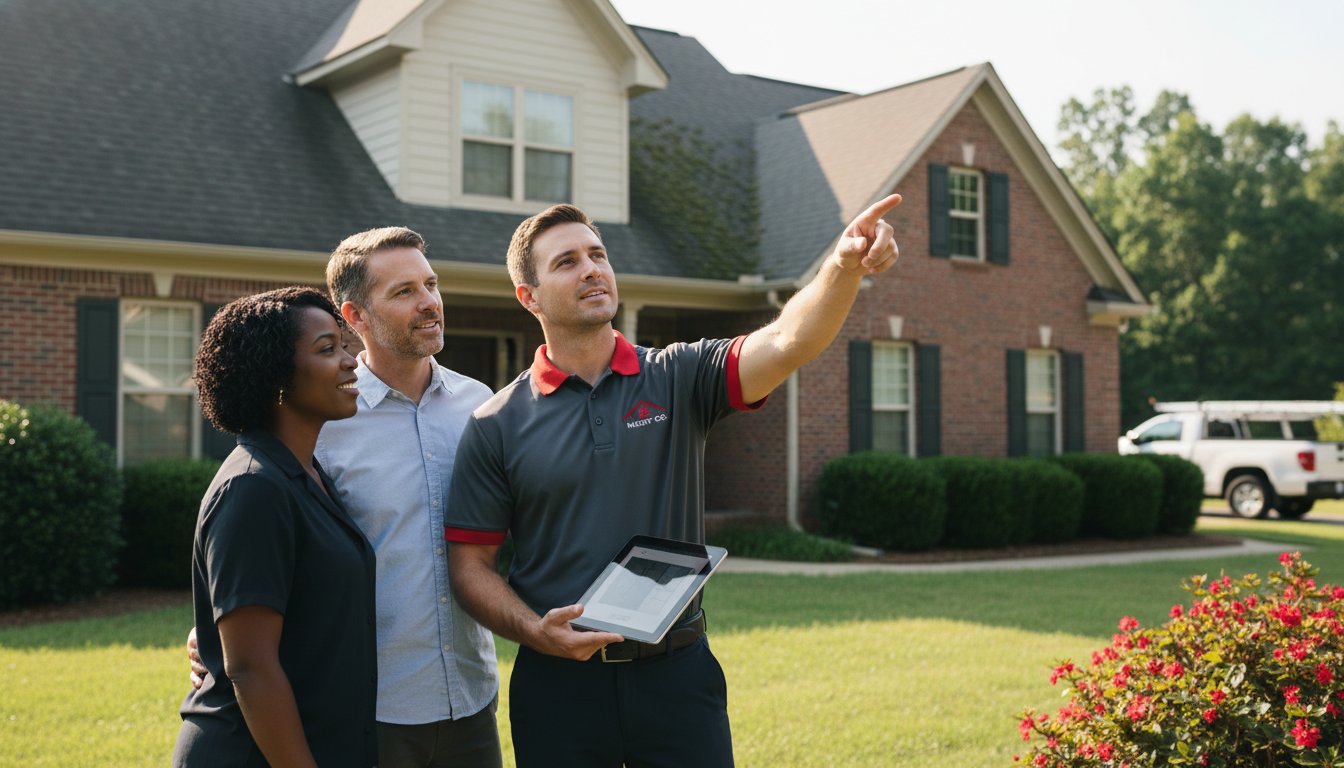
We’ve designed our process to be entirely frictionless for the homeowner. From the initial inspection to the final walkthrough, we maintain transparent communication and a tidy project site that mirrors the organization of a professional industrial site. You’ll receive a comprehensive estimate that covers everything from siding and gutters to a fresh coat of exterior paint. This ensures there are no surprises and no gaps in your home’s protection. Take the first step toward a more resilient, beautiful home today. Schedule your free siding and storm damage inspection today!
Secure Your Home Against the Georgia Elements
Choosing from the best siding options for Georgia homes is the first step toward long term property protection. We’ve discussed how the state’s intense humidity and UV exposure demand materials that resist rot and thermal expansion. Whether you select the rugged durability of fiber cement or the low maintenance efficiency of modern vinyl, your home’s envelope must be engineered for resilience. Proper installation remains the final, most critical piece of the puzzle to ensure your siding withstands the high winds and hail typical of our spring storm cycles.
Since 2016, we’ve served Cumming, Alpharetta, and the Greater Atlanta area as expert storm damage restoration specialists. Our A+ rated craftsmanship and dedicated insurance claim assistance provide the steady hand you need during a restoration project. We prioritize high-caliber labor and premium materials to ensure your home remains a safe, beautiful sanctuary for years to come. Don't wait for the next major storm to test your exterior’s integrity. Get Your Free Georgia Siding Quote & Inspection today. We look forward to being your local ally in protecting what matters most.
Frequently Asked Questions
What is the most durable siding for Georgia's high humidity?
Fiber cement is widely regarded as the most durable option for Georgia's intense humidity. Unlike traditional wood, it's composed of cement, sand, and cellulose fibers, making it impervious to rot and moisture-driven expansion. We specifically recommend products engineered for the Southern climate to ensure your home remains protected against the 70% to 80% humidity levels common in our region.
How much does it cost to reside a house in Georgia in 2026?
The cost to reside a home in Georgia varies significantly based on the square footage, the material selected, and the complexity of the architectural details. While vinyl is typically the most budget-friendly upfront investment, fiber cement and engineered wood offer a higher long term value due to their durability. We recommend checking current local material market rates and labor costs, which have shifted following the adoption of the 2024 International Residential Code.
Can siding really help lower my summer cooling bills in Atlanta?
Siding plays a major role in your home's energy efficiency by acting as a thermal bridge between the outdoors and your living space. Selecting one of the best siding options for Georgia homes, such as insulated vinyl or fiber cement with a high-quality moisture barrier, increases your home's R-value. This reduces the strain on your air conditioning system during 90-degree Atlanta afternoons, leading to lower monthly utility costs.
Is fiber cement siding worth the extra cost over vinyl?
Fiber cement is generally considered a superior long term investment for homeowners planning to stay in their properties for ten years or more. It offers unmatched fire resistance and a lifespan that can double that of standard vinyl. While the initial investment is higher, the material's resistance to Georgia’s "triple threat" of humidity, UV, and storms often results in lower maintenance costs over the life of the product.
How do I know if my siding has storm damage that insurance will cover?
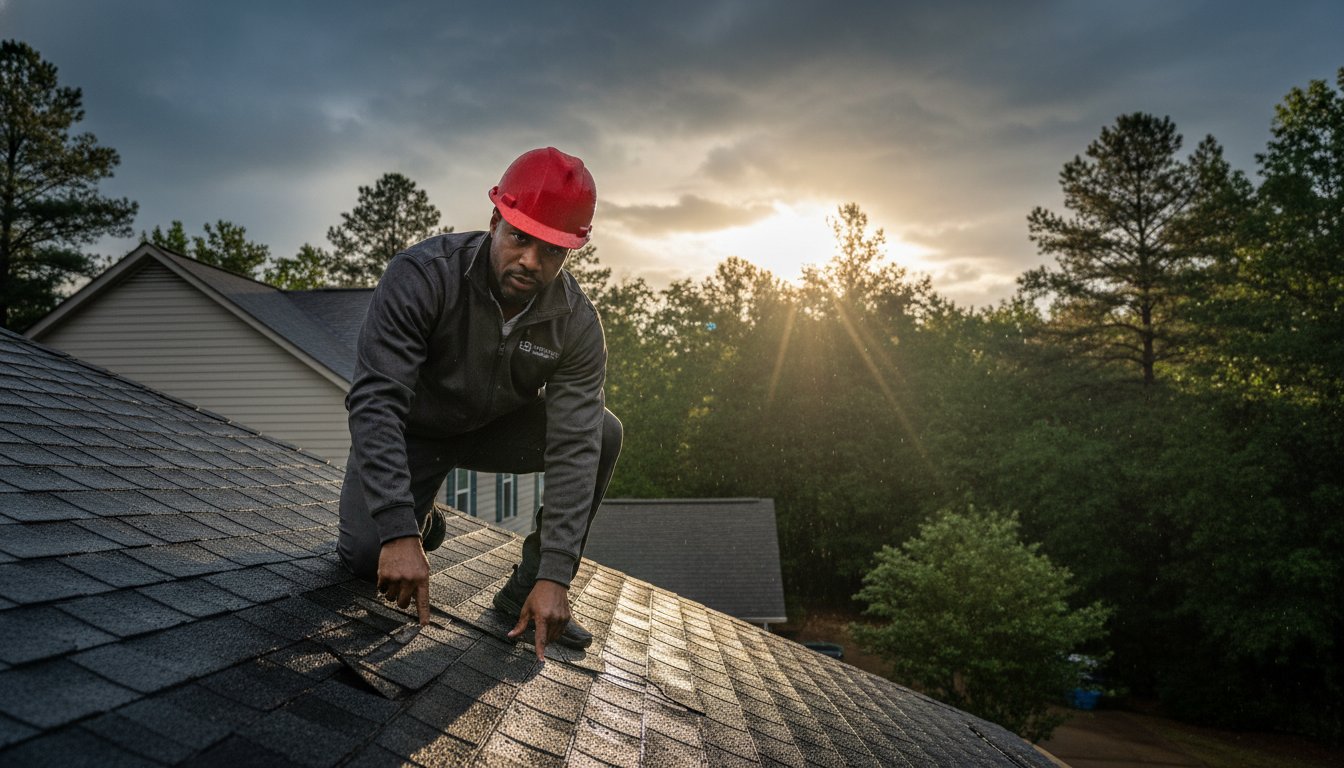
Visible signs of storm damage include cracks, circular dents from hail impact, or panels that have pulled away from the wall due to high winds. Even small fractures can allow moisture to enter your home’s structure, leading to rot. We specialize in identifying these technical failures and providing the documentation required to help homeowners navigate the complexities of an insurance claim after a severe weather event.
What are the most popular siding colors for Georgia homes right now?
For 2026, the trend has moved toward sophisticated, darker tones like Iron Gray, which is currently a top choice for North Georgia exteriors. Deep blues and classic whites for the "modern farmhouse" look also remain highly popular in developments across Cumming and Alpharetta. We recommend choosing colors with advanced UV-resistant coatings to prevent the fading that often occurs with intense Southern sun exposure.
How long does siding installation typically take for a standard home?
A professional siding installation for a standard residential home typically takes between seven and fourteen days to complete. This timeline includes the removal of old materials, the installation of moisture barriers, and the precision fitting of the new panels. Factors like the size of the home, the complexity of the trim work, and local weather patterns can influence the final project schedule.
Does Supreme Roofing offer siding repair or only full replacement?
We provide both targeted siding repairs and full exterior replacements, depending on the condition of your home and the extent of any damage. If your siding has suffered localized storm damage, we can often perform a restoration that integrates seamlessly with your existing exterior. For older homes showing widespread rot or warping, we offer full installation services using the highest-caliber materials available in the industry.