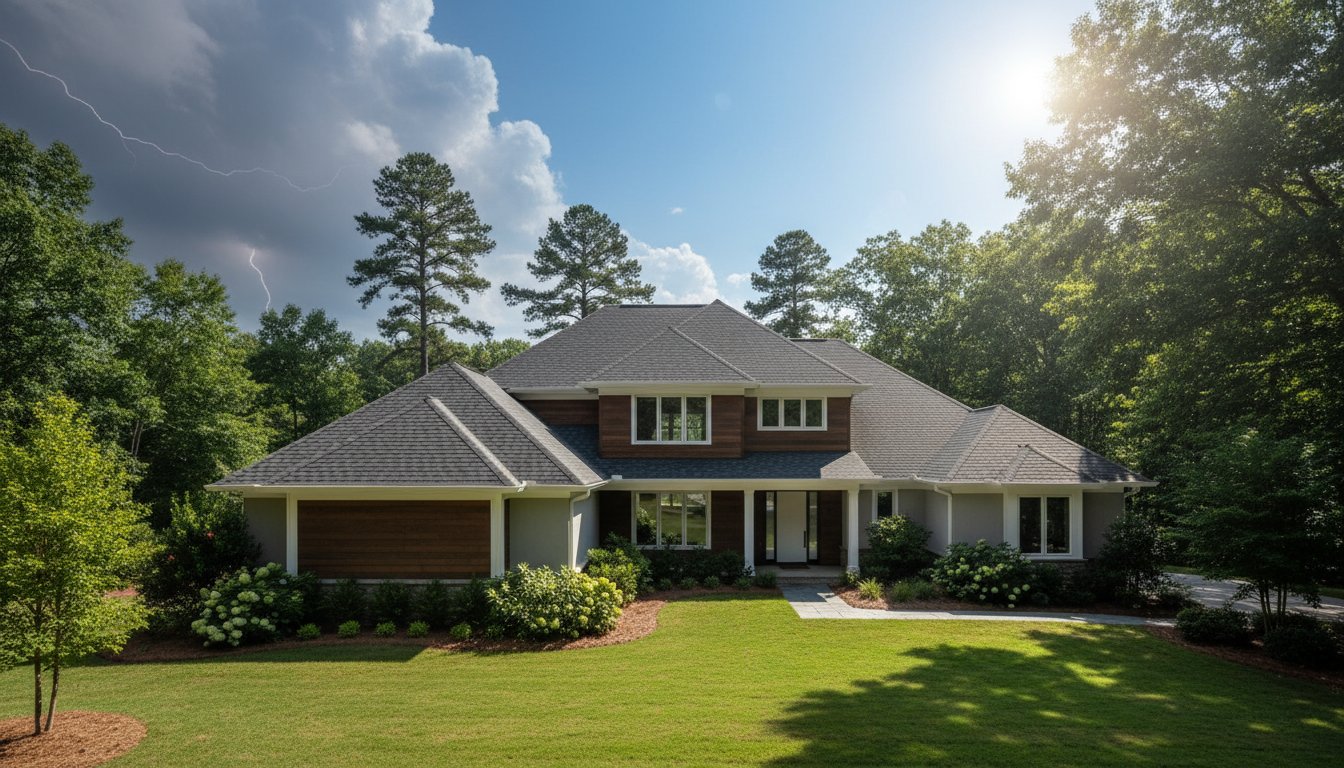
On a typical 95 degree July afternoon in Atlanta, your roof surface can reach a blistering 160 degrees. This intense solar heat gain often forces your air conditioner to work 30% harder just to maintain a comfortable indoor temperature. Finding the best roofing materials for georgia climate is no longer just about aesthetics; it's about protecting your home from the relentless humidity and sudden hailstorms that define life in North Georgia.
You already know the frustration of seeing those ugly black algae streaks or feeling the anxiety of a windstorm in Cumming. We've compiled this 2026 guide to help you achieve a Supreme standard of protection and lasting peace of mind. You'll learn which materials offer the highest heat resistance and how the right choice can slash your monthly cooling costs while increasing your home's value. We will explore everything from impact-resistant shingles to advanced ventilation systems that keep your home safe, dry, and energy-efficient year-round.
Key Takeaways
- Understand how Georgia’s "Climate Trifecta" of intense UV radiation, high humidity, and volatile storms impacts your roof’s lifespan and attic temperature.
- Identify the best roofing materials for georgia climate by comparing the cost-effective performance of architectural shingles against the gold-standard longevity of metal roofing.
- Discover why advanced ventilation systems and modern "Cool Roof" coatings are essential for preventing material failure and maintaining structural integrity.
- Learn how choosing Class 4 impact-resistant materials can shield your home from severe hail belts while potentially securing significant discounts on your homeowners insurance.
- Gain a clear roadmap for selecting a roof that balances your budget and neighborhood aesthetic with the professional installation required to keep your warranty valid.
The Georgia Climate Trifecta: Why Your Roof Material Matters in Atlanta & Cumming
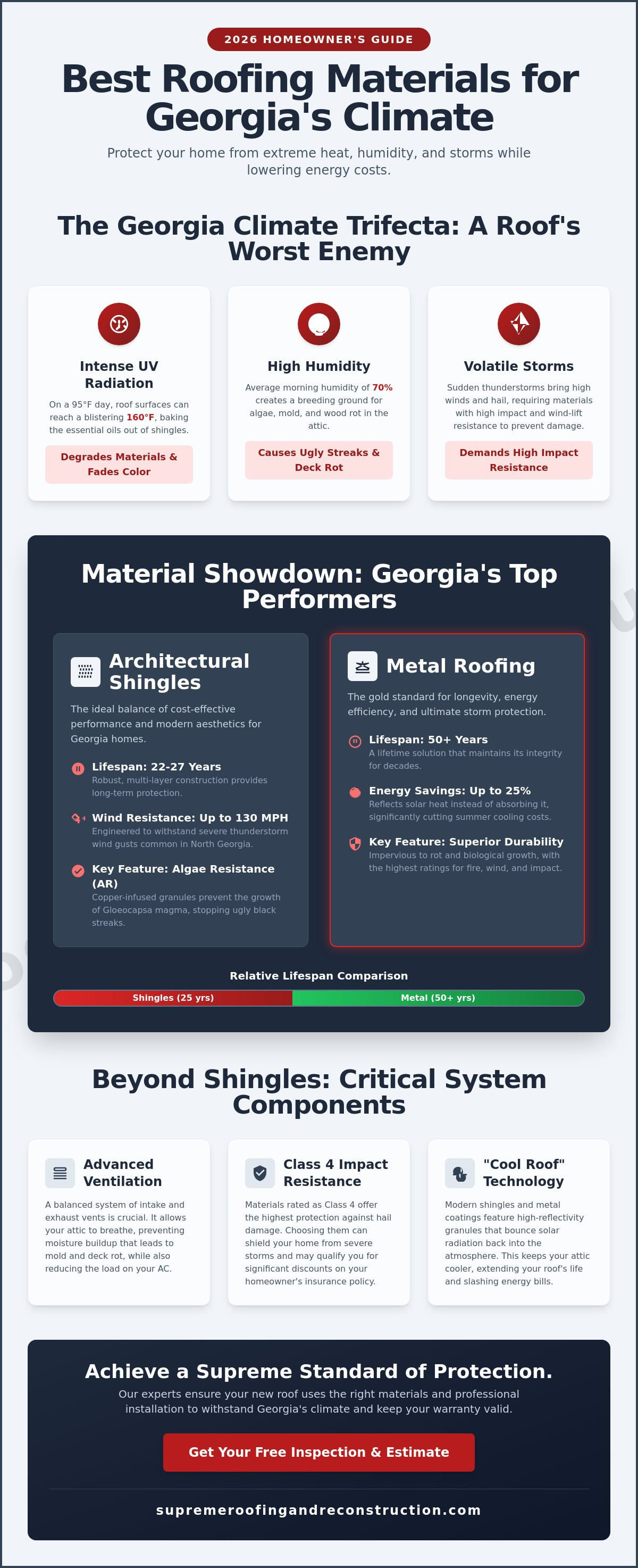
The Georgia climate isn't just warm; it's a relentless testing ground for your home's exterior. We define the "Georgia Climate Trifecta" as the combination of intense UV radiation, 70% average morning humidity, and the volatile storm patterns that characterize North Georgia. Choosing the best roofing materials for georgia climate requires more than just picking a color. It's about engineering a defense against "Solar Heat Gain." This phenomenon can push attic temperatures above 140°F during a typical July afternoon in Atlanta. This extreme heat doesn't just raise your cooling costs; it actively bakes the life out of your shingles. At Supreme Roofing and Reconstruction, we maintain a "Supreme" standard by installing materials that exceed local building codes and stand up to these specific regional stressors.
- Intense UV Radiation: Constant solar exposure degrades asphalt oils.
- High Humidity: Moisture fosters biological growth and deck rot.
- Volatile Storms: Wind and hail require high-impact resistance.
Heat and UV Radiation in North Georgia
When temperatures hit 95°F in Alpharetta or Roswell, your roof faces thermal shock. This occurs when shingles rapidly expand in the midday sun and contract as evening thunderstorms roll in. UV rays act as a silent catalyst, breaking down the essential bitumen and granules that keep your home waterproof. Homeowners need high-reflectivity materials to bounce this energy back. While you can find a comprehensive list of roofing materials online, not all are designed for the 2,800 plus hours of sunshine Georgia receives annually. We focus on options that maintain structural integrity despite constant solar bombardment.
Humidity and Moisture Management
Humidity levels in Cumming often exceed 60% year-round, creating a breeding ground for Gloeocapsa magma. This cyanobacteria is the culprit behind those unsightly black streaks that eat away at your curb value and shingle life. If your roof lacks proper ventilation, moisture gets trapped in the attic, leading to deck rot and mold in Cumming homes. Continuous exposure to high humidity weakens the chemical bonds within the roof deck, eventually compromising the entire structural support system. Our team ensures your ventilation system works in tandem with moisture-resistant shingles to keep your home dry and healthy.
Comparing the Top 3 Roofing Materials for Georgia Homes
Selecting the right roof isn't just about curb appeal; it's about structural integrity against Georgia's unpredictable weather. From the sweltering humidity of July to the sudden hail of spring, your choice determines your home's long-term safety. We've analyzed the best roofing materials for georgia climate to help you make an informed decision for your Alpharetta or Cumming property.
Architectural Asphalt Shingles: Performance vs. Price
Architectural shingles remain the most popular choice for Atlanta metro homeowners because they offer a superior balance of cost and durability. Unlike traditional 3-tab shingles, which often fail in Lawrenceville's 60 mph wind gusts, architectural shingles are rated for winds up to 130 mph. This structural thickness provides a dimensional look that mimics wood shake while offering better protection.
Georgia’s humidity often leads to unsightly black streaks caused by Gloeocapsa magma algae. We recommend premium shingles equipped with Algae-Resistant (AR) technology, which uses copper granules to prevent growth. In the Atlanta area, a high-quality architectural shingle installation typically lasts 22 to 27 years when maintained correctly. For homeowners seeking professional guidance on these systems, consulting reputable roof replacement companies ensures the installation meets meticulous manufacturer warranty standards.
Metal Roofing: The 50-Year Solution
Metal roofing is the gold standard for longevity and energy efficiency. While the initial investment is higher, the ROI is evident in Marietta utility bills. Metal reflects solar heat rather than absorbing it, which can reduce cooling costs by 25% during peak summer months. When choosing resilient roofing materials, metal stands out for its Class 4 impact rating against hail and debris.
- Standing Seam: Features concealed fasteners for a sleek, leak-proof finish.
- Metal Shingles: Provides the look of traditional materials with the strength of steel.
Don't let the noise myth deter you. Modern metal roofs are installed over solid decking and high-grade insulation. This setup makes them just as quiet as asphalt during a heavy North Georgia thunderstorm. It's a permanent solution that often lasts 50 years or more, providing unmatched peace of mind for the "Expert Protector" homeowner.
Synthetic and Composite Roofing
For high-end estates in Alpharetta or historic homes in Gainesville, synthetic slate and composite shake offer a "Supreme" aesthetic without the massive weight of natural stone. Real slate can weigh 1,000 pounds per square, often requiring expensive structural reinforcement. Synthetic alternatives provide the same luxury look at a fraction of the weight, making them ideal for older foundations.
These materials are engineered to withstand the toughest best roofing materials for georgia climate challenges, including heavy hail and UV degradation. They don't crack, rot, or attract pests like natural cedar might. If you're unsure which material fits your home's architectural style, our team can provide a comprehensive roof assessment to guide your investment with honesty and technical expertise.
The Invisible Factors: Humidity, Algae Resistance, and Ventilation
Choosing a high-quality shingle is only half the battle. Even the best roofing materials for georgia climate will fail prematurely without a proper roof ventilation system. In the 2026 market, homeowners must look beyond the surface aesthetics. We focus on the synergy between high-performance materials and the invisible systems that protect them. For example, modern underlayment acts as a critical secondary seal. While older felt paper often tears or degrades, 100 percent synthetic underlayment provides a waterproof shield that withstands the 50 inches of annual rainfall common in the Atlanta metro area.
Many homeowners believe that a thicker shingle automatically equals a better roof. This is a common misconception. In Georgia's sweltering heat, a thick material that lacks advanced "Cool Roof" granule technology can actually trap heat and accelerate degradation. By 2026, standard roofing specifications for the Southeast prioritize solar reflectance. These specialized granules reflect infrared radiation, keeping your attic up to 20 degrees cooler during July peaks. This technology doesn't just protect the shingle; it preserves the structural integrity of your entire home by preventing heat-related expansion and contraction.
Combatting Algae and Mold Growth
Georgia’s 70 percent average humidity creates a perfect breeding ground for Gloeocapsa magma, the bacteria responsible for those unsightly black streaks. Modern manufacturing integrates copper and zinc granules directly into the shingle surface. When it rains, these metals release ions that prevent algae from taking root. Beyond the roof itself, professional exterior painting and meticulous maintenance of your soffits and fascia protect the roof perimeter from moisture intrusion. Watch for these early warning signs of growth:
- Dark, vertical streaks appearing on North-facing slopes.
- Moss accumulation in shaded valleys or near overhanging trees.
- Excessive granule loss appearing in your downspouts or gutters.
- Damp, musty odors in the upper levels of your home.
Advanced Ventilation Strategies
Effective airflow serves as the lungs of your home. When we evaluate the best roofing materials for georgia climate, we always compare ridge vents to power fans for Atlanta attics. Ridge vents provide a continuous, passive exhaust that works with the natural physics of rising heat. However, for complex rooflines with limited ridge space, solar-powered fans offer active extraction that moves 1,500 cubic feet of air per minute. This airflow prevents "shingle baking," a condition where trapped attic heat reaches 160 degrees and destroys the asphalt layers from the inside out. Investing in a balanced intake and exhaust system typically yields a 15 percent reduction in monthly cooling costs during the peak summer months.
Storm Resilience and Insurance: Protecting Your Investment
Selecting the best roofing materials for georgia climate requires a strategy that goes beyond curb appeal. In North Georgia, your roof is the primary shield against volatile weather patterns that bring heavy hail and sudden downpours. We recommend focusing on the Class 4 Impact Resistance (IR) rating. This industry standard, defined by the UL 2218 test, involves dropping a two-inch steel ball from a height of 20 feet onto the material. If the shingle doesn't crack, it earns the Class 4 designation. This isn't just a technical trophy; it's a financial asset. Many Georgia homeowners see their insurance premiums drop by 15% to 25% after installing these high-performance materials.
Hail and Wind Ratings Explained
Wind uplift ratings are critical for homes in areas like Johns Creek and Milton, where 60mph gusts can peel back standard shingles. While standard shingles might carry a 110mph rating, many metal roofing systems are tested for speeds exceeding 140mph. For those who prefer the look of asphalt, IR shingles provide a reinforced fiberglass mat that prevents the bruising and granule loss common during spring storms. This resilience ensures your home remains watertight even after a significant weather event. Choosing a material with high wind resistance reduces the likelihood of emergency repairs during peak storm seasons.
Navigating Insurance Claims for Upgrades
When your home sustains damage, the recovery process feels overwhelming. Supreme Roofing acts as your expert advocate during storm damage restoration to ensure you receive a fair assessment. A common question we hear is whether insurance covers better materials. While policies typically cover "like kind and quality," we often utilize the "Code Upgrade" clause. If local building codes in Cumming have updated since your original roof was installed, your policy may cover the cost of bringing the system up to modern, safer standards.
Working with experienced roof repair contractors is vital because we understand the documentation adjusters require. We provide the detailed evidence needed to justify the use of superior underlayments or reinforced flashing. Even if your insurance only covers a base replacement, the out-of-pocket cost to upgrade to the best roofing materials for georgia climate is often surprisingly low when the bulk of the labor and material is already covered by a claim. It's a strategic moment to invest in your home's future stability.
Choosing Your Supreme Roof: Next Steps for Georgia Homeowners
Selecting the right system involves balancing immediate costs with 50-year performance goals. For most Atlanta suburbs, architectural shingles offer the best value. However, standing seam metal roofs provide unmatched resistance to the humidity and high winds typical of North Georgia. Your choice should align with your neighborhood’s architectural standards and your long-term residency plans. Finding the best roofing materials for georgia climate means looking beyond the surface to the structural integrity beneath.
A premium material only performs as well as its installation. Manufacturer warranties often require certified contractors to follow strict application protocols. If a crew skips a step in the flashing or underlayment process, your warranty could be voided before the first storm hits. Supreme Roofing prioritizes meticulous craftsmanship to ensure your investment stays protected. We provide Expert Protection by focusing on the details that others overlook, from ridge vent airflow to starter strip placement. Our team treats every home as a fortress against the elements.
Local Expertise in Cumming & Beyond
Being based in Cumming means we understand the specific weather patterns of the 400 corridor. We don't just look at shingles; we examine the entire home envelope. This includes the synergy between your roof, gutters, and siding. A failure in one area often leads to damage in another. Our team maintains a Supreme standard of quality that supports our community through reliable, long-term property protection. We've served the North Georgia area with a commitment to accountability that only a local ally can provide. When you work with us, you aren't just getting a contractor; you're gaining a neighbor who is invested in the safety of your street.
Schedule Your Free Roof Consultation
Don't wait for a leak to appear during the next spring storm cycle. Our process is designed to be stress-free. We start with a comprehensive 21-point inspection and move through a transparent project plan to a final walkthrough. We act as your advocate, ensuring every detail meets our rigorous standards. Identifying the best roofing materials for georgia climate is just the first step. The next is ensuring they're installed by a team that stands behind their work every single day.
Our experts are ready to guide you through the selection process, whether you're looking for the classic appeal of asphalt or the modern durability of metal. We handle the technical complexities so you can focus on enjoying your home. Take the first step toward a more secure property today.
Secure Your Home for the Next Decade of Georgia Weather
Your roof is your home's primary defense against Atlanta's intense heat and Cumming's unpredictable storm seasons. Selecting the best roofing materials for georgia climate means prioritizing shingles with high-grade algae resistance and superior wind ratings to combat our 60% average morning humidity. Proper ventilation remains critical to prevent attic temperatures from reaching 150 degrees, a common issue that can shave years off your roof's functional lifespan. Since 2016, Supreme Roofing and Reconstruction has served as a dedicated local ally for homeowners navigating the complexities of storm damage and insurance claims.
As a GAF Master Elite Contractor, we provide meticulous installations that exceed standard requirements for durability and shingle integrity. We are specialists in Georgia storm damage restoration, ensuring your investment remains protected long after the clouds clear. You don't have to manage the stress of an aging or damaged roof alone. Our team brings technical expertise and community-focused care to every project we handle.
Protect your home with a Supreme Roof Replacement; schedule your free estimate!
We look forward to helping you build a safer, more resilient home for your family.
Frequently Asked Questions
What is the absolute best roofing material for the Georgia climate?
Architectural asphalt shingles are the best roofing materials for georgia climate because they offer a reliable balance of durability and affordability. These systems withstand Georgia's 50 inches of annual rainfall and carry a 130 mph wind rating. For homeowners wanting a lifetime solution, standing seam metal provides unmatched UV resistance. Our team ensures meticulous installation of both options to keep your family safe during intense North Georgia storms.
Do metal roofs make a house hotter in the Georgia summer?
Metal roofs actually keep your home cooler because they reflect up to 70 percent of solar radiation away from the structure. Unlike asphalt which absorbs heat, a metal system with a cool-roof coating reduces cooling costs by 25 percent during July peaks. We install these systems with proper ventilation to ensure your attic remains at a stable temperature. This proactive choice lowers energy bills while maintaining a comfortable indoor environment for your family.
How long do asphalt shingles actually last in Atlanta?
Most homeowners see architectural asphalt shingles last 18 to 22 years in the Atlanta area. Even though manufacturers provide 30 year ratings, Georgia's high UV index and 60 percent average humidity cause faster granule depletion. Regular maintenance and annual inspections help extend this lifespan by catching small flashing issues early. We prioritize shingle integrity to ensure your roof remains a sturdy barrier against the elements for as long as possible.
Can I get an insurance discount for choosing a specific roofing material?
You can often secure an insurance discount of 5 to 20 percent by choosing the best roofing materials for georgia climate, specifically UL 2218 Class 4 impact-resistant shingles. These materials are tested to survive 2 inch hail stones without fracturing. We provide all necessary documentation to your insurance provider to ensure you get these savings. This proactive step lowers your premiums while providing a Supreme level of protection for your property.
Is it worth upgrading to impact-resistant shingles in Cumming, GA?
Upgrading to impact-resistant shingles is a wise investment since Forsyth County recorded 12 significant hail events in 2024 alone. These shingles feature a polymer-modified asphalt that acts like a shock absorber during storms. This prevents the hidden bruising that leads to premature roof failure. Our expert team recommends this upgrade for Cumming homeowners who want a stress-free experience during the spring storm season.
How does Georgia humidity affect my roof lifespan?
High humidity levels, which often exceed 90 percent in Georgia summers, promote the growth of Gloeocapsa magma, a black algae that eats limestone filler. This biological growth traps moisture against the roof deck and can lead to wood rot if left untreated. We utilize shingles with copper-infused granules that provide a 10 year streak-free warranty. This meticulous material selection ensures your roof remains aesthetically pleasing and structurally sound despite the damp climate.
What color roof is best for energy efficiency in the South?
Light gray, tan, or white shingles are the most energy-efficient choices for the South because they maintain lower surface temperatures. Research from the Department of Energy shows that cool-colored roofs stay 50 degrees cooler than traditional black shingles during peak sunlight. This temperature difference reduces the workload on your HVAC system. We help you select a palette that complements your home’s aesthetic while driving down your monthly utility expenses.
Should I replace my gutters when I get a new roof?
You should replace your gutters during a roof installation to ensure the drip edge and flashing integrate perfectly. Older gutters often struggle with the 5 inch per hour rainfall rates we see in Georgia's summer thunderstorms. We install 6 inch K-style gutters that handle 40 percent more water volume than standard 5 inch versions. This seamless approach protects your foundation and prevents water from backing up under your brand new shingles.