What if the most dangerous threat to your home isn't the shingle you see lying in your yard, but the ones still sitting perfectly in place on your roof? You've likely stared up at your house after one of our intense North Georgia thunderstorms, searching for the critical signs of wind damage to roof Atlanta properties typically show, only to feel more uncertain. It's stressful to wonder if a hidden issue is quietly compromising your home's integrity while you wait for the next downpour to reveal a costly leak. We understand that fear of the unknown, especially when insurance claims and complex building codes are on the line.
This guide will show you how to spot subtle seal failures and "invisible" fractures before they turn into major structural headaches. You'll learn exactly what makes damage claim-worthy under the 2024 International Residential Code standards that took effect in Georgia this year. We're providing a clear, professional checklist to demystify the inspection process and showing you how to connect with a local expert for a meticulous, stress-free assessment at no initial cost. By the end of this article, you'll have the confidence to protect your home with the Supreme quality and expert restoration it deserves.
Key Takeaways
- Identify how Atlanta's unique weather patterns, such as microbursts and tropical remnants, create the uplift forces that compromise your roof's integrity.
- Master the safe way to spot the most common signs of wind damage to roof Atlanta homes face without ever having to climb a ladder.
- Learn why a single lifted shingle often signals a total seal failure, turning your protective roof into a sieve during the next major downpour.
- Follow a step-by-step documentation plan to record your "Date of Loss" and capture the wide-angle evidence insurance adjusters require.
- Understand how a meticulous, professional inspection protects your home's value by identifying hidden fractures that standard assessments might miss.
Understanding Wind Damage in the Atlanta Metro Area
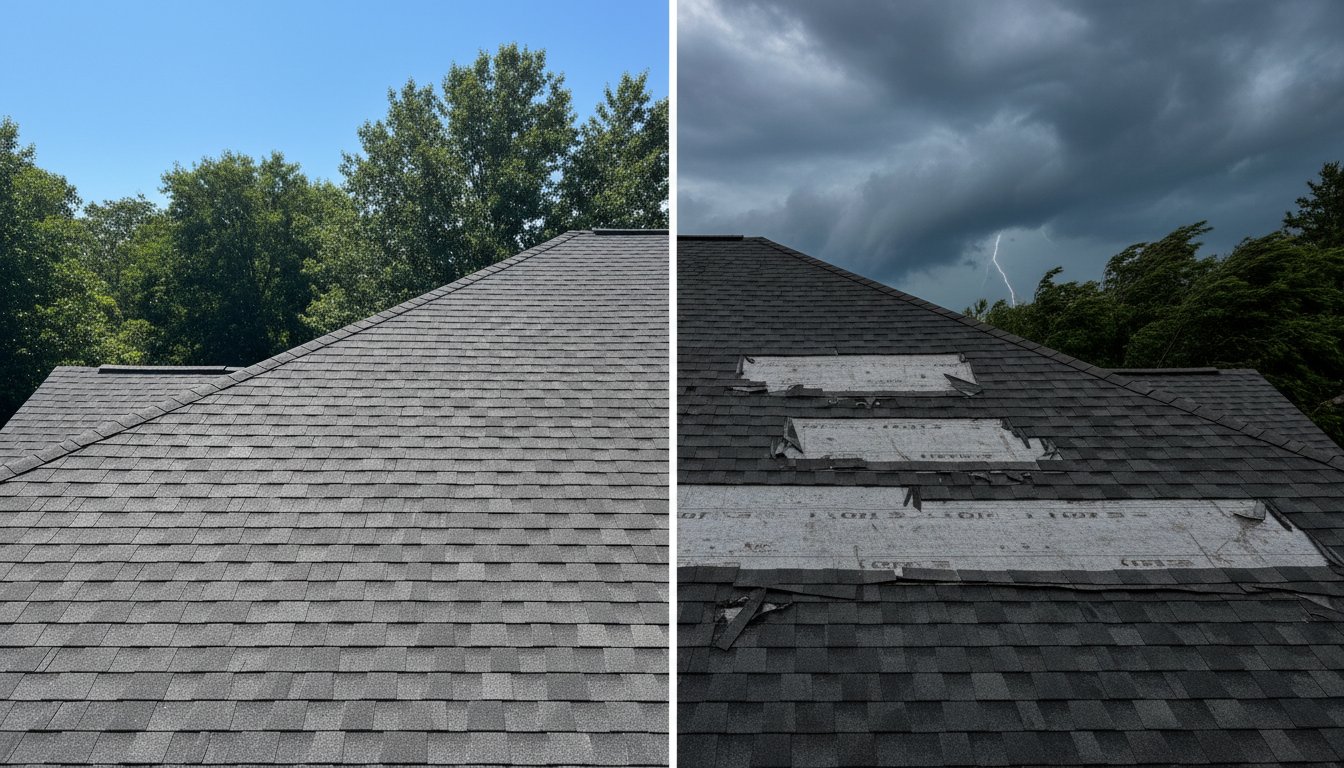
Wind damage is rarely as obvious as a fallen tree on a porch. To a professional, it's defined as the compromise of your roof's water-shedding system caused by powerful uplift forces. While you might be searching for the most obvious signs of wind damage to roof Atlanta homes typically display, the most dangerous issues are often the most subtle. We categorize these into functional damage, which affects the roof's ability to keep water out, and aesthetic damage, like minor granule scratches or scuffs. As your Expert Protector, we prioritize identifying functional failures early. Catching a broken seal today prevents the stress of a collapsed ceiling or mold growth next month.
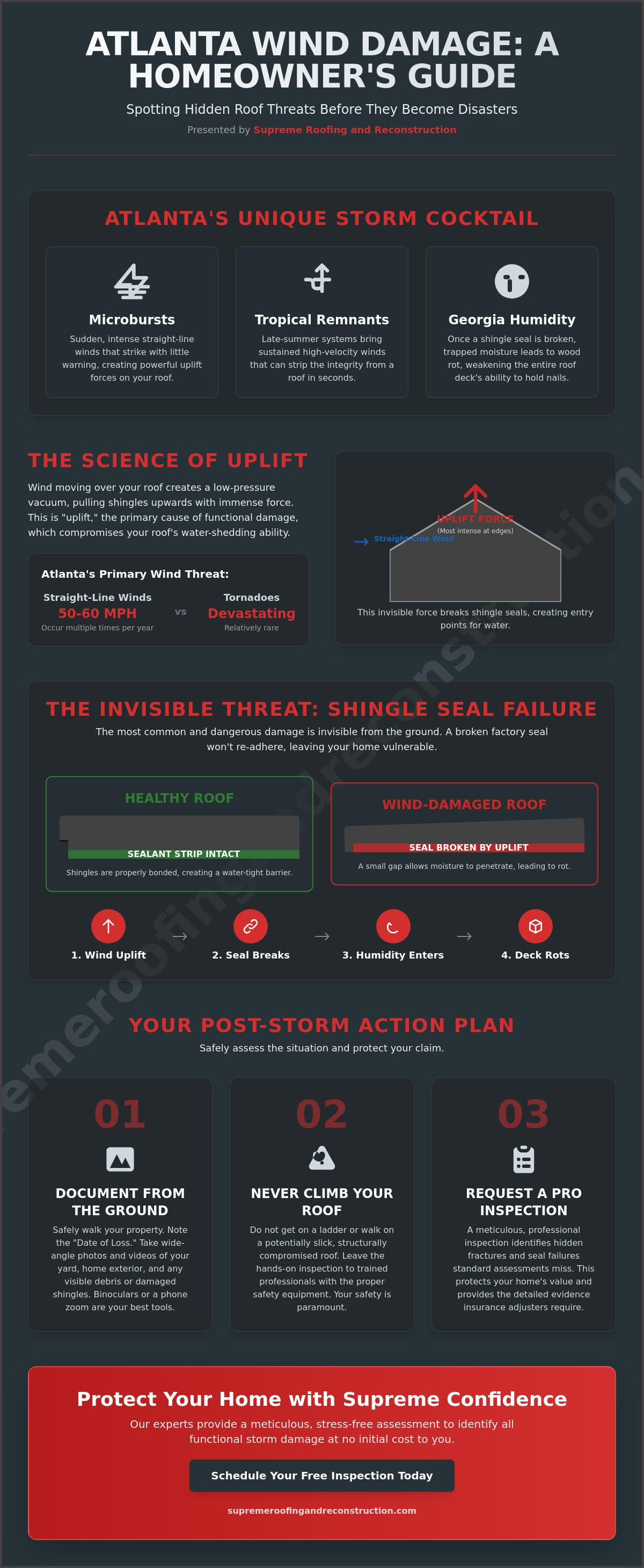
Atlanta faces a unique cocktail of weather threats that many national guides ignore. While spring is known for severe weather, our late-summer tropical remnants and sudden afternoon microbursts are just as destructive. These events bring high-velocity straight-line winds that can strip the integrity from a roof in seconds, even if no shingles actually fly off the house. Understanding these local patterns is the first step in maintaining a secure home.
Straight-Line Winds vs. Tornadic Activity
Tornadoes are devastating but relatively rare. In contrast, 50 to 60 mph straight-line winds happen multiple times a year across North Georgia. These winds create a vacuum effect known as uplift. When wind hits the side of your home, it accelerates over the roof's edge, pulling upward on your shingles with immense pressure. This force is most intense at the eaves and rakes of Atlanta's classic ranch-style homes and tall two-story builds. Our dense local tree cover often makes this worse. Large oaks and pines create wind turbulence, causing gusts to swirl and buffet your roof from multiple angles. A thorough windstorm mitigation inspection is the only way to verify if your home's fastening system held up against these invisible forces.
Why Georgia's Humidity Makes Wind Damage Worse
Our local climate is unforgiving to compromised roofs. When wind lifts a shingle, it breaks the factory-applied sealant strip. Once that bond is broken, it won't simply stick back down on its own. This creates a tiny gap where Georgia's heavy humidity can settle against your wooden roof deck. Trapped moisture leads to a "dry rot" cycle, where the wood softens and loses its ability to hold nails. This invisible decay is why we advocate for immediate storm damage restoration. We don't just patch holes. We ensure your entire roofing system is meticulously sealed against the moisture that defines our region, keeping your family safe and dry regardless of the forecast.
Visible Warning Signs You Can Spot Safely from the Ground
Safety is the foundation of every storm assessment we perform. After a North Georgia storm passes, resist the urge to grab a ladder and climb onto a potentially slick or compromised surface. High roofs and wet shingles are a dangerous combination for anyone without professional safety gear. Instead, use a pair of binoculars or your smartphone's high-definition zoom to scan for signs of wind damage to roof Atlanta structures from the safety of your driveway. This ground-level perspective is often all you need to spot critical red flags before they escalate into interior leaks.
Many homeowners fall victim to the "missing shingle myth," assuming that a few missing tabs are just a minor nuisance. In reality, a single missing shingle is often the first visible symptom of a total system failure. When wind speeds reach a certain threshold, they create "peel-back" forces that compromise the perimeter of your roof. If you see shingles lying in your yard or on your deck, it means the wind was strong enough to overcome the factory fasteners. This is a clear indicator that your roof's overall integrity requires a meticulous inspection. We also recommend checking if your home's construction aligns with the FORTIFIED standard, which provides a scientifically-backed blueprint for resisting high-wind events.
Don't just look at the roof itself. Debris indicators in your yard serve as proxies for wind speed. If you find heavy tree limbs, fence panels, or patio furniture scattered across your lawn, the gusts were likely powerful enough to cause "invisible" roofing damage. Pay close attention to your fascia and soffit. These edge components are highly vulnerable to high-pressure gusts. If they appear loose or detached, the wind has likely found a way to get under your roofing materials, which can lead to rapid wood rot.
The Shingle Tab Checklist
- Shadow Lines: Look for thin, dark horizontal lines across the top of shingle tabs. These are creases caused by shingles being folded back by the wind and then flopping back down.
- Ruffled Shingles: Check for shingles that appear "puffy" or don't lay perfectly flat against the layers below. This suggests the sealant bond is broken.
- Granule Loss: Inspect the splash blocks at the bottom of your downspouts. A sudden pile of shingle granules indicates that the protective layer of your roof is being stripped away.
Gutter and Metal Flashing Clues
Flashing is the metal armor that protects roof intersections like chimneys and valleys. Wind can catch the edges of this metal and pull it away from the structure, leaving wide gaps for water to enter. Similarly, "wavy" or sagging gutters often indicate that high-pressure gusts have physically moved the gutter system or loosened the fasteners. If you notice any of these signs of wind damage to roof Atlanta properties, you should schedule a professional assessment to prevent minor issues from becoming major leaks.
The 'Hidden' Danger: Shingle Seal Failure and Creasing
Your roof might look perfectly intact from the curb, but that visual can be a dangerous illusion. Most homeowners assume that if they don't see shingles in the yard, their home is secure. This assumption is where the most costly mistakes begin. The true strength of your roof lies in its factory-applied sealant strips. These adhesive lines are designed to bond each shingle to the one below it, creating a unified, water-shedding shield. When high winds hit your home, they don't always tear shingles away. Instead, they often lift them just enough to break this critical bond.
Once that seal is broken, the damage is permanent. Think of it like a piece of tape that has been pulled up and dropped in the dirt. Even if the shingle "lays back down" after the storm, the adhesive is now coated with wind-borne dust, pollen, and debris from our North Georgia pines. It will never re-bond on its own. This "dead seal" is one of the most deceptive signs of wind damage to roof Atlanta properties experience. It leaves your roof vulnerable to "shingle chatter," where the tabs bounce during every minor breeze, slowly backing out the nails and inviting leaks into your attic.
How Wind Creases Asphalt Shingles
When wind catches a loose shingle, it creates a "hinge" effect. The shingle bends upward until the internal fiberglass matting literally fractures. These fractures are often invisible from the street, appearing only as a faint shadow line or a subtle crease across the top of the shingle tab. These weakened areas are ticking time bombs. The intense heat of Atlanta summers accelerates this degradation, making the fractured asphalt brittle. Eventually, those creases will snap, and the shingle will blow away during a storm that wouldn't have damaged a healthy roof. Our meticulous inspection process identifies these fractures before they turn into an emergency.
The Importance of Thermal Bonding
Shingles rely on a process called thermal bonding, where the sun's heat fuses the adhesive strips together. After a wind event, that process is often disrupted. If the bond is broken and contaminated by grit, the sun can no longer do its job. This is why we recommend working with roof repair contractors who understand the science of shingle integrity. We don't just look for holes; we perform manual lift tests to ensure every shingle is still properly bonded. This proactive approach is the hallmark of an Expert Protector, ensuring your home remains a fortress against the next round of severe weather.
Your Post-Storm Action Plan: Documentation and Safety
After a severe weather event, your first priority is safety, but your second must be precise documentation. The "Date of Loss" is the anchor for any successful insurance claim. Record the exact date and time the storm hit your neighborhood. This timestamp correlates your property damage with verified weather reports. It's a powerful tool when adjusters review your file. Without a specific date, insurance companies may struggle to verify that a single event caused the damage, which can lead to unnecessary delays or denials.
Grab your phone and capture wide-angle photos of your entire property. Don't just focus on the shingles. Include fallen tree limbs, damaged fencing, or debris scattered across the yard. These photos provide the necessary context that proves the storm's intensity. If you've already spotted the signs of wind damage to roof Atlanta homes often show, like ruffled tabs or missing granules, photograph those from the ground. This visual trail creates a transparent record of your home's condition immediately following the event. Before you call your insurance company, schedule your meticulous Supreme inspection to ensure you have a professional report in hand.
What to Look for in the Attic
Check the interior of your home immediately. Your attic is a silent witness to roofing failures. Look for "daylight" showing through the roof boards, which is a clear sign of a missing shingle or a failed ridge vent. Inspect your insulation for dampness or a musty odor, as these suggest a recent leak that hasn't yet stained your ceiling. It's also important to understand that roof ventilation issues can sometimes cause condensation that mimics a storm leak. Our experts can help you distinguish between a ventilation failure and actual wind damage, saving you from filing an unnecessary claim.
Navigating the Georgia Insurance Timeline
Most insurance policies in Georgia offer a one-year window to file a claim for wind damage. While this sounds like a long time, the longer you wait, the harder it is to prove the storm caused the issue rather than general wear and tear. We strongly advise against hiring "storm chasers" who knock on doors with high-pressure sales tactics immediately after a storm. These crews often lack local roots and may not be around if a problem arises later. A detailed report from a local contractor who knows the specific signs of wind damage to roof Atlanta homeowners face carries significantly more weight with an insurance adjuster. We act as your advocate, providing the factual, results-driven evidence needed to navigate the claims process with confidence.
Why Supreme Roofing is Atlanta’s Expert Storm Protector
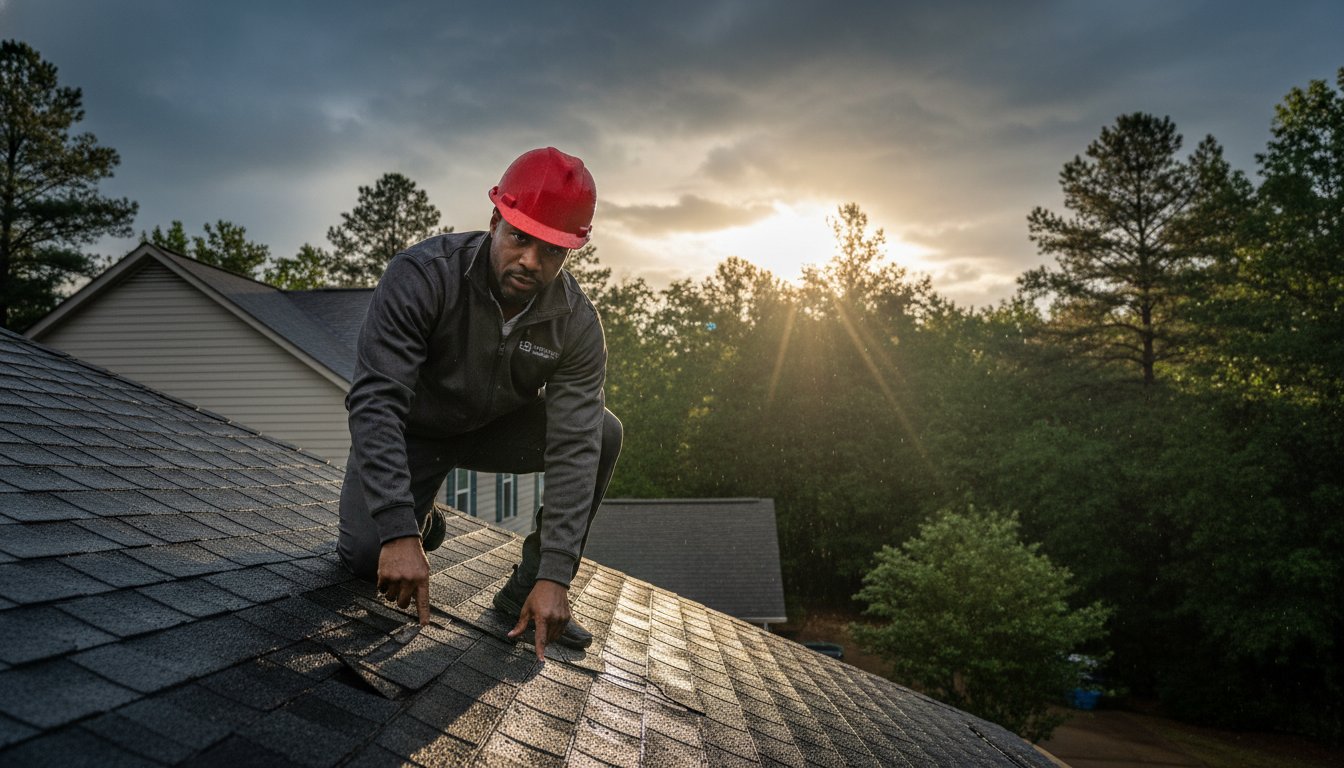
Supreme Roofing and Reconstruction has spent the last 10 years serving as the steady hand for homeowners across Atlanta and Cumming. We've built our reputation on the "Supreme" standard of quality, which means we never settle for "good enough" when your family's safety is on the line. When a storm compromises your property, you don't just need a roofer; you need an advocate who understands the technical nuances of shingle integrity and the complexities of the insurance world. We act as your Expert Protector, ensuring every detail of your restoration is handled with meticulous care.
Our inspection process goes far beyond looking for missing tabs. We understand that the most destructive signs of wind damage to roof Atlanta homes often hide beneath the surface. We perform manual seal integrity tests to identify those "dead seals" and fractures that lead to long-term wood rot and structural decay. By catching these issues early, we provide a permanent solution that protects your home's value and prevents the stress of future interior repairs. We don't just patch holes; we restore the unmatched strength of your entire roofing system.
Navigating an insurance claim can feel like learning a second language. That's why we offer a stress-free assistance program where we speak the adjuster's language for you. We provide the factual, results-driven documentation they need to approve your claim fairly and efficiently. Our goal is to make the entire restoration process seamless, moving you from the initial crisis to a fully restored home without the headache of complex paperwork or uncooperative adjusters.
The Supreme Inspection Advantage
Choosing a local expert means choosing accountability. Our roots in Cumming and Marietta serve as our signature of reliability. When we inspect your home, we provide a photo-documented report that clearly illustrates every crease and fracture. We don't stop at the shingles, either. Our team evaluates your entire exterior, including your gutters, siding, and any exterior painting needs that may have resulted from storm debris. This comprehensive approach ensures your home's envelope is completely restored to a "Supreme" state of excellence, maintaining both its beauty and its protection.
Ready to Secure Your Home?
Don't wait for the next Georgia downpour to find out if your roof is failing. We approach every project with a neighborly warmth, treating your property with the same meticulous care we'd give our own. Our team is ready to act as your skilled craftsman and knowledgeable advocate, ensuring your storm restoration is handled with total transparency and integrity. Schedule your stress-free wind damage inspection today.
Secure Your Home Before the Next Storm Hits
Protecting your investment starts with understanding that visible debris is only half the story. The most dangerous signs of wind damage to roof Atlanta properties often involve hidden seal failures and microscopic fractures that only a trained eye can detect. By identifying these vulnerabilities today, you prevent the stress of sudden leaks and ensure your home remains a fortress against Georgia's unpredictable weather patterns. Catching these subtle issues early is the most effective way to preserve your property's value and structural integrity.
Supreme Roofing and Reconstruction has provided unmatched storm restoration services since 2016. With over 10 years of local expertise, we specialize in meticulous inspections and expert insurance claim navigation for homeowners in Atlanta, Cumming, and North Georgia. We act as your dedicated advocate, ensuring every repair meets our "Supreme" standards of craftsmanship and technical precision. Don't wait for a small fracture to become a major structural headache. Get a Stress-Free Wind Damage Inspection from Supreme Roofing. Our team is ready to provide the professional guidance and steady hand you need to keep your family safe and dry.
Frequently Asked Questions
Can wind damage a roof without shingles falling off?
Yes, wind can cause significant structural issues without removing a single shingle. High-velocity gusts often lift shingles enough to break the factory-applied sealant strip, allowing dust and debris to coat the adhesive. This prevents the shingle from resealing, leading to "shingle chatter" and eventual leaks. Our meticulous inspections identify these compromised seals even when the roof looks perfectly intact from the ground.
How much wind does it take to damage a shingle roof in Atlanta?
Most asphalt shingles are rated for high speeds, but damage can occur with straight-line winds as low as 50 to 60 mph. These speeds are common during North Georgia thunderstorms and microbursts. Older roofs or those with existing wear are particularly vulnerable to these forces. We often see the first signs of wind damage to roof Atlanta homes after these recurring seasonal events, especially at the roof's edges and ridges.
Will my insurance company cover wind damage if my roof is old?
Insurance companies typically cover storm damage regardless of the roof's age, provided the damage resulted from a specific weather event. However, the payout structure depends on whether your policy is Replacement Cost Value or Actual Cash Value. An older roof might receive a depreciated payout. We act as your advocate during this process, providing the technical evidence needed to demonstrate that a storm, not just age, caused the functional failure.
What happens if I ignore minor wind damage?
Ignoring minor issues like creased shingles or broken seals often leads to catastrophic failures. Water can seep under compromised shingles, causing wood rot in the decking and mold growth in your attic. If you wait too long to address the problem, insurance companies may deny future claims by attributing the damage to neglect rather than a storm event. Prompt restoration is the most cost-effective way to protect your home.
How do I know if I have wind damage or just an old roof?
Distinguishing between age and storm damage requires a professional eye. General wear often manifests as uniform curling, cracking, or widespread granule loss across the entire surface. In contrast, wind damage is usually localized or characterized by specific physical markers like horizontal creases, lifted tabs, or detached flashing. We provide photo-documented reports to show you exactly which signs of wind damage to roof Atlanta properties are present on your home.
Should I call my insurance company or a roofer first after a storm?
You should always call a trusted local roofer first. Filing a claim before verifying damage can lead to a "zero-pay" claim on your record, which may increase your premiums without providing any benefit. We perform a comprehensive assessment to determine if the damage meets the threshold for a successful claim. This allows you to approach your insurance company with a professional report and a clear understanding of the restoration required.
How long do I have to file a wind damage claim in Georgia?
Most standard homeowners' insurance policies in Georgia allow for a one-year window from the "Date of Loss" to file a claim. However, some specific policies may have shorter durations. It is critical to document the damage as soon as possible after a storm event. Delaying your claim makes it harder to prove that the wind caused the damage, especially after subsequent weather events occur during the year.
Is a roof inspection free after a major wind storm?
Yes, Supreme Roofing and Reconstruction provides meticulous, no-obligation storm damage assessments for homeowners. We believe in being a helpful neighbor and a local ally during stressful times. Our team will evaluate your roof, gutters, and siding to ensure your home's entire envelope is secure. You receive a transparent overview of your roof's condition, allowing you to make an informed decision about your next steps without any upfront costs.