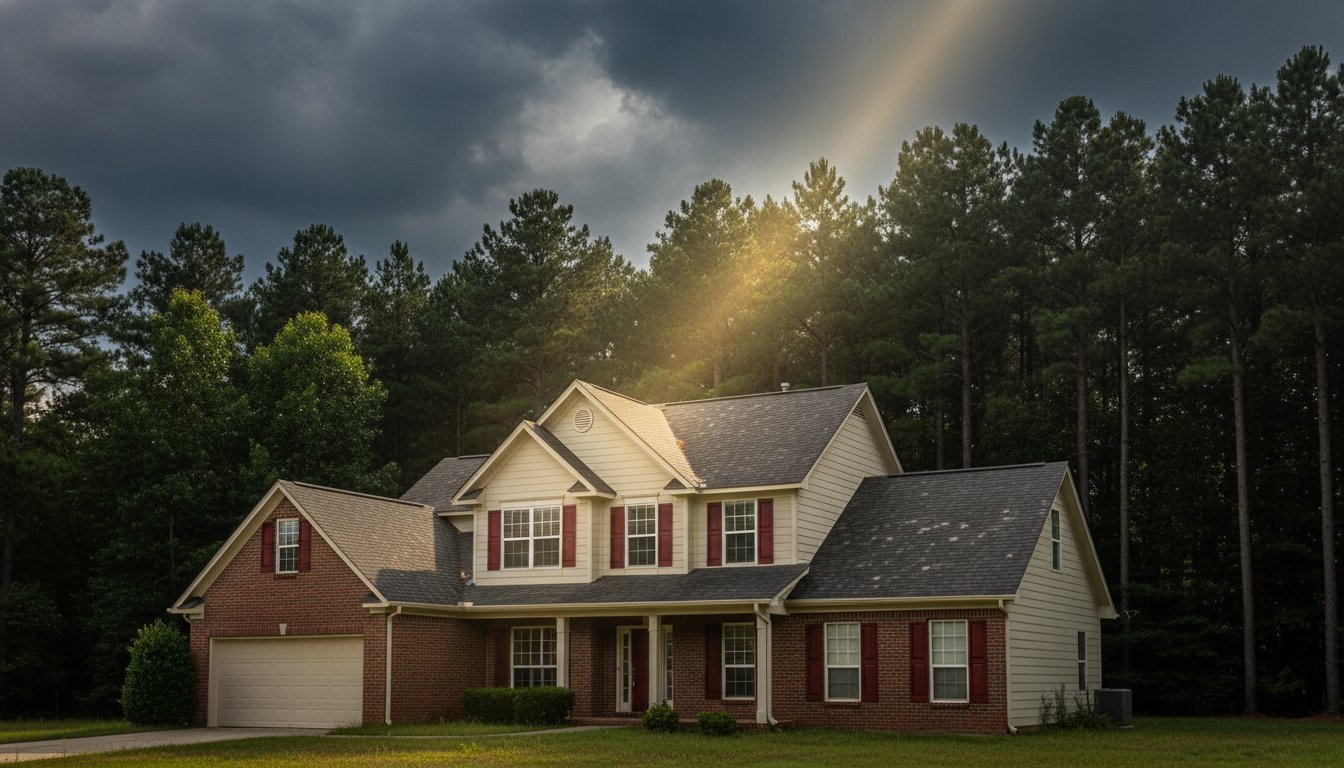
Last April, a homeowner in Cumming discovered a small damp patch in their attic following a typical North Georgia hail storm. Within three weeks, that minor leak escalated into a major structural issue because the shingle integrity had silently failed months earlier. You likely understand that your roof is your home's first line of defense, yet the fear of hidden damage or a complex insurance claim often leads to costly delays. It's stressful to guess whether your property is truly protected or if you're overlooking critical signs you need a new roof before the next season of heavy rain arrives.
We're here to provide the clarity you need to protect your investment with absolute confidence. You'll learn how to spot early failure points using our expert-backed checklist, designed specifically for the unique weather patterns we face in North Georgia. This guide breaks down technical indicators like flashing failure, explains the Georgia storm damage factor, and helps you determine if a meticulous repair or a full replacement is the most reliable path forward for your family's safety. We've simplified the process so you can move from uncertainty to a secure, "Supreme" standard home.
Key Takeaways
- Understand how the intense North Georgia UV rays accelerate shingle aging and why local roofs often fail before the national 20-year average.
- Master our expert visual checklist to identify the critical signs you need a new roof, including granule loss and curling shingle edges.
- Learn how to use your attic as an early warning system to spot structural gaps and water paths before they cause costly interior damage.
- Distinguish between normal wear and storm-related "bruising" to navigate insurance claims with confidence and protect your home’s value.
- Calculate your roof's "tipping point" to determine whether a strategic repair or a full replacement is the most cost-effective solution for your property.
Understanding Roof Lifespans in the Georgia Climate
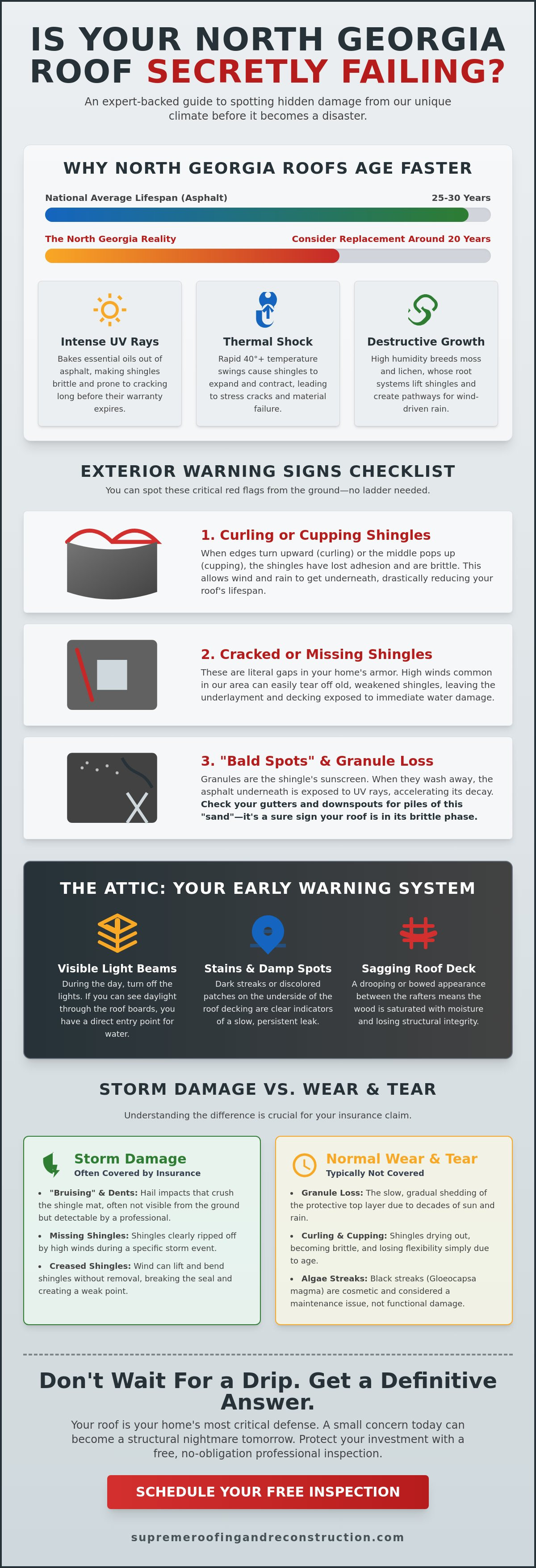
While the national average for asphalt shingle longevity often hovers around 25 to 30 years, homeowners in North Georgia should follow a stricter 20-year rule. The local climate presents unique challenges that accelerate material degradation. In cities like Cumming and Roswell, roofs face a relentless cycle of extreme heat and moisture. High-intensity UV rays act as a slow-motion oven, baking the essential oils out of asphalt shingles. This process makes the material brittle and prone to failure long before its theoretical expiration date. When the protective granules begin to slough off, your home loses its primary defense against the elements.
Neglecting your roof because it looks functional from the driveway is a dangerous strategy. By the time a leak manifests in your ceiling, the structural decking beneath the shingles has often suffered months of moisture saturation and rot. Recognizing the Understanding Roof Lifespans through the lens of local weather patterns helps you identify the signs you need a new roof before a minor issue becomes a total loss. Proactive inspections are vital because your roof is your home's primary shield against the unpredictable storms that define the Southeast.
The Impact of Thermal Shock
Georgia's spring and fall seasons often feature temperature swings of 40 degrees or more within a single 12-hour period. This creates a phenomenon known as thermal shock. As shingles heat up during the day, they expand; as they cool rapidly at night, they contract. Over time, this constant movement causes the shingles to lose their flexibility and develop deep cracks. Thermal shock is a primary cause of premature roof failure in the Southeast because it compromises the shingle's ability to shed water effectively.
Humidity and Biological Growth
High humidity levels in Lawrenceville and Roswell create a breeding ground for biological organisms. It's vital to distinguish between harmless aesthetic issues and structural threats. While black streaks caused by algae are mostly a cosmetic concern, moss and lichen are destructive. These organisms develop root systems that physically lift the edges of your shingles, allowing wind-driven rain to penetrate the underlayment. To prevent these growths from shortening your roof's life, follow a dedicated roof maintenance plan for homeowners in cumming ga to ensure your property remains protected. Seeing these biological invaders is one of the visible signs you need a new roof if the growth has already compromised the shingle's seal.
Exterior Signs of Roof Damage: A Visual Checklist
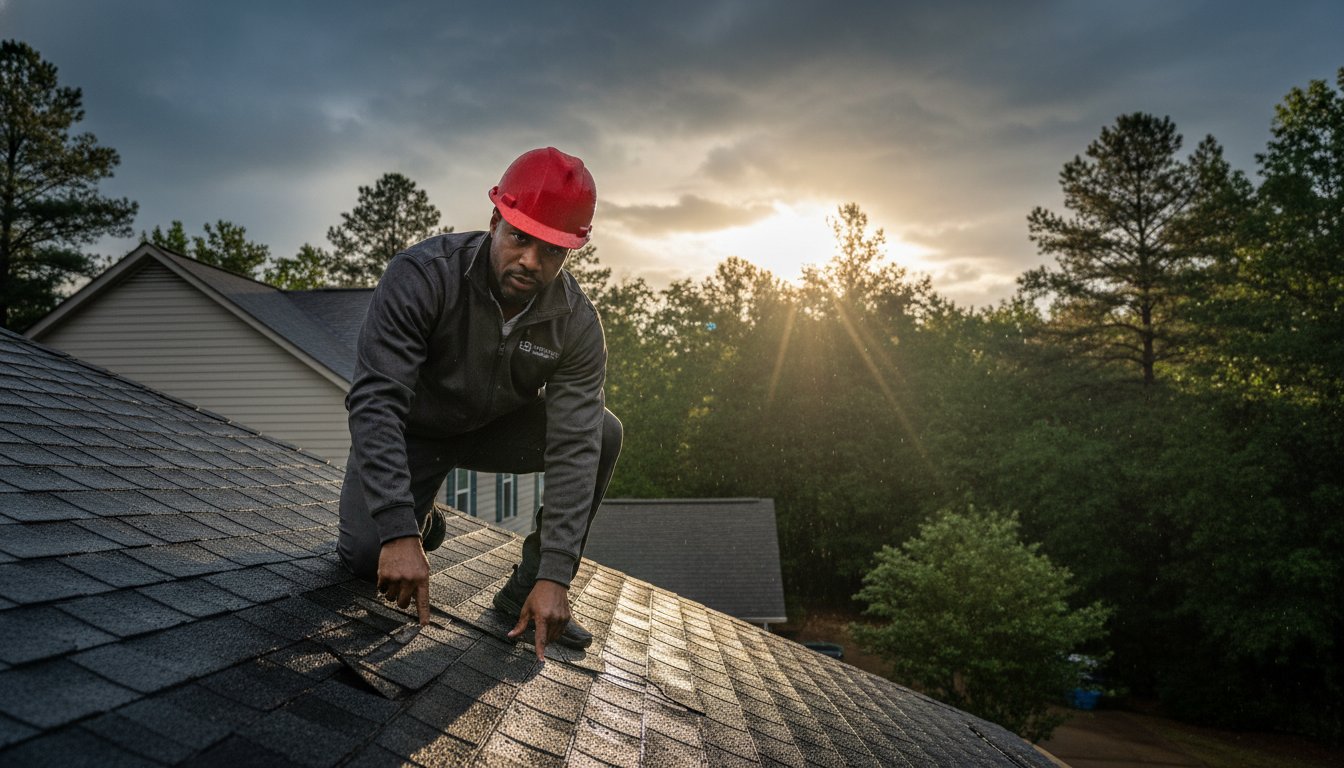
Identifying the signs you need a new roof starts with a simple walk around your property. You don't need to climb a ladder to spot critical red flags; a pair of binoculars often reveals the truth about your home's defense system. North Georgia weather, with its rapid temperature swings and heavy seasonal rains, puts immense stress on asphalt shingles. When you look up, you're searching for inconsistencies in the texture and shape of your roofline.
- Curling or cupping shingle edges: When shingles turn upward at the edges or the middle starts to concave, they've lost their adhesion. This usually indicates the asphalt has dried out from years of Georgia sun exposure.
- Cracked or missing shingles: These are literal gaps in your home's armor. High winds in the Cumming area can tear weakened shingles away, leaving the underlayment vulnerable to the next downpour.
- Bald spots: If your roof looks "patchy" or has dark spots, the protective top layer has likely washed away.
Shingle Integrity and Granule Loss
Granules serve as the primary UV shield for your roof. Without them, the underlying asphalt becomes brittle and cracks under the sun's intensity. After a heavy Gainesville storm, check your gutter downspouts. If you see piles of "sand" or mineral debris, your shingles have reached their brittle phase. A 10 percent loss of surface material can accelerate aging by several years in a single season. This shedding is a clear signal that the shingle's structural integrity is failing. If you notice this accumulation, it's one of the most reliable signs you need a new roof before a minor leak becomes a major interior restoration project.
Flashing and Penetration Points
Flashing is the thin material installed to direct water away from critical areas like chimneys, vents, and dormers. While some builders use plastic flashing to reduce costs, these materials often warp or crack within 7 to 10 years. Metal flashing, particularly galvanized steel or copper, provides a much more durable seal. If you notice rusted or pulling metal around your skylights, you need to act quickly. These technical areas are the most common source of leaks in North Georgia homes. Ensuring these points are meticulously sealed is a "Supreme" standard of care. If your flashing is failing, consulting professional roof repair contractors is the best way to determine if a targeted fix or a total replacement is necessary. For a thorough assessment of your home's exterior, the team at Supreme Roofing and Reconstruction provides the expert guidance you need to make an informed decision.
Interior Warning Signs: The Attic Early Warning System
You don't always need a ladder to spot trouble. Your attic acts as a diagnostic center for the health of your home. If you notice water stains blooming across your ceilings or running down your interior walls, you're seeing the final stage of a leak that started weeks ago. These moisture trails often originate at the roof deck, travel along rafters, and eventually soak into your drywall. Identifying these signs you need a new roof early can prevent a minor leak from turning into a total structural overhaul.
Supreme Roofing and Reconstruction experts recommend a flashlight inspection once every quarter. During this walk-through, look for these three critical failures:
- Light peeking through: Turn off the attic lights on a sunny afternoon. If you see pinpricks of daylight through the roof boards, you have structural gaps that invite water and pests into your home.
- Sagging roof deck: A visible dip in the roof's internal profile is a red flag. This physical sag usually indicates that moisture has compromised the integrity of your plywood or rafters.
- Spiking utility bills: If your cooling costs have jumped 15% compared to last summer without a rate hike, your roof may no longer be shedding heat effectively.
Detecting Hidden Moisture
Look for dark, localized discolorations or "trails" on the underside of the roof deck. A persistent musty odor often signals that moisture is trapped within the attic space, even if you don't see a standing puddle. Roof deck rot is the progressive decay of the wooden structural layer beneath your shingles. This decay destroys the roof's ability to hold fasteners and support weight, making the entire structure unsafe for your family and our crews.
Ventilation and Heat Traps
Alpharetta summers frequently push attic temperatures above 150 degrees Fahrenheit. Without proper roof ventilation, this trapped heat literally bakes your shingles from the inside out. This process causes shingles to become brittle and fail years before their rated lifespan. You might also find black mold growth on your insulation, which is a direct byproduct of poor airflow and high humidity. Upgrading to a modern, well-ventilated system is one of the clearest signs you need a new roof to protect your home’s energy efficiency and structural health.
Storm Damage vs. Normal Wear: The Insurance Factor
Identifying the signs you need a new roof often starts with distinguishing between age and impact. Atlanta storms bring heavy hail and high winds that cause immediate, structural failure. Hail bruises appear as small, dark dimples where the protective granules have been knocked away. This exposes the underlying bitumen to UV rays, which causes the shingle to become brittle and fail. Wind damage is often more subtle but equally dangerous. High gusts lift shingles and crease them across the top. A creased shingle signals a complete loss of the factory seal. Even if the shingle looks flat after the wind dies down, it's no longer bonded to your roof. These are definitive signs you need a new roof that insurance typically covers, provided you act quickly. Timing is your biggest hurdle. Most Georgia insurance policies require you to file a claim within 12 months of the storm date. If you wait until a leak appears two years later, the carrier will likely classify the issue as a maintenance problem or neglect rather than a claimable event. This shift in classification can cost you thousands of dollars in out of pocket expenses.Navigating Hail and Wind Claims
Supreme Roofing plays a vital role in storm damage restoration by providing the technical evidence adjusters require. We perform meticulous, photo-documented inspections that highlight shingle failure and "collateral damage." We look for dents on soft metals like gutters, downspouts, and siding. These marks provide the undeniable proof adjusters need to validate a roof claim. Our goal is to ensure the damage is documented correctly the first time.The "Supreme" Approach to Claims
We act as your knowledgeable advocate to ensure a stress-free experience from start to finish. You should be wary of "storm chasers" who flood Marietta and Cumming after a storm. These out of state companies often disappear before the warranty period even begins. As established local contractors, we ensure your estimate covers the full scope of Supreme quality materials. This includes high grade underlayment and proper flashing, not just the cheapest shingles available. We focus on restoring your home's integrity with craftsmanship that lasts.Your Next Steps: Repair, Replace, or Monitor?
Deciding whether to patch a leak or invest in a full overhaul is a significant choice for any homeowner. If your roof is less than 15 years old and the damage is confined to a small area, a professional repair can often extend its lifespan by 3 to 5 years. This localized approach works well for minor storm damage or a few missing shingles. However, you must recognize the "Tipping Point." When repair costs exceed 25% of the total replacement cost, or if you find yourself calling a contractor every time it rains, the financial math shifts toward a full installation.
Identifying the signs you need a new roof early can save you thousands in interior water damage repairs. Ignoring these warnings leads to compounding damage in your attic and drywall. A professional inspection remains the only definitive way to determine if your structure is still viable or if it has become a liability. Our team provides the technical expertise needed to make this distinction with total confidence.
Making the Financial Decision
Choosing a replacement offers a superior long-term return on investment compared to the endless cycle of leak patching. In competitive markets like John’s Creek and Alpharetta, a new roof significantly boosts property value and buyer confidence. It transforms your home’s curb appeal while providing a "Supreme" level of protection against Georgia’s unpredictable weather. Before you commit, it's wise to review our guide on the top roof replacement companies to understand how to vet contractors for quality and integrity.
Schedule Your Supreme Inspection
A Supreme Roofing and Reconstruction consultation is designed to be thorough and stress-free. We don't just glance at your shingles from the driveway. We perform a meticulous assessment of your entire roofing system, including:
- Detailed analysis of shingle integrity and granule loss
- Meticulous inspection of flashing around chimneys and vents
- Evaluation of gutter drainage and attic ventilation
We pride ourselves on transparency. Our experts only recommend what you actually need to keep your home safe and dry. We act as your local ally, providing factual data so you can make an informed decision without the pressure. We provide an unmatched level of detail in our reports, ensuring you have a clear roadmap for your home's protection. Don't leave your property's safety to chance. Contact us today for a free, no-obligation roof health check and experience the peace of mind that comes with a Supreme standard of service.
Secure Your Home with a Professional Roof Assessment
Ignoring shingle damage or attic moisture often leads to preventable structural issues. You've learned how to spot compromised flashing and why the unique Georgia climate accelerates wear on older systems. Since 2016, Supreme Roofing and Reconstruction has helped Cumming homeowners navigate the complex line between normal aging and storm damage. Our team brings A+ rated local craftsmanship to every project. We ensure your property remains a safe haven while providing expert insurance claim assistance to make the restoration process stress-free. Identifying the signs you need a new roof is the first step, but professional verification provides the ultimate peace of mind. Don't let hidden damage linger until it becomes an expensive emergency. We're here to act as your local ally and expert protector, standing by the meticulous quality of our materials and labor. Our approach ensures your home stays dry and your family stays safe. Take action now to secure your investment and maintain your home's value for the long term.
Get Your Free Supreme Roof Inspection Today
Your home deserves the highest standard of protection, and we're ready to deliver it.
Frequently Asked Questions
Is a 15-year-old roof considered old in Georgia?
Yes, 15 years is the critical threshold for asphalt roofs in Georgia because high UV exposure and humidity accelerate material breakdown. While architectural shingles can last 25 years, the Georgia Department of Insurance notes that intense heat degrades shingles 20 percent faster than in cooler climates. This age is often when the primary signs you need a new roof become visible, including heavy granule loss and brittle flashing.
Can I just replace the damaged shingles instead of the whole roof?
You can replace individual shingles if the damage is localized to a small area and the surrounding materials remain pliable. If a storm tears 5 or 10 shingles off a 2,500 square foot roof, a targeted repair is often the most efficient solution. However, if the rest of the shingles are brittle, they won't seal correctly with new pieces. We prioritize shingle integrity to ensure your home stays dry during North Georgia's heavy rain cycles.
What does hail damage look like on an asphalt shingle roof?
Hail damage appears as dark, circular divots where the protective granules have been knocked away to expose the underlying asphalt mat. These bruises are typically 0.5 to 2 inches in diameter and feel soft to the touch, similar to a bruised apple. Since these impacts compromise the waterproofing layer, they represent one of the most urgent signs you need a new roof to prevent interior rot.
Does homeowners insurance cover a roof that is just old?
No, standard homeowners insurance policies don't cover roof replacement due to age or general wear and tear. Most carriers, including State Farm and Allstate, specifically exclude maintenance issues in their standard policy language. Insurance exists to cover sudden, accidental damage from events like 60 mph wind gusts or 1 inch hailstones. We provide meticulous inspections to help you differentiate between age-related deterioration and legitimate storm damage claims.
How long does a typical roof replacement take in the Cumming area?
A standard roof replacement for a 2,500 square foot home in Cumming typically takes 1 to 2 days to complete. Our crew arrives at 7:00 AM to begin the tear-off process and aims to have the new underlayment installed by midday to keep the structure protected. We maintain a structured, intentional schedule to ensure a seamless experience that minimizes disruption to your family's daily routine.
What happens if I ignore small signs of roof damage?
Ignoring minor issues like a single cracked shingle or loose flashing leads to rot in the roof decking within 3 to 6 months. Small leaks often travel along rafters, causing mold growth in the attic and damaging your home's structural integrity. Addressing these problems early prevents the need for a full restoration and saves you from the 30 percent higher costs associated with repairing extensive secondary water damage.
Why are my shingles curling even though the roof is relatively new?
Shingles often curl prematurely due to poor attic ventilation that traps heat and moisture under the roof deck. When attic temperatures exceed 130 degrees Fahrenheit, the shingles bake from the inside out, causing the edges to lift or cup. This is a technical failure that often voids manufacturer warranties. We check your soffit and ridge vents to ensure proper airflow and protect your long-term investment.
How do I know if my roof leak is an emergency?
A roof leak is an emergency if water is actively entering the living space, saturating drywall, or pooling near electrical outlets. If you see a 12 inch diameter water stain on your ceiling or notice a steady drip during a storm, you need immediate professional intervention. Our team acts as an expert protector, providing rapid tarping services to stop the water and prevent further interior damage to your property.